Stainless Steel Grades for Custom Manufacturing

Explore stainless steel grades for CNC machining, sheet metal fabrication, casting and custom manufacturing. Compare commonly used alloys by corrosion resistance, strength, machinability, heat resistance and typical applications to find a practical material for your part.


All your designs are secure and confidential
  • Wide Grade Selection​​​​​​​
    Compare a range of austenitic, martensitic and precipitation-hardening stainless steels for different performance requirements.
  • Multiple Manufacturing Processes
    Find stainless steel grades suitable for CNC machining, sheet metal fabrication, casting and other manufacturing processes.​​​​​​​
  • Engineering Material Support​​​​​​​
    Get practical grade recommendations based on corrosion exposure, strength, machinability, temperature and cost.​​​​​​​
  • Material Certificates & Traceability​​​​​​​
    Material certificates and traceability records are available for applicable stainless steel grades and qualified projects.

Stainless Steel Grades We Work With

Explore commonly used stainless steel grades for CNC machining, sheet metal fabrication, casting and other custom manufacturing processes. Compare their corrosion resistance, strength, machinability and typical applications to find a practical option for your part.

17-4 PH Stainless Steel: Properties, Heat Treatment & Applications

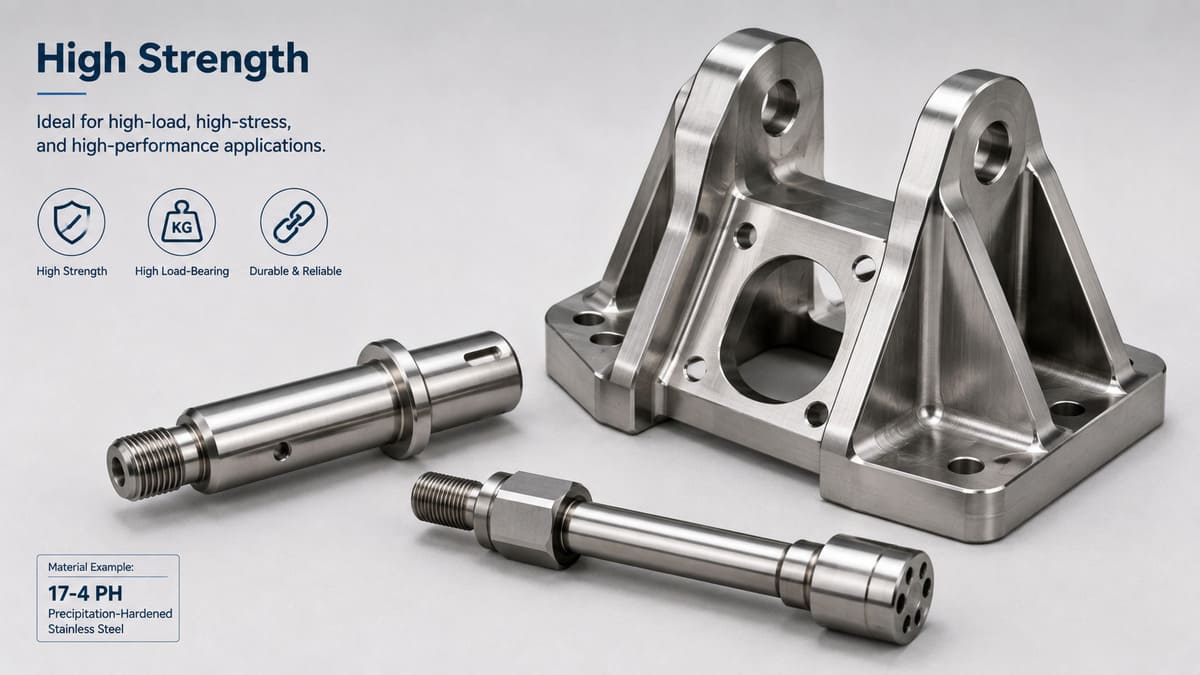
17-4 PH is a precipitation-hardening stainless steel that combines high strength, good corrosion resistance and controllable mechanical properties through aging heat treatment. It is commonly used for precision mechanical components where significantly higher strength is required than standard austenitic stainless steels can provide.

View More
303 Stainless Steel: Properties, Machinability & Applications

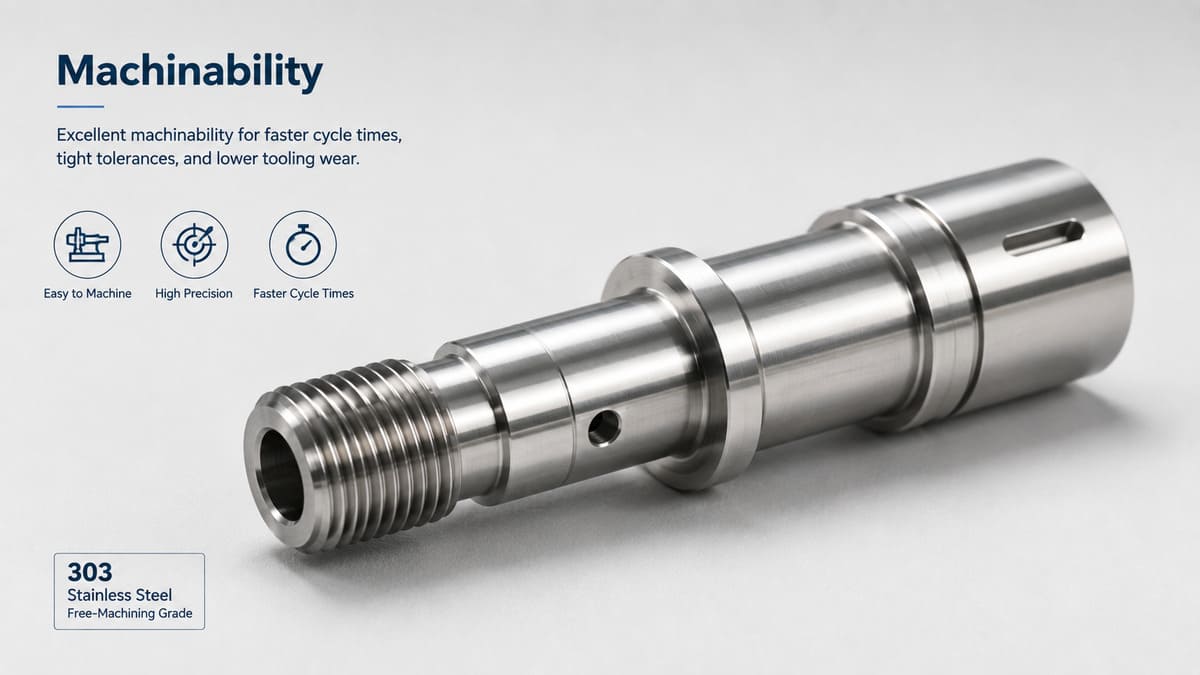
303 is a sulfur-modified austenitic stainless steel developed for improved machinability and chip breaking. It is best suited to high-volume or precision-machined components where machining efficiency is more important than the higher corrosion resistance, weldability and formability provided by 304.

View More
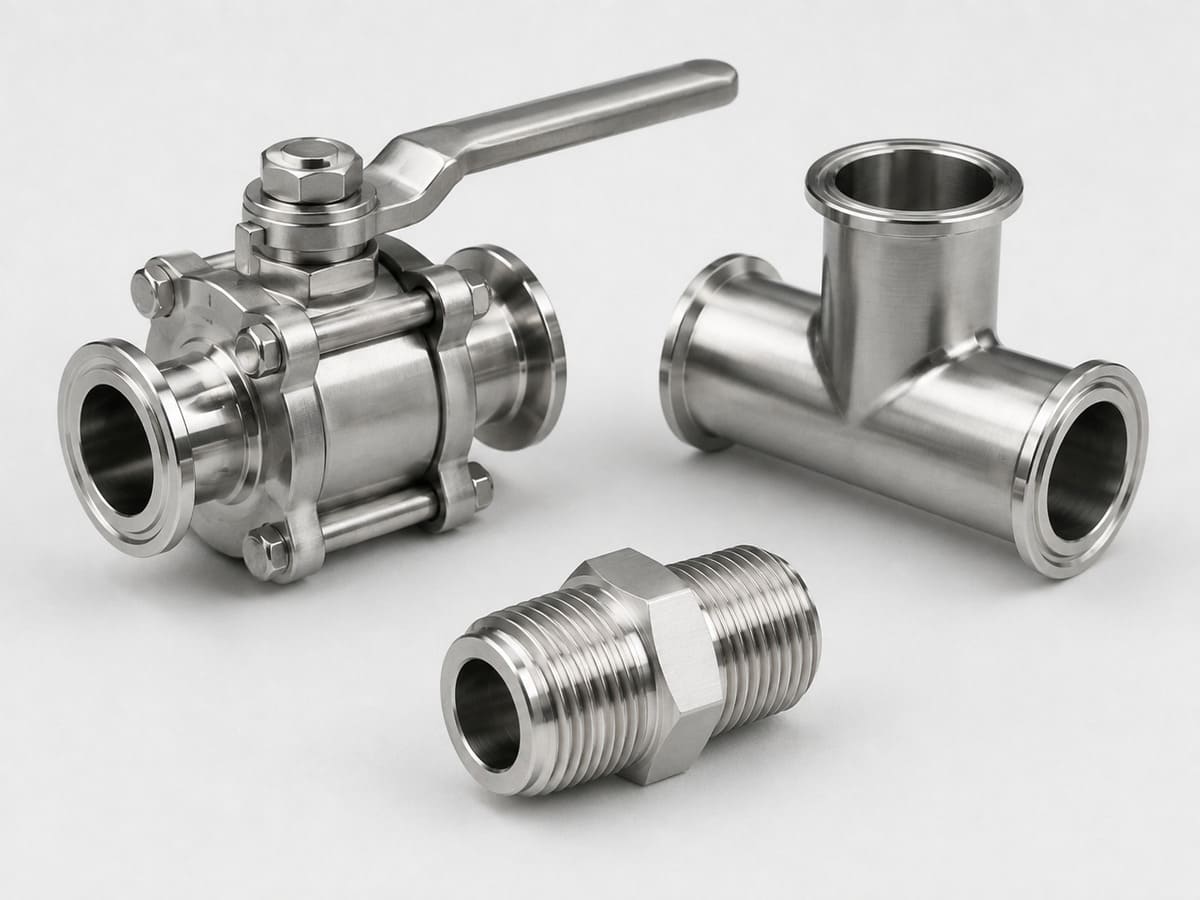
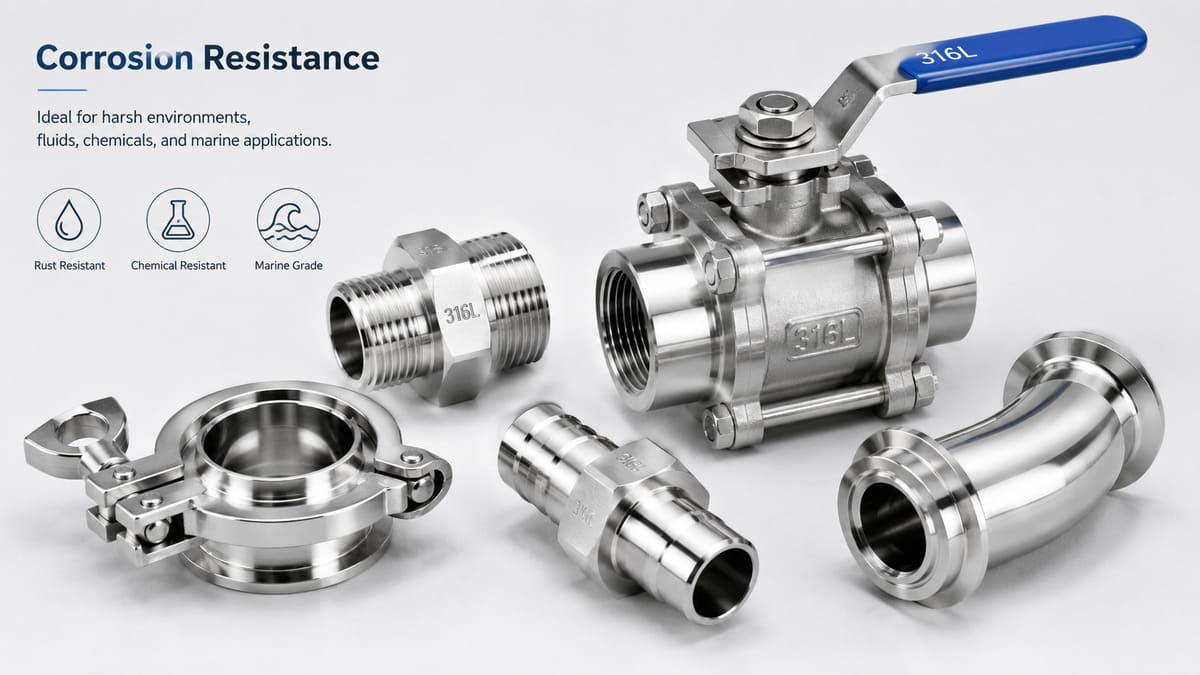
316L Stainless Steel: Properties, Corrosion Resistance & Applications

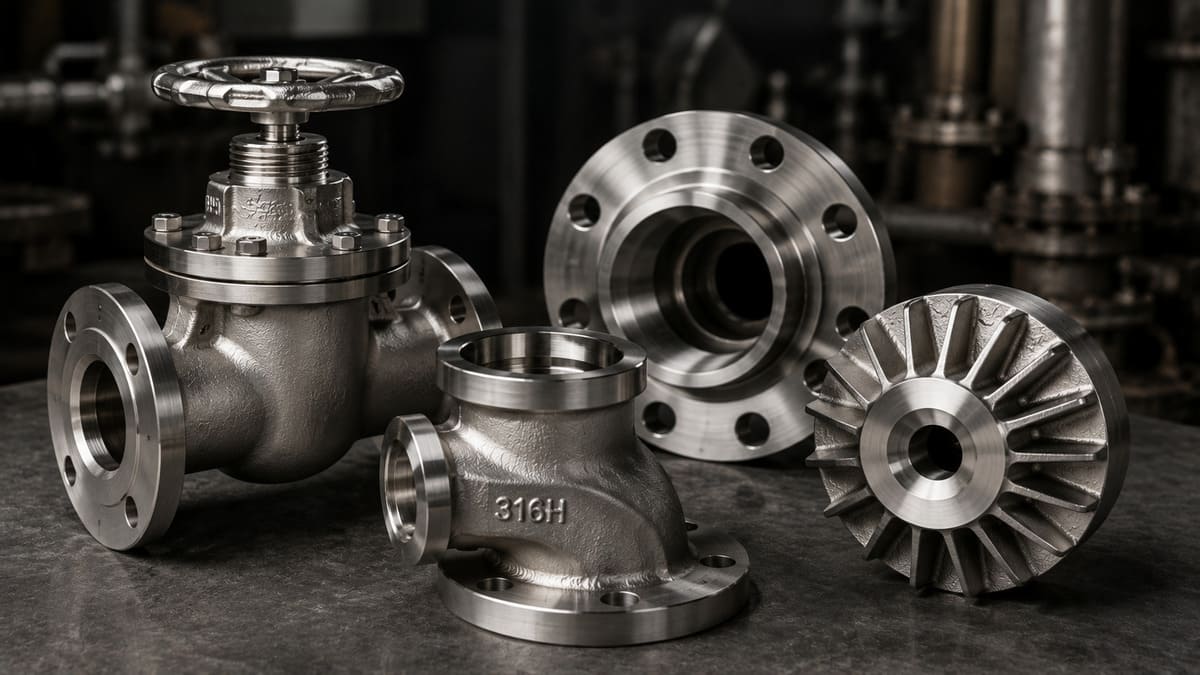
316L is a low-carbon Cr-Ni-Mo austenitic stainless steel with better chloride corrosion resistance than 304 and excellent welding performance. It is commonly used for welded and corrosion-resistant equipment in chemical, food, pharmaceutical and fluid-handling applications.

View More
304 Stainless Steel: Properties, Characteristics & Applications

304 stainless steel is a general-purpose austenitic stainless steel selected for its balanced corrosion resistance, formability, weldability and manufacturing versatility.

View More

How to Choose the Right Stainless Steel Grade

The right stainless steel grade depends on corrosion exposure, strength, machinability, hardness, welding requirements and operating environment. Use these common selection scenarios as a starting point when comparing grades for custom parts.

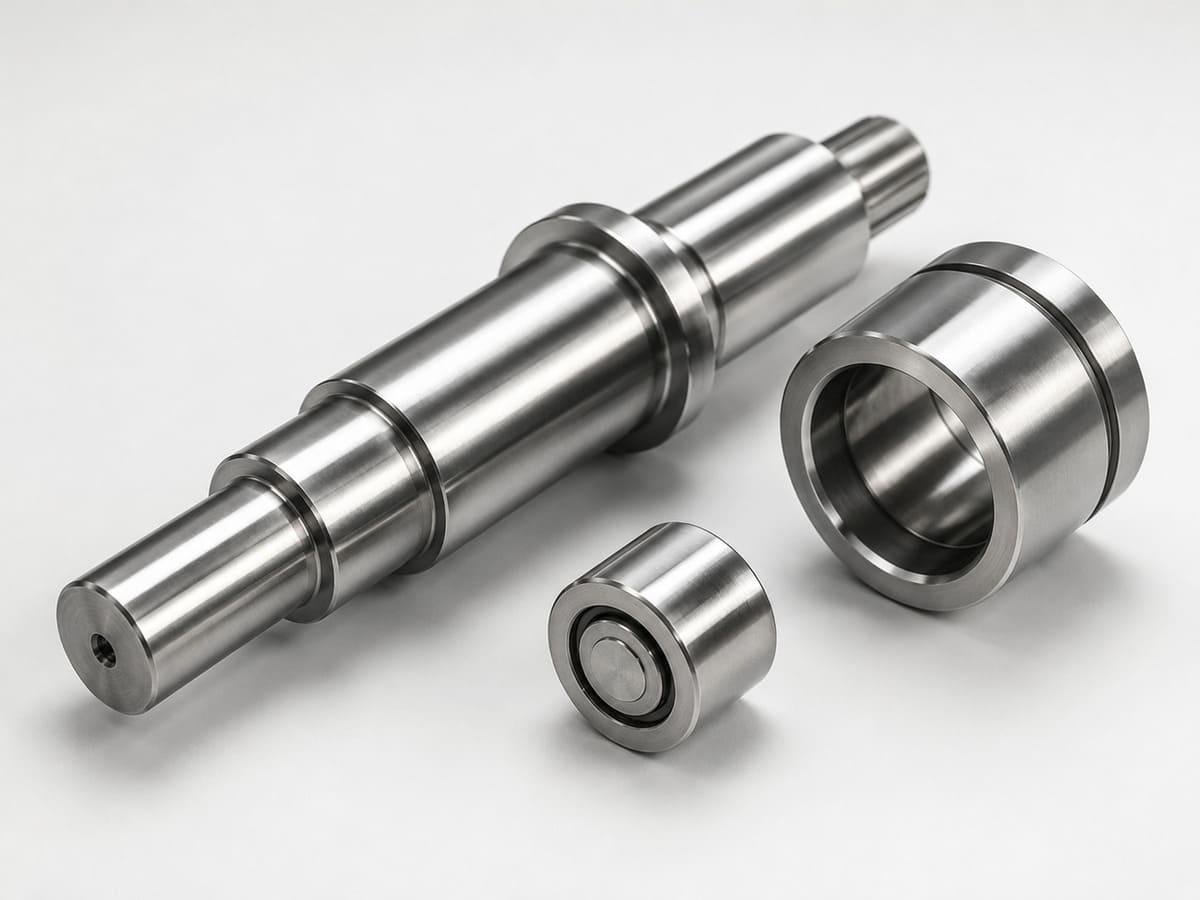
  • 303 stainless steel precision turned shafts, fittings and machined components
    Stainless Steel 303

    303 is a practical choice for high-volume turned and machined parts where excellent machinability is more important than welding performance or maximum corrosion resistance.

    Best When You Need:
    Fast Machining · Turned Parts · Precision Features · Good Surface Finish

    Explore Stainless Steel 303
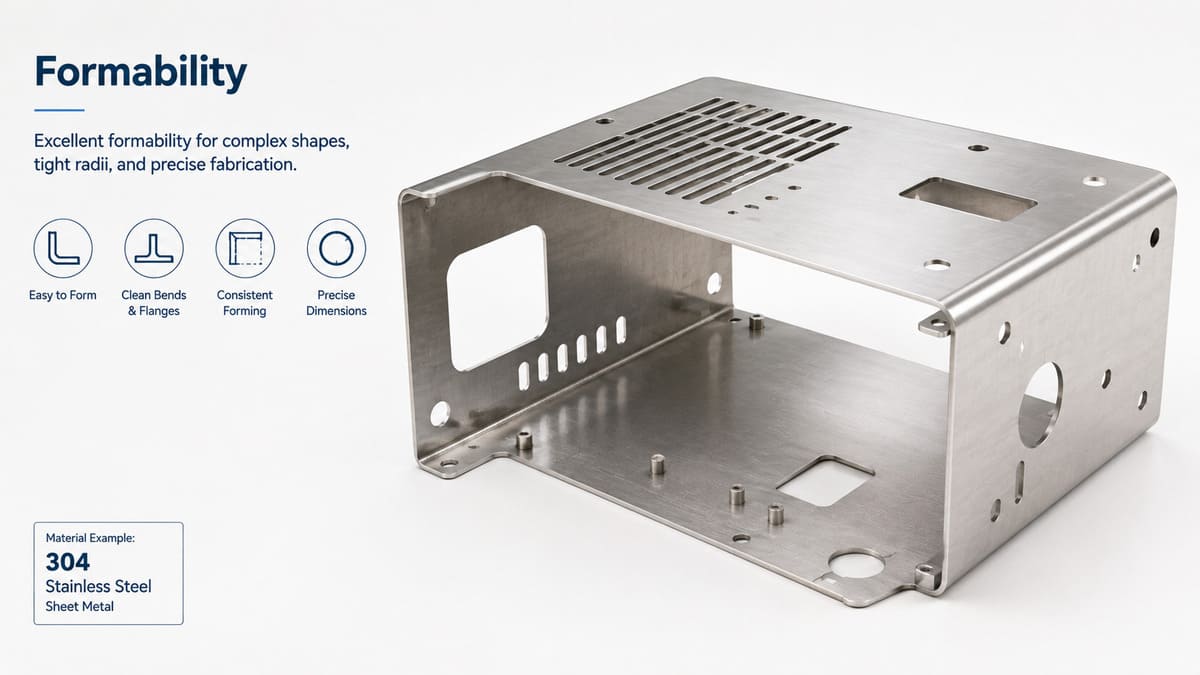
  • 304 stainless steel fabricated brackets, housings and general-purpose components
    Stainless Steel 304

    304 offers a strong balance of corrosion resistance, formability, weldability and availability for general industrial components.

    Best When You Need:
    General Fabrication · Housings · Brackets · Enclosures · Welded Components

    Explore Stainless Steel 304
  • 316L stainless steel precision components for corrosion-resistant applications

    Stainless Steel 316L

    316L is commonly selected for parts exposed to moisture, chemicals, chlorides and demanding service environments.

    Best When You Need:
    Marine Exposure · Chemical Resistance · Fluid Systems · Welded Assemblies

    Explore Stainless Steel 316L

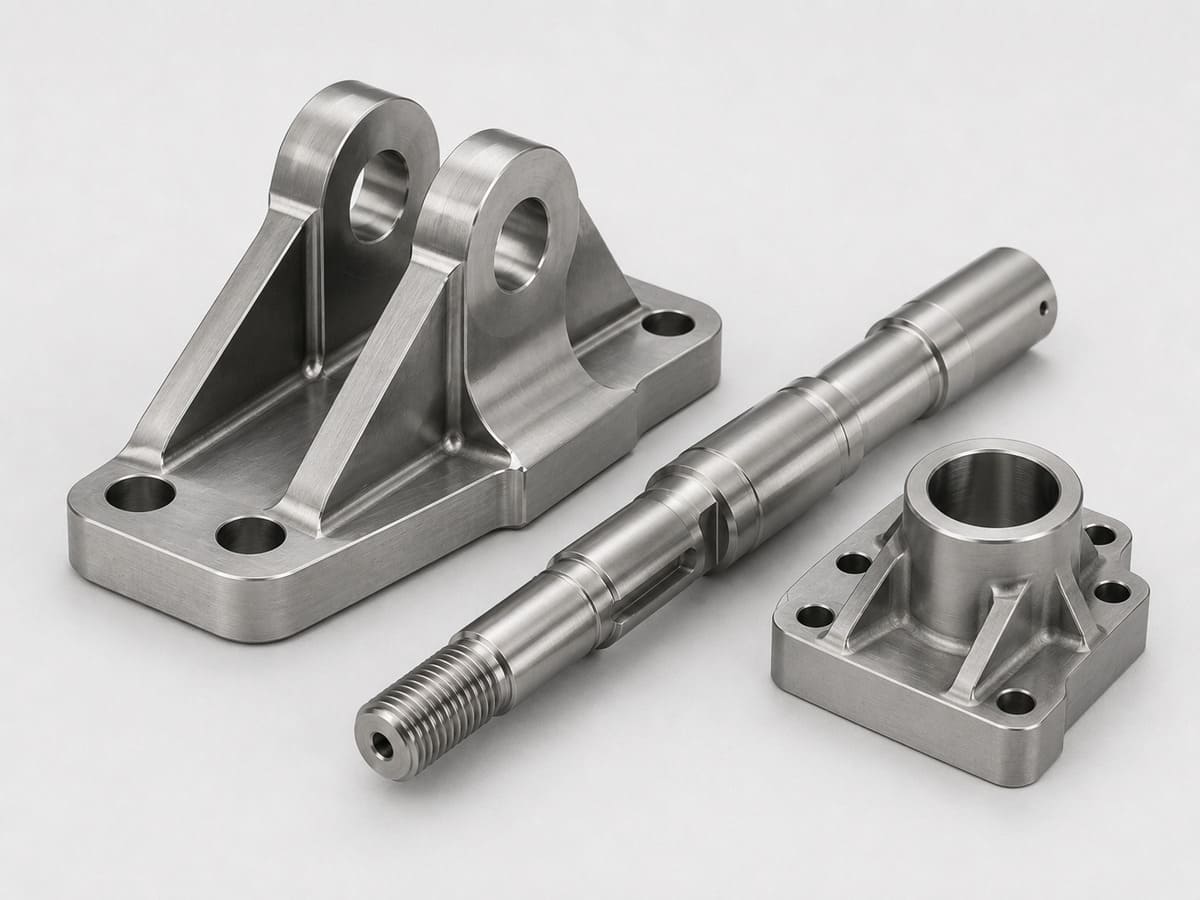
  • 17-4 PH stainless steel high-strength structural bracket and precision shaft

    Stainless Steel 17-4 PH

    17-4 PH combines high mechanical strength with useful corrosion resistance and can be heat treated to achieve different performance levels.

    Best When You Need:
    High Loads · Structural Parts · Shafts · Valve Components · Precision Assemblies

    Explore Stainless Steel 17-4 PH

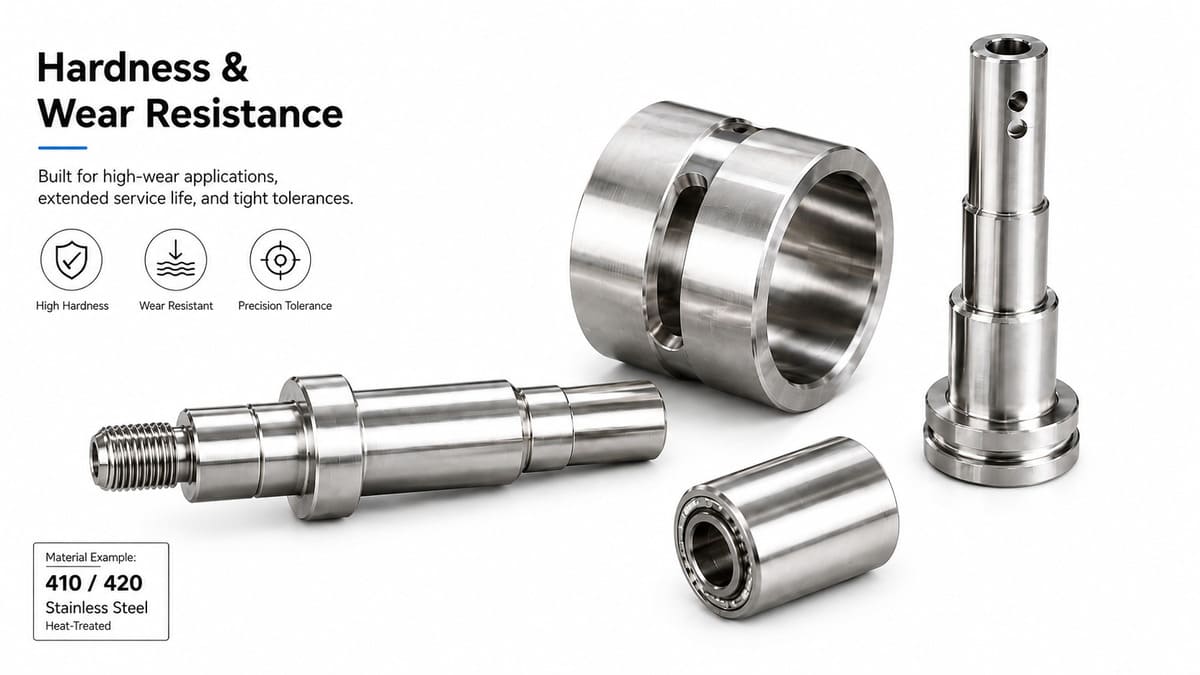
  • 420 stainless steel hardened precision components for wear-resistant applications
    Stainless Steel 420

    420 can be heat treated to achieve high hardness and wear resistance for mechanical and precision components.

    Best When You Need:
    Wear Resistance · High Hardness · Polished Surfaces · Mechanical Components

    Explore Stainless Steel 420
  • 410 stainless steel heat-treated shafts and mechanical components
    Stainless Steel 410

    410 offers a useful combination of strength, hardness and moderate corrosion resistance for heat-treated mechanical components.

    Best When You Need:
    Shafts · Fasteners · Valve Parts · Mechanical Strength · Heat Treatment

    Explore Stainless Steel 410
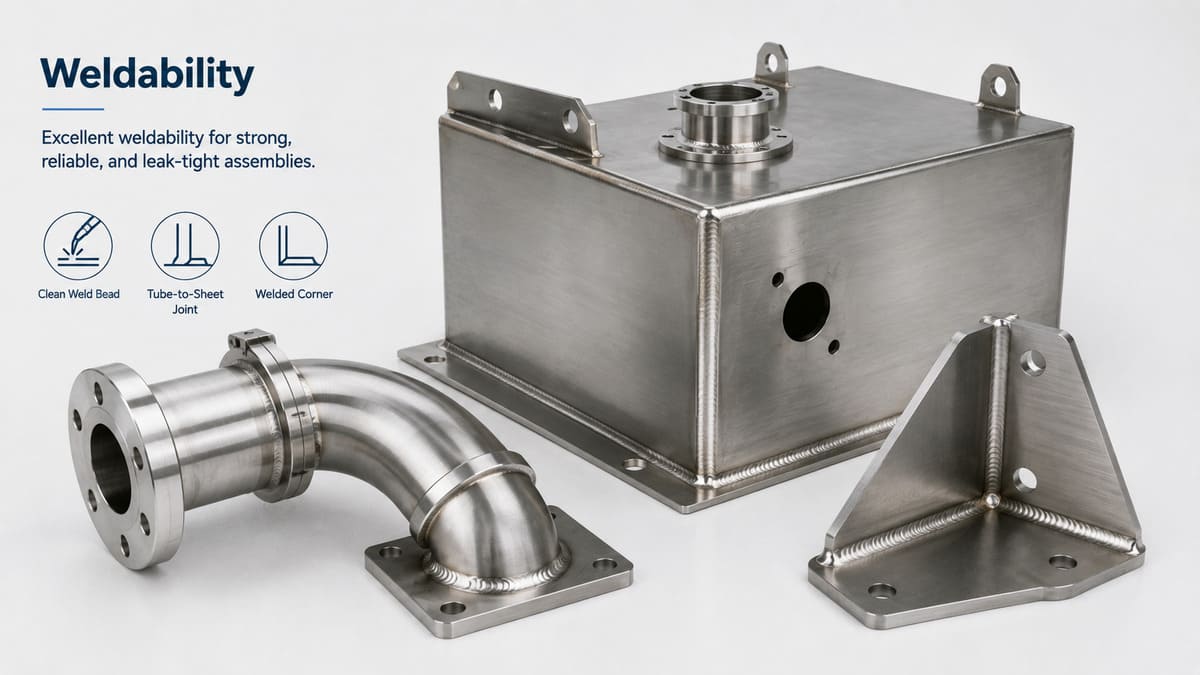
  • 304L and 316L stainless steel welded components and fabricated assemblies
    Stainless Steel 304L / 316L

    Low-carbon grades help reduce sensitization concerns in welded assemblies while maintaining good corrosion resistance.

    Best When You Need:
    Welded Structures · Tanks · Process Equipment · Corrosion Resistance

    Compare 304L and 316L
  • 430 stainless steel formed panels and fabricated components
    Stainless Steel 430

    430 can be a practical option for formed and decorative components that do not require the corrosion resistance or mechanical performance of 304 or 316L.

    Best When You Need:
    Panels · Covers · Decorative Parts · Formed Components · Lower Material Cost

    Explore Stainless Steel 430
Explore practical comparisons between commonly used stainless steel grades to understand differences in corrosion resistance, strength, machinability, weldability, hardness and typical applications.

Compare Stainless Steel Grades in More Detail

When engineers, designers, and procurement teams compare cast iron and steel, the discussion often starts—and ends—with a simple question: Which one is stronger?In reality, this question oversimplifies a far more complex engineering decision.Cast iron and steel are both iron-based alloys, yet their

Read More
Cast Iron Vs Steel Pros and Cons.png

H1Aluminum: Complete Engineering Guide to Composition, Alloys, Properties & Manufacturing ApplicationsIntroductionAluminum is one of the most widely used engineering metals in modern manufacturing. Known for its lightweight characteristics, corrosion resistance, and excellent machinability, aluminum

Read More
Aluminum Complete Engineering Guide to Composition, Alloys, Properties & Manufacturing Applications.jpg

Comprehensive engineering guide to steel materials, covering composition, grades, mechanical properties, CNC machining, casting, fabrication methods, and industrial applications. One-stop steel manufacturing solutions by NAITE TECH.

Read More
Steel Materials Guide.png

Tin metal is a soft, silvery-white metal that has played a critical role in human manufacturing for thousands of years. From ancient bronze tools to modern electronics soldering, tin remains indispensable due to its corrosion resistance, low melting point, and alloying versatility. This article prov

Read More
tin metal definition, composition, properties, and applications.png

Manufacturing Processes for Stainless Steel Grades

Different stainless steel grades perform differently during machining, forming, welding and casting. Choose the manufacturing process based on material grade, part geometry, tolerance requirements and production needs.


Process Selection Note​​​​​​​
The most suitable process depends on the exact stainless steel grade, material form, part geometry, welding requirements, tolerances, surface finish and production quantity.
  • Grade & Process Matching​​​​​​​
    Match stainless steel grades with suitable manufacturing processes.
  • Design-Based Selection​​​​​​​
    Consider geometry, weldability, tolerances and production requirements.
  • Engineering Support​​​​​​​
    Get practical guidance when comparing grades and processes.

Key Properties of Stainless Steel Grades

Stainless steel offers a strong combination of corrosion resistance, mechanical strength and manufacturing versatility. Performance varies significantly by grade, condition and heat treatment.

Surface Finish Compatibility for Stainless Steel

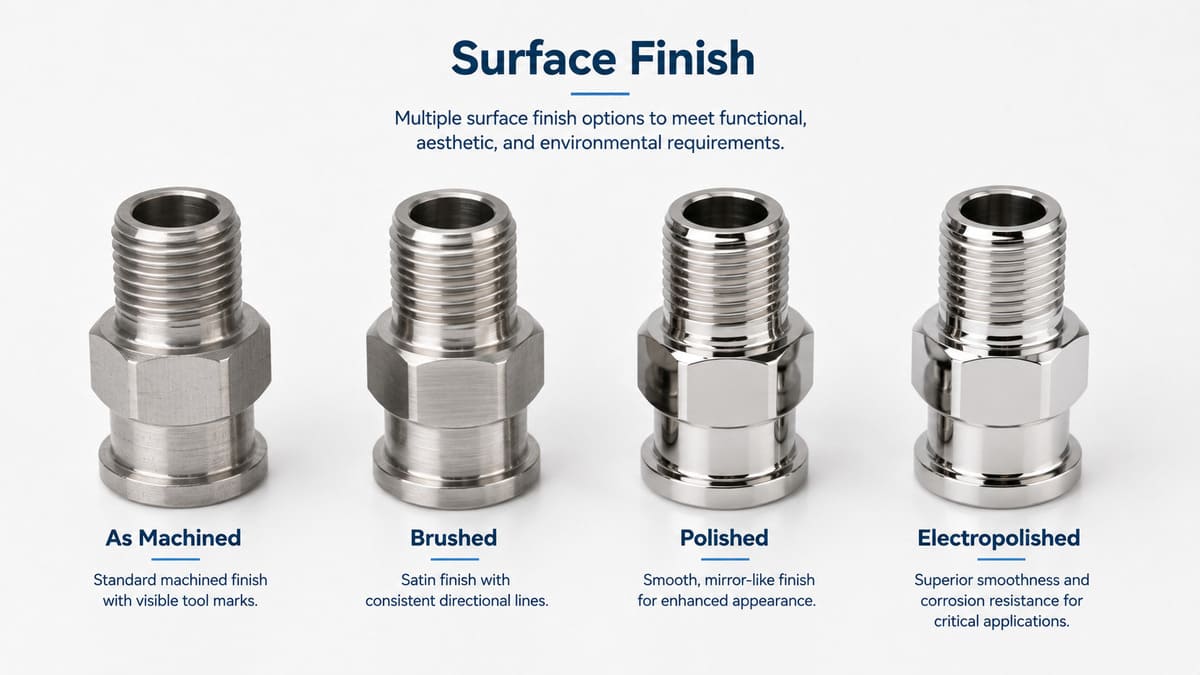
Stainless steel supports a range of functional and cosmetic finishes for corrosion resistance, cleanliness, appearance and surface performance. Finish suitability depends on the grade, surface condition and application requirements.

Common Finishes:
Passivation · Electropolishing · Polishing · Brushing · Bead Blasting · Laser Marking
8
+
Stainless Steel Grades
6
+
Surface Finish Options
4
+
Manufacturing Processes​​​​​​​
8
+
Key Material Properties
Finish Note​​​​​​​
Final appearance, corrosion performance and dimensional impact depend on the stainless steel grade, surface preparation, finishing specification and operating environment.

Stainless Steel Grades for Different Applications

Different stainless steel grades are selected for different combinations of corrosion resistance, strength, hardness, weldability and operating environment.
Application Note​​​​​​​
Final grade selection should consider corrosion exposure, mechanical loads, temperature, fabrication requirements, surface finish and production process.

Verified Stainless Steel Materials for Consistent Part Quality

Stainless steel grade, condition and material source can directly affect corrosion resistance, strength and part performance. We review material requirements before production and can provide supporting documentation for applicable projects.
Material Quality & Traceability

Explore Other Manufacturing Materials

Compare other metals and engineering materials for different strength, weight, corrosion resistance, temperature and manufacturing requirements.

Explore More Materials
ARE WE DOING
Stainless Steel Grades FAQs
  • Which stainless steel grade is best for CNC machining?
    Created with Sketch.
    形状 Created with Sketch.
    303 is one of the easiest stainless steel grades to machine and is commonly used for turned parts, shafts, fittings and precision components. 304, 316L and 17-4 PH are also widely machined when corrosion resistance or higher strength is required.
  • What is the difference between 304 and 316 stainless steel?
    Created with Sketch.
    形状 Created with Sketch.
    304 is a versatile general-purpose stainless steel with good corrosion resistance and formability. 316 contains molybdenum, giving it better resistance to chlorides, chemicals and marine environments.
  • Should I choose 303 or 304 stainless steel?
    Created with Sketch.
    形状 Created with Sketch.
    Choose 303 when machinability is the main priority. Choose 304 when better corrosion resistance, weldability and formability are more important.
  • What is the difference between 316 and 316L stainless steel?
    Created with Sketch.
    形状 Created with Sketch.
    316L has a lower carbon content than 316, which helps reduce sensitization after welding. It is commonly selected for welded parts and corrosion-resistant assemblies.
  • Which stainless steel grade is best for marine applications?
    Created with Sketch.
    形状 Created with Sketch.
    316 and 316L are commonly used in marine and chloride-rich environments because they offer better corrosion resistance than 304.
  • Which stainless steel grade offers the highest strength?
    Created with Sketch.
    形状 Created with Sketch.
    17-4 PH is commonly selected when high mechanical strength is required together with useful corrosion resistance and dimensional stability.
  • Which stainless steel grade is best for wear resistance?
    Created with Sketch.
    形状 Created with Sketch.
    420 and 410 can be heat treated to improve hardness and wear resistance. 420 is often selected when higher hardness and polishability are important.
  • Which stainless steel grades are best for sheet metal fabrication?
    Created with Sketch.
    形状 Created with Sketch.
    304, 304L, 316L and 430 are commonly used for sheet metal parts because they offer useful combinations of formability, weldability and corrosion resistance.
  • Can stainless steel be passivated or electropolished?
    Created with Sketch.
    形状 Created with Sketch.
    Yes. Passivation and electropolishing are commonly used on stainless steel to improve surface cleanliness, appearance and corrosion performance. Finish suitability depends on the grade and application requirements.
  • Is stainless steel magnetic?
    Created with Sketch.
    形状 Created with Sketch.
    Magnetic behavior depends on the stainless steel family and condition. Ferritic and martensitic grades such as 430, 410 and 420 are generally magnetic, while austenitic grades such as 304 and 316 are typically much less magnetic in the annealed condition.

Find the Right Stainless Steel Grade for Your Parts

Upload your CAD file and share your material, quantity, tolerance and application requirements. Our engineering team can help review suitable stainless steel grades and manufacturing options for your project.
Accepted files: STEP, STP, SLDPRT, IGES, IGS, X_T, STL, DWG and PDF.
If there are any CNC machining issues.
Please contact us.
Capabilities
Service
Support
COPYRIGHT © 2025 CHANGZHOU NAITE METAL TECHNOLOGY CO., LTD. ALL RIGHTS RESERVED.