
- Home
- Capabilities
- Solution
- Material
- Industry
- Resources
- Request a Quote
Views: 0 Author: Site Editor Publish Time: 2026-01-21 Origin: Site
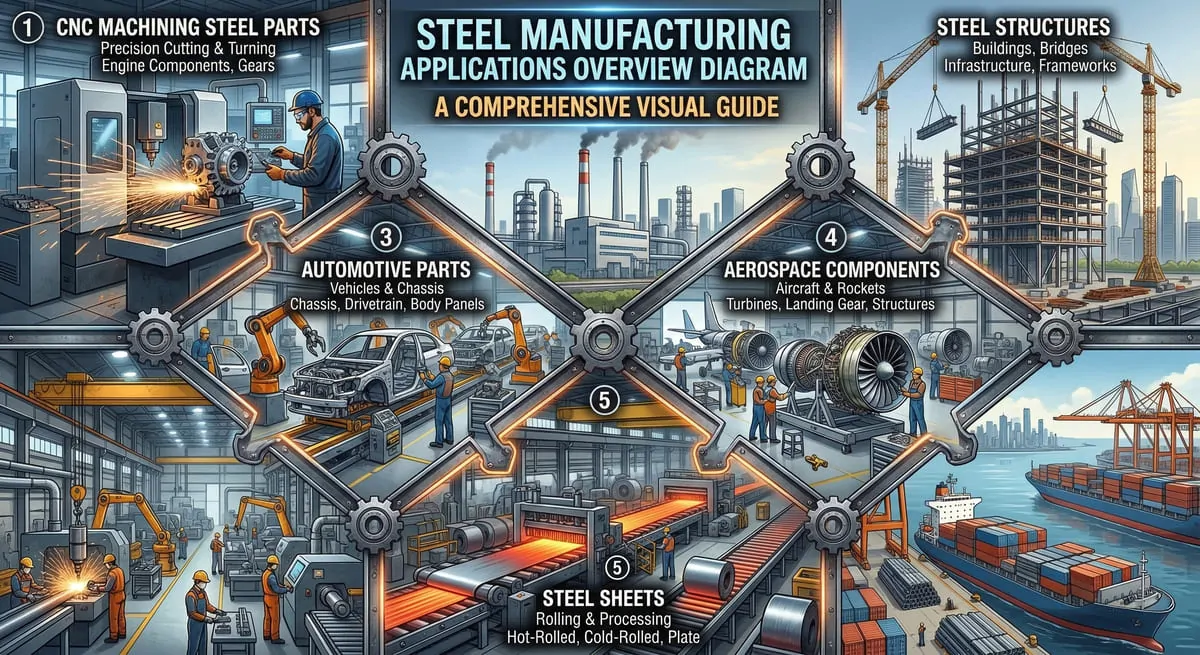
Steel is one of the most important engineering materials in modern manufacturing. From structural frameworks and mechanical components to precision CNC parts and high-performance tools, steel plays a critical role across nearly every industrial sector.
At NAITE TECH, steel remains one of the most frequently specified materials for CNC machining, casting, and sheet metal fabrication projects. Its versatility, predictable mechanical behavior, and wide availability make steel an essential material for both prototyping and mass production.
This guide provides a comprehensive, manufacturing-focused overview of steel—covering its definition, composition, types, properties, processing methods, and real-world industrial applications.
Steel is an iron-based engineering alloy primarily composed of iron (Fe) and carbon (C), with controlled additions of alloying elements to achieve specific mechanical, physical, and chemical properties. Unlike pure metals, steel is engineered at both the chemical and microstructural levels to deliver predictable performance across a wide range of manufacturing processes and service conditions.
In modern manufacturing, steel is not defined by a single material specification, but by a family of materials whose properties can be precisely tailored through composition control, thermomechanical processing, and heat treatment. This adaptability is the fundamental reason steel remains the most widely used structural and mechanical material in the world.
From an engineering standpoint, steel occupies a unique position among metallic materials: it offers a rare combination of strength, toughness, machinability, formability, weldability, availability, and cost efficiency that few alternatives can match at scale.
Although steel is often casually described as “iron with carbon,” the distinction between steel and iron is far more significant from a metallurgical and manufacturing perspective.
Iron, in its commercially pure form, contains very low carbon content (typically below 0.02%) and exhibits limited strength, poor hardenability, and minimal structural versatility. While pure iron offers good magnetic properties and corrosion resistance in certain environments, it lacks the mechanical performance required for most load-bearing or precision applications.
Steel, by contrast, introduces controlled carbon levels—generally between 0.02% and 2.0%—along with optional alloying elements such as chromium, nickel, molybdenum, and manganese. These additions fundamentally transform the internal crystal structure of the material, enabling:
Significant increases in tensile and yield strength
Tunable hardness and wear resistance
Controlled ductility and toughness
Improved fatigue and impact performance
From a metallurgical standpoint, the presence of carbon allows steel to form multiple microstructures—such as ferrite, pearlite, bainite, and martensite—each of which offers a distinct balance between strength and ductility. This microstructural flexibility is what makes steel suitable for everything from thin-wall CNC machined housings to heavy-duty shafts, gears, and structural frames.
In practical manufacturing terms:
Iron is rarely used for precision mechanical components
Steel is engineered specifically for structural integrity, machinability, and long-term performance
This fundamental difference explains why steel has replaced iron in nearly all modern industrial applications.
Steel’s dominance in manufacturing is not accidental—it is the result of unmatched versatility across both design requirements and production methods.
From an engineering design perspective, steel allows manufacturers to balance competing requirements that are often difficult to satisfy simultaneously:
High strength without excessive brittleness
Predictable deformation under load
Stable dimensional behavior during machining
Long-term durability under cyclic stress
From a manufacturing perspective, steel is compatible with virtually every mainstream production process, including:
CNC milling and turning
Casting and forging
Sheet metal fabrication
Welding and assembly
Heat treatment and surface finishing
This process compatibility enables engineers to optimize not only part performance, but also total manufacturing cost, lead time, and scalability. A steel component can be cast near-net-shape for material efficiency, CNC machined for precision features, heat treated for strength, and surface finished for corrosion resistance—all within a single integrated manufacturing workflow.
For companies like NAITE TECH that provide one-stop manufacturing services, steel offers a strategic advantage: it allows seamless integration of multiple processes while maintaining consistent material behavior across different production stages.
Despite the emergence of advanced materials such as aluminum alloys, titanium, and high-performance polymers, steel remains irreplaceable in CNC machining and fabrication for many applications.
One key reason is predictability. Steel grades exhibit well-documented machining characteristics, allowing engineers to accurately control:
Tool selection and cutting parameters
Chip formation and evacuation
Surface finish consistency
Dimensional stability over long machining cycles
Compared to lightweight materials, steel generally offers:
Lower risk of vibration and chatter during machining
Better dimensional stability in complex geometries
Superior load-bearing capability in compact designs
In fabrication and assembly, steel’s weldability and structural integrity make it the preferred choice for frames, enclosures, brackets, and load-bearing assemblies. Carbon steels and low-alloy steels, in particular, provide excellent weld penetration and joint strength when proper procedures are followed.
From a cost-performance standpoint, steel continues to deliver the most favorable balance for medium- to high-volume production. While alternative materials may offer advantages in specific niches—such as weight reduction or corrosion resistance—steel remains the default material when strength, reliability, availability, and manufacturing efficiency must all be considered together.
A critical point often overlooked in basic material discussions is that steel should not be viewed as a single material, but as a material system. Its performance is determined not only by nominal chemical composition, but by the interaction between:
Alloying elements
Microstructure
Processing history
Heat treatment condition
Final manufacturing method
For example, the same steel grade can exhibit vastly different behavior depending on whether it is supplied in annealed, normalized, quenched-and-tempered, or surface-hardened condition. These differences directly affect machinability, strength, fatigue resistance, and service life.
This systems-level understanding is essential for selecting the right steel for CNC machining, casting, or fabrication projects—especially when tight tolerances, high loads, or demanding environments are involved.
Beyond its technical merits, steel plays a unique role in global industrial supply chains. It is one of the most widely standardized materials worldwide, with established grade systems across ASTM, EN, JIS, GB, and ISO frameworks. This standardization ensures:
Reliable global sourcing
Consistent quality control
Easier cross-border engineering collaboration
For international manufacturers and OEMs, this means steel components can be designed, produced, and serviced with long-term supply stability—an increasingly critical factor in modern manufacturing strategy.
In summary, steel is not merely a basic construction material—it is a foundational engineering alloy that enables modern manufacturing to function at scale. Its combination of mechanical performance, process flexibility, global availability, and cost efficiency makes steel indispensable across industries ranging from automotive and aerospace to medical devices and energy infrastructure.
Understanding steel at an engineering level is the first step toward making informed material decisions. In the sections that follow, we will explore steel’s composition, metallurgy, processing methods, and application-specific selection strategies in greater technical depth.
The performance of steel is fundamentally determined by its chemical composition and the metallurgical structure formed during solidification, deformation, and heat treatment. Unlike many engineering materials whose properties are largely fixed after production, steel allows engineers to fine-tune mechanical behavior through precise control of alloying elements and microstructure.

For CNC machining, casting, and fabrication applications, understanding steel composition is not academic theory—it directly affects machinability, tool life, dimensional stability, weldability, and long-term component performance.
Carbon is the single most influential element in steel. Even small changes in carbon content can significantly alter mechanical properties and manufacturing behavior.
| Steel Category | Carbon Content | General Characteristics |
|---|---|---|
| Ultra-Low Carbon | <0.05% | Excellent ductility, low strength |
| Low Carbon Steel | 0.05–0.30% | Good machinability, weldability |
| Medium Carbon Steel | 0.30–0.60% | Balanced strength and toughness |
| High Carbon Steel | 0.60–1.00% | High hardness, wear resistance |
| Ultra-High Carbon | >1.00% | Tool steels, very hard, brittle |
Strength & Hardness
Increasing carbon content raises tensile strength and hardness by promoting carbide formation and enabling martensitic transformation during heat treatment.
Ductility & Toughness
Higher carbon reduces ductility and impact resistance, increasing the risk of cracking during forming, welding, or machining.
Machinability
Low-carbon steels typically machine smoothly with predictable chip formation, while high-carbon steels require reduced cutting speeds and more aggressive tool management.
From a manufacturing standpoint, carbon content directly affects whether a steel grade is best suited for precision CNC machining, structural fabrication, or wear-resistant components.
While carbon establishes the baseline behavior of steel, alloying elements are used to enhance or modify specific properties. These elements allow steel to perform reliably under demanding mechanical, thermal, and environmental conditions.
Increases corrosion resistance and oxidation resistance
Enhances hardness and wear resistance
Essential for stainless steel (≥10.5% Cr)
Manufacturing impact:
Chromium-containing steels tend to be more abrasive during machining, increasing tool wear but delivering superior surface durability.
Improves toughness and impact resistance
Maintains ductility at low temperatures
Enhances corrosion resistance in combination with chromium
Manufacturing impact:
Nickel improves machinability consistency and reduces brittleness, particularly in alloy and stainless steels used for precision components.
Increases high-temperature strength
Improves hardenability
Reduces susceptibility to temper embrittlement
Manufacturing impact:
Molybdenum-alloyed steels are often heat treated to high strength levels, requiring specialized CNC machining strategies and tooling.
Improves strength and hardness
Enhances deoxidation during steelmaking
Improves hot-working properties
Manufacturing impact:
Moderate manganese levels improve machinability, but excessive content can increase tool wear.
Refines grain structure
Improves wear resistance
Enhances fatigue strength
Manufacturing impact:
Vanadium-containing steels offer superior performance in high-stress applications but are generally more challenging to machine.
Strengthens ferrite
Improves oxidation resistance
Acts as a deoxidizer
Manufacturing impact:
Silicon improves strength with minimal impact on machinability when kept within controlled ranges.
Steel’s mechanical properties are not determined by composition alone, but by the microstructure formed during cooling and heat treatment. These microstructures represent different arrangements of iron and carbon at the microscopic level.
Soft, ductile, low strength
Excellent formability and machinability
Low carbon solubility
Typical Applications:
Sheet metal fabrication, low-stress structural components
Alternating layers of ferrite and cementite
Moderate strength and hardness
Good wear resistance
Typical Applications:
Medium-carbon steels used in shafts, gears, and mechanical components
Fine microstructure formed at intermediate cooling rates
Good balance of strength and toughness
Improved fatigue resistance
Typical Applications:
High-performance structural and automotive components
Very hard, high strength
Low ductility in as-quenched state
Requires tempering for practical use
Typical Applications:
Tool steels, hardened mechanical parts, wear-resistant components
Face-centered cubic (FCC) structure
High ductility and toughness
Stable at high temperatures or with sufficient alloying
Typical Applications:
Austenitic stainless steels for corrosion-resistant and non-magnetic applications
The relationship between microstructure and machinability is critical in CNC machining and fabrication.
| Microstructure | Machinability | Tool Wear | Surface Finish |
|---|---|---|---|
| Ferrite | Excellent | Low | Smooth |
| Pearlite | Good | Moderate | Consistent |
| Bainite | Fair | Moderate–High | Stable |
| Martensite | Poor | High | Risk of tool damage |
| Austenite | Fair–Poor | High | Work hardening risk |
Key engineering considerations:
Ferritic and pearlitic steels are preferred for high-precision CNC machining
Martensitic steels require controlled cutting parameters and often pre-machining before final heat treatment
Austenitic stainless steels are prone to work hardening, demanding sharp tools and optimized feeds
At NAITE TECH, steel grade selection and heat treatment condition are always evaluated together to ensure optimal machinability, tolerance control, and production efficiency.
Modern steel production relies on tight composition tolerances to ensure consistent downstream manufacturing performance. Even small deviations in carbon or alloying elements can result in:
Unstable cutting behavior
Inconsistent surface finish
Variations in hardness across a single batch
For precision CNC machining and high-volume production, controlled steel chemistry is essential for maintaining repeatable quality and minimizing scrap rates.
Steel composition and metallurgical structure form the foundation of every mechanical and manufacturing property that engineers rely on. Carbon content defines the strength potential, alloying elements tailor performance, and microstructure ultimately determines how steel behaves during machining, forming, and service.
A clear understanding of these fundamentals allows manufacturers to move beyond generic material selection and toward application-optimized steel engineering.
To fully understand why steel can achieve such a wide range of mechanical properties, it is essential to examine its metallurgical behavior during heating and cooling. Advanced steel metallurgy focuses on how phase transformations occur, how microstructures evolve, and how these changes directly influence strength, toughness, machinability, and long-term reliability.
For manufacturers engaged in CNC machining, casting, welding, and heat treatment, metallurgical control is not theoretical—it determines whether a part performs reliably or fails prematurely.
The iron–carbon (Fe–C) phase diagram is the foundation of steel metallurgy. Rather than presenting it as an academic chart, engineers use the phase diagram as a decision-making tool to predict how steel will behave during processing.
Key transformation points include:
Eutectoid point (~0.77% C at 727°C)
At this composition and temperature, austenite transforms into pearlite.
Hypoeutectoid steels (<0.77% C)
These steels form ferrite and pearlite upon cooling, offering good ductility and machinability.
Hypereutectoid steels (>0.77% C)
These steels form pearlite and cementite, resulting in higher hardness and wear resistance.
From a manufacturing perspective, understanding where a steel grade sits on the phase diagram allows engineers to anticipate:
Hardenability potential
Risk of brittleness
Suitable heat treatment routes
Machining difficulty after heat treatment
Steel undergoes several critical phase transformations as temperature changes. These transformations are responsible for the material’s final properties.
When steel is heated above its critical temperature, ferrite and pearlite transform into austenite. This phase can dissolve significantly more carbon, enabling subsequent transformations during cooling.
Manufacturing relevance:
Uniform austenitization is essential for consistent heat treatment results and uniform hardness across machined parts.
At slower cooling rates, carbon atoms have time to diffuse, forming structures such as:
Ferrite – soft and ductile
Pearlite – balanced strength and toughness
Bainite – fine structure with improved fatigue resistance
These transformations are commonly exploited in normalized and annealed steels used for CNC machining and fabrication.
Rapid cooling (quenching) suppresses diffusion, forcing carbon atoms into a distorted lattice structure known as martensite.
Extremely high hardness
Very high internal stress
Low ductility without tempering
Manufacturing relevance:
Martensitic steels are difficult to machine and are typically rough-machined before heat treatment, followed by finish machining.
Whenever steel is welded, flame-cut, or heavily machined, localized heating creates a heat-affected zone (HAZ). This region experiences microstructural changes without melting.
HAZ characteristics include:
Grain growth near the fusion zone
Hardness variation across small distances
Increased susceptibility to cracking
In CNC machining, aggressive cutting parameters can generate localized heat sufficient to alter surface microstructure, particularly in hardened or alloy steels.
Engineering mitigation strategies:
Controlled heat input during welding
Preheating and post-weld heat treatment
Optimized cutting speeds and coolant use during machining
Advanced metallurgy also involves identifying and mitigating defects that can compromise part performance.
Segregation – uneven alloy distribution
Inclusions – non-metallic particles
Porosity – trapped gases or shrinkage voids
Decarburization – surface carbon loss
| Defect | Impact on Machining | Impact on Performance |
|---|---|---|
| Segregation | Inconsistent cutting | Local weakness |
| Inclusions | Tool chipping | Fatigue failure |
| Porosity | Surface defects | Reduced strength |
| Decarburization | Uneven hardness | Wear issues |
At NAITE TECH, incoming steel materials are evaluated not only by chemical specification but also by consistency and suitability for precision machining and long-term service.
Advanced steel metallurgy enables engineers to tailor properties by controlling transformation paths.
| Heat Treatment | Target Structure | Typical Result |
|---|---|---|
| Annealing | Ferrite + Pearlite | Improved machinability |
| Normalizing | Fine Pearlite | Balanced strength |
| Quenching | Martensite | Maximum hardness |
| Tempering | Tempered Martensite | Strength + toughness |
This control allows the same steel grade to serve multiple applications—from easily machinable components to high-strength structural parts.
Metallurgical condition has a direct, measurable impact on CNC machining:
Softer microstructures reduce tool wear
Uniform grain size improves surface finish
Controlled hardness improves dimensional stability
Understanding these relationships allows manufacturers to select steel not just by grade name, but by supply condition and processing history.
Advanced steel metallurgy explains why steel can be engineered to meet such diverse and demanding requirements. By controlling phase transformations and microstructure, engineers can precisely balance strength, toughness, machinability, and durability.
This metallurgical flexibility is the core reason steel continues to dominate modern manufacturing, even as alternative materials emerge.
Steel manufacturing is a highly controlled industrial process that transforms raw iron-bearing materials into precisely engineered alloys suitable for demanding mechanical and manufacturing applications. From an engineering perspective, steelmaking is not simply about melting and solidifying metal—it is about chemistry control, impurity removal, structural refinement, and repeatability.
For CNC machining, casting, and fabrication, the steelmaking route directly affects material cleanliness, consistency, machinability, and long-term performance.
Modern steel production relies on two dominant primary steelmaking routes: the Basic Oxygen Furnace (BOF) and the Electric Arc Furnace (EAF). Each process offers distinct advantages depending on production scale, material source, and quality requirements.
The BOF process produces steel by blowing high-purity oxygen into molten iron derived from blast furnaces.
Key characteristics:
Uses hot metal from iron ore reduction
Rapid carbon removal through oxidation
High-volume, cost-efficient production
Engineering implications:
Excellent for large-scale structural and automotive steels
Consistent base chemistry
Typically lower residual elements
BOF steels are widely used for carbon steels and low-alloy steels where cost efficiency and uniformity are priorities.
The EAF process melts steel scrap or direct reduced iron (DRI) using electrical energy.
Key characteristics:
Flexible charge materials
Excellent chemistry control
Lower environmental footprint
Engineering implications:
Ideal for alloy steels and specialty grades
Better control of residual elements
Often preferred for high-quality CNC machining steels
EAF steels are commonly selected for precision components due to their cleanliness and consistent machinability.
After primary steelmaking, molten steel undergoes secondary refining, where chemistry and cleanliness are precisely adjusted. This stage is critical for producing steels suitable for high-performance applications.
Vacuum degassing – Removes dissolved gases such as hydrogen and nitrogen
Ladle refining – Fine-tunes alloy content
Inclusion control – Reduces non-metallic inclusions
Manufacturing relevance:
Improved fatigue performance
Reduced tool wear during machining
Enhanced surface finish consistency
For precision CNC machining and critical components, secondary refining often makes the difference between acceptable and premium material quality.
Once refined, molten steel is solidified and shaped into semi-finished products.
Most modern steel is produced through continuous casting, forming slabs, billets, or blooms.
Advantages:
Uniform solidification
Reduced segregation
Improved surface quality
Hot rolling reduces thickness and refines grain structure.
Engineering impact:
Improves toughness
Enhances structural integrity
Establishes baseline mechanical properties
Cold rolling further improves dimensional accuracy and surface finish.
Engineering impact:
Higher strength through work hardening
Tight thickness tolerances
Preferred for sheet metal fabrication and enclosures
Heat treatment is the final critical step that converts chemically correct steel into a performance-optimized engineering material.
| Process | Purpose | Typical Result |
|---|---|---|
| Annealing | Soften material | Improved machinability |
| Normalizing | Refine grain | Balanced strength |
| Quenching | Maximize hardness | High strength |
| Tempering | Reduce brittleness | Toughness recovery |
Heat treatment selection directly affects CNC machining strategy. Softer, annealed steels machine easily, while quenched-and-tempered steels require optimized tooling and cutting parameters.
The steelmaking route influences downstream manufacturing outcomes in several measurable ways:
Cleanliness – Affects fatigue life and tool wear
Consistency – Enables repeatable machining results
Residual elements – Influence weldability and machinability
At NAITE TECH, steel selection considers not only grade designation, but also steelmaking origin and heat treatment condition to ensure reliable production results.
Modern steelmaking increasingly emphasizes sustainability:
High recycling rates via EAF processes
Reduced energy consumption
Improved material utilization
Steel’s recyclability allows manufacturers to achieve sustainability goals without compromising mechanical performance or manufacturability.
Understanding how steel is made provides engineers with insight into material behavior that cannot be captured by chemical composition alone. Steelmaking routes determine cleanliness, consistency, and suitability for precision manufacturing.
For CNC machining, casting, and fabrication, selecting the right steel begins with understanding its origin.

Steel is not a single material, but a family of engineered alloys designed to meet vastly different mechanical, environmental, and manufacturing requirements. Proper classification is essential for selecting the right steel grade for CNC machining, casting, fabrication, and long-term service performance.
From an engineering standpoint, steel grades are primarily classified based on carbon content, alloying elements, microstructure, and intended application.
Carbon steel is the most widely used category of steel, defined primarily by its carbon content, with minimal intentional alloying additions.
Low carbon steels—also known as mild steels—are characterized by excellent ductility, formability, and weldability.
Typical characteristics:
Low strength, high toughness
Excellent machinability in annealed condition
Outstanding weldability
Common grades:
AISI 1018
AISI 1020
ASTM A36
Manufacturing suitability:
CNC machining of brackets, housings, fixtures
Sheet metal fabrication
Structural components
Low carbon steel is often selected when ease of manufacturing and cost efficiency outweigh strength requirements.
Medium carbon steels offer a balanced combination of strength and toughness, especially when heat treated.
Typical characteristics:
Higher strength than low carbon steel
Moderate machinability
Heat treatable
Common grades:
AISI 1045
AISI 4140 (low-alloy variant)
Manufacturing suitability:
Shafts, gears, mechanical components
Load-bearing CNC machined parts
These steels are widely used in industrial machinery due to their versatility.
High carbon steels are optimized for hardness and wear resistance.
Typical characteristics:
Very high strength and hardness
Reduced ductility
Challenging machinability
Common grades:
AISI 1075
AISI 1095
Manufacturing suitability:
Springs
Cutting tools
Wear-resistant components
Machining is typically performed in annealed condition, followed by heat treatment.
Alloy steels contain intentional additions of elements such as chromium, nickel, molybdenum, manganese, and vanadium to enhance specific properties.
Key benefits of alloying:
Increased strength and hardenability
Improved fatigue resistance
Enhanced toughness
Low-alloy steels contain less than 5% total alloying elements.
Representative grades:
AISI 4140
AISI 4340
Engineering advantages:
Excellent strength-to-weight ratio
Good machinability when properly heat treated
High reliability under dynamic loads
These steels are commonly used in aerospace, automotive, and heavy equipment applications.
High-alloy steels contain more than 5% alloying elements and are engineered for specialized environments.
Applications include:
High-temperature service
Corrosive environments
Extreme mechanical stress
Stainless steel is defined by a minimum chromium content of approximately 10.5%, forming a passive oxide layer that provides corrosion resistance.
Key features:
Excellent corrosion resistance
Non-magnetic
Outstanding formability
Common grades:
304
316 / 316L
Manufacturing notes:
Challenging machinability due to work hardening
Ideal for medical, food-grade, and chemical applications
Key features:
Heat treatable
High strength and hardness
Common grades:
410
420
Used for blades, shafts, and wear-resistant components.
Key features:
Moderate corrosion resistance
Magnetic
Lower cost
Often used in automotive exhaust systems and appliances.
Tool steels are engineered for extreme hardness, wear resistance, and dimensional stability.
Key categories:
Cold-work tool steel (D-series)
Hot-work tool steel (H-series)
High-speed steel (M-series)
Manufacturing considerations:
Machined in softened condition
Final hardness achieved through precise heat treatment
Tool steels are essential for molds, dies, and cutting tools.
Special-purpose steels are developed for specific functional requirements beyond general mechanical performance.
Forms protective rust layer
Reduced maintenance
Used in bridges and architectural structures.
Optimized magnetic properties
Low energy loss
Used in motors and transformers.
Maintains hardness at elevated temperatures
Used for cutting tools
Steel grades are defined by multiple international standards:
AISI / SAE – United States
ASTM – Material specifications
EN / DIN – Europe
JIS – Japan
Understanding grade equivalency is critical for global sourcing and manufacturing.
Selecting steel based solely on strength numbers is insufficient. Proper classification considers:
Carbon content
Alloying strategy
Heat treatment condition
Manufacturing process compatibility
At NAITE TECH, steel selection is guided by application-driven engineering rather than catalog listings.

The performance of steel in real-world manufacturing applications is defined not by its name or grade alone, but by a precise combination of mechanical, physical, and chemical properties. These properties directly influence material selection, CNC machining behavior, fatigue life, corrosion resistance, and long-term reliability.
(Strength, Hardness, Toughness, Fatigue)
Mechanical properties describe how steel responds to applied forces and loads. They are the primary criteria for structural integrity and component durability.
Tensile Strength – Maximum stress before fracture
Yield Strength – Stress at permanent deformation
Hardness – Resistance to indentation and wear
Elongation – Measure of ductility
Impact Toughness – Resistance to sudden loads
Fatigue Strength – Performance under cyclic stress
| Steel Category | Yield Strength (MPa) | Tensile Strength (MPa) | Hardness (HB) | Elongation (%) |
|---|---|---|---|---|
| Low Carbon Steel (1018) | 250–370 | 400–550 | 120–180 | 20–30 |
| Medium Carbon Steel (1045) | 310–450 | 570–700 | 170–220 | 12–18 |
| Alloy Steel (4140 Q&T) | 650–900 | 850–1100 | 250–320 | 10–15 |
| Stainless Steel 304 | 215–290 | 520–750 | 150–190 | 35–45 |
| Tool Steel (D2) | 700–900 | 900–1200 | 280–350 | 5–8 |
Engineering Note: Heat treatment condition (annealed, quenched, tempered) can shift these values significantly. Values shown represent typical industrial ranges.
High strength steels are not always optimal. Excessive hardness can reduce impact resistance and machinability. Engineering design often requires a balanced mechanical profile, especially for CNC machined functional parts.
(Density, Thermal, Electrical Behavior)
Physical properties affect mass, heat transfer, dimensional stability, and performance in thermal or electrical environments.
| Property | Typical Value | Engineering Impact |
|---|---|---|
| Density | ~7.85 g/cm³ | Weight & inertia |
| Melting Point | 1370–1510°C | Casting & heat treatment |
| Thermal Conductivity | 45–60 W/m·K | Heat dissipation |
| Electrical Conductivity | ~6–10 MS/m | Low vs aluminum |
| Coefficient of Thermal Expansion | 11–13 µm/m·K | Dimensional stability |
Steel’s relatively low thermal expansion contributes to dimensional accuracy during CNC machining and service.
Steel’s chemical stability depends on alloy composition and environmental exposure.
| Steel Type | Corrosion Resistance | Typical Environment |
|---|---|---|
| Carbon Steel | Low | Dry, coated systems |
| Low-Alloy Steel | Moderate | Industrial machinery |
| Stainless Steel 304 | High | Indoor, food-grade |
| Stainless Steel 316 | Very High | Marine, chemical |
| Weathering Steel | Moderate (self-protecting) | Outdoor structures |
Important: Corrosion resistance is not absolute. Surface condition, weld quality, and environmental contaminants strongly affect real-world performance.
(General Guidelines – Dry / Flood Coolant)
This table provides practical starting parameters for CNC milling and turning of common steel types. Final values should always be optimized per machine rigidity, tooling, and setup.
| Steel Type | Cutting Speed (m/min) | Feed per Tooth (mm) | Notes |
|---|---|---|---|
| Low Carbon Steel | 150–220 | 0.05–0.15 | Excellent machinability |
| Medium Carbon Steel | 120–180 | 0.04–0.12 | Use coolant |
| Alloy Steel (4140) | 80–140 | 0.03–0.10 | Tool wear control |
| Stainless Steel 304 | 60–120 | 0.03–0.08 | Avoid work hardening |
| Tool Steel (Annealed) | 50–100 | 0.02–0.06 | Rigid setup required |
| Steel Category | Surface Speed (m/min) | Feed (mm/rev) |
|---|---|---|
| Carbon Steel | 180–250 | 0.10–0.30 |
| Alloy Steel | 120–180 | 0.08–0.25 |
| Stainless Steel | 90–150 | 0.05–0.20 |
| Tool Steel | 70–120 | 0.05–0.15 |

(Free-Cutting Steel = 100)
| Material | Machinability Rating |
|---|---|
| Free-Cutting Steel (1212) | 100 |
| Low Carbon Steel (1018) | 70–80 |
| Medium Carbon Steel (1045) | 55–65 |
| Alloy Steel (4140) | 45–55 |
| Stainless Steel 304 | 35–45 |
| Tool Steel D2 | 25–35 |
Lower machinability increases cycle time, tooling cost, and risk of dimensional deviation.
Steel’s versatility comes from its wide mechanical performance envelope, predictable physical behavior, and tunable chemical resistance. Understanding these properties is essential for:
Accurate material selection
CNC machining optimization
Long-term component reliability
At NAITE TECH, steel properties are evaluated holistically—not in isolation, but in direct relation to manufacturing process and end-use requirements.
Selecting the right steel grade requires balancing mechanical performance, manufacturability, corrosion resistance, and cost. No single steel excels in all dimensions. This section provides a clear, engineering-driven comparison of the most commonly used steel categories.
| Property Dimension | Carbon Steel | Alloy Steel | Stainless Steel |
|---|---|---|---|
| Primary Alloying | Carbon | Cr, Mo, Ni, Mn | ≥10.5% Chromium |
| Strength Range | Low–Medium | Medium–Very High | Medium |
| Heat Treatability | Limited | Excellent | Grade dependent |
| Corrosion Resistance | Low | Moderate | High–Very High |
| Machinability | Good | Moderate | Challenging |
| Cost Level | Low | Medium | High |
| Typical Applications | Structural, brackets | Shafts, gears | Medical, food-grade |
| Steel Grade | Tensile Strength (MPa) | Machinability | Corrosion Resistance | Typical Use |
|---|---|---|---|---|
| AISI 1018 | 400–550 | ★★★★☆ | ★☆☆☆☆ | General CNC parts |
| AISI 1045 | 570–700 | ★★★☆☆ | ★☆☆☆☆ | Shafts, pins |
| AISI 4140 | 850–1100 | ★★☆☆☆ | ★★☆☆☆ | Load-bearing parts |
| SS 304 | 520–750 | ★★☆☆☆ | ★★★★☆ | Medical, food |
| SS 316 | 530–780 | ★★☆☆☆ | ★★★★★ | Marine, chemical |
| Tool Steel D2 | 900–1200 | ★☆☆☆☆ | ★★☆☆☆ | Dies, molds |
Rating Reference:
★★★★★ = Excellent ★☆☆☆☆ = Poor
| Material Category | Relative Cost | Performance Gain |
|---|---|---|
| Carbon Steel | 1.0 | Baseline |
| Low-Alloy Steel | 1.5–2.0 | Strength, fatigue |
| Stainless Steel 304 | 2.5–3.0 | Corrosion resistance |
| Stainless Steel 316 | 3.0–3.5 | Chemical durability |
| Tool Steel | 3.5–5.0 | Wear, hardness |
Engineering Insight:
Choosing a higher-cost steel only makes sense when its enhanced properties are functionally required. Over-specification increases cost without delivering value.
| Steel Type | Tool Wear | Cycle Time | Dimensional Stability |
|---|---|---|---|
| Carbon Steel | Low | Short | Good |
| Alloy Steel | Medium | Medium | Very Good |
| Stainless Steel | High | Long | Good |
| Tool Steel | Very High | Long | Excellent (post-HT) |
High-volume CNC parts: Low carbon or free-machining steel
High-load mechanical parts: Alloy steel (4140 / 4340)
Corrosive environments: Stainless steel 316
Precision tooling: Tool steel with controlled heat treatment
Steel grade selection should always be application-driven, not material-driven. A correct choice optimizes:
Mechanical reliability
Manufacturing efficiency
Total lifecycle cost
At NAITE TECH, steel grade recommendations are made by aligning design intent, machining feasibility, and real-world service conditions.

Steel’s versatility is fully realized only through the right manufacturing and processing methods. Different steel grades behave very differently during machining, forming, casting, and finishing. Understanding these behaviors is critical to achieving dimensional accuracy, surface integrity, mechanical performance, and cost efficiency.
CNC machining is one of the most precise and flexible methods for producing steel components, especially for tight-tolerance, complex-geometry, and functional parts.
| Steel Category | Machinability | Typical CNC Operations |
|---|---|---|
| Low Carbon Steel | Excellent | Milling, turning, drilling |
| Medium Carbon Steel | Good | Shafts, pins, plates |
| Alloy Steel (4140) | Moderate | Load-bearing parts |
| Stainless Steel | Challenging | Medical, food-grade |
| Tool Steel | Difficult | Molds, dies |
Tool selection (carbide vs coated carbide)
Heat generation and chip evacuation
Work hardening in stainless steel
Dimensional distortion after heat treatment
Engineering Best Practice:
Critical tolerance features should be machined after heat treatment whenever possible to ensure dimensional stability.
| Operation | Achievable Tolerance |
|---|---|
| CNC Milling | ±0.01–0.05 mm |
| CNC Turning | ±0.005–0.02 mm |
| Precision Grinding | ±0.002–0.005 mm |
Steel casting enables the production of complex geometries and thick-walled components that are inefficient or impossible to machine from solid stock.
| Casting Process | Best For | Typical Applications |
|---|---|---|
| Sand Casting | Large parts | Machine bases |
| Investment Casting | High detail | Valves, impellers |
| Die Casting* | Not typical for steel | — |
| Continuous Casting | Raw material | Slabs, billets |
Note: Traditional die casting is not suitable for steel due to high melting temperatures.
Complex internal geometries
Reduced material waste
Cost-effective for medium volumes
Cast steel components are often CNC machined post-casting to achieve final tolerances.
Steel sheet metal fabrication is widely used for enclosures, brackets, frames, and structural assemblies.
Laser cutting
Bending and forming
Welding (MIG / TIG / Spot)
Stamping
| Material | Thickness Range | Typical Use |
|---|---|---|
| Cold Rolled Steel | 0.5–3.0 mm | Precision enclosures |
| Hot Rolled Steel | 2.0–10.0 mm | Structural frames |
| Galvanized Steel | 0.6–3.0 mm | Corrosion resistance |
| Stainless Steel Sheet | 0.5–4.0 mm | Medical, food |
Secondary operations significantly influence performance, durability, and aesthetics of steel components.
Heat treatment (annealing, quenching, tempering)
Stress relieving
Precision grinding
| Finishing Method | Primary Benefit | Typical Application |
|---|---|---|
| Black Oxide | Corrosion protection | Machine parts |
| Zinc Plating | Rust prevention | Fasteners |
| Powder Coating | Aesthetic & durability | Enclosures |
| Polishing | Smooth surface | Medical components |
| Passivation | Corrosion resistance | Stainless steel |
Choosing the right manufacturing method depends on:
Part geometry complexity
Required tolerance
Production volume
Steel grade and heat treatment condition
Integrated manufacturing—combining casting, CNC machining, fabrication, and finishing—often delivers the best balance of cost and performance.
Steel manufacturing is not a single process decision but a system-level optimization. Proper alignment between material selection, processing method, and finishing ensures:
Reliable mechanical performance
Efficient production cycles
Consistent quality
At NAITE TECH, steel parts are produced through fully integrated workflows, minimizing risk and lead time.

Steel remains the most widely used engineering material across global industries due to its balanced strength, manufacturability, scalability, and cost efficiency. However, different industries impose very different requirements on steel performance, tolerances, and compliance standards.
This section breaks down steel applications by industry and component type, aligning material selection with real manufacturing use cases.
The automotive industry relies heavily on steel for both structural integrity and high-volume manufacturability.
Transmission shafts and gears
Suspension arms and brackets
Engine mounts and housings
Chassis structural members
| Application Area | Recommended Steel |
|---|---|
| Structural parts | Low / medium carbon steel |
| Drivetrain | Alloy steel (4140 / 4340) |
| Exhaust systems | Stainless steel 409 / 304 |
| Safety components | High-strength low-alloy (HSLA) |
Fatigue resistance under cyclic loading
Cost efficiency for mass production
Compatibility with CNC machining and forging
Steel remains dominant in automotive manufacturing due to its predictable performance and recyclability.
In aerospace, steel is used selectively where extreme strength, wear resistance, or thermal stability is required.
Landing gear components
High-strength fasteners
Actuation shafts
Structural fittings
| Requirement | Steel Grade |
|---|---|
| Ultra-high strength | 4340 / 300M |
| Wear resistance | Tool steel |
| Corrosion resistance | Stainless steel 17-4PH |
Tight tolerances (±0.005 mm or better)
Strict heat treatment control
Full material traceability
Although lighter alloys are common, steel remains indispensable in critical load-bearing aerospace systems.
Industrial equipment demands durability, reliability, and service life, making steel the material of choice.
Gearboxes
Machine frames
Bearings and shafts
Hydraulic components
| Operating Condition | Steel Recommendation |
|---|---|
| High torque | Alloy steel |
| Abrasive wear | Tool steel |
| Corrosive environment | Stainless steel |
| Large structures | Carbon steel |
Steel’s ability to be cast, machined, welded, and repaired makes it ideal for heavy machinery.
Medical and life science applications demand biocompatibility, corrosion resistance, and extreme precision.
Surgical instruments
Implant components
Diagnostic equipment housings
| Grade | Application |
|---|---|
| Stainless Steel 316L | Implants, tools |
| Stainless Steel 304 | Equipment housings |
| Precipitation-Hardening SS | High-strength instruments |
ISO 13485 manufacturing standards
Surface finish control
Cleanroom-compatible processing
Steel’s consistency and sterilization resistance make it essential in medical manufacturing.
Steel is foundational in energy and infrastructure due to its scalability and structural performance.
Oil & gas pipelines
Wind turbine components
Power generation equipment
Structural beams and supports
| Sector | Key Property |
|---|---|
| Oil & Gas | Corrosion & pressure resistance |
| Power Generation | Thermal stability |
| Renewable Energy | Fatigue resistance |
| Infrastructure | Long-term durability |
Steel enables safe, long-life operation in harsh and demanding environments.
| Component Type | Manufacturing Method |
|---|---|
| Shafts | CNC turning |
| Housings | CNC milling |
| Large structures | Welding & fabrication |
| Complex shapes | Casting + machining |
This mapping helps engineers quickly align design intent with feasible manufacturing routes.
Steel’s dominance across industries stems from its:
Broad mechanical property range
Compatibility with all major manufacturing processes
Predictable long-term performance
At NAITE TECH, steel applications are supported by industry-specific engineering knowledge, ensuring materials and processes are matched precisely to functional requirements.
Selecting the correct steel is not about choosing the strongest or most expensive grade—it is about choosing the most appropriate material for the part’s functional, environmental, and manufacturing requirements. Poor material selection often leads to overdesign, unnecessary cost, machining difficulty, or premature failure.
This section outlines a practical, engineering-driven selection framework.
The first step in steel selection is understanding how the part will be loaded during service.
| Load Type | Engineering Focus | Steel Recommendation |
|---|---|---|
| Static load | Yield strength | Carbon / alloy steel |
| Cyclic load | Fatigue strength | Alloy steel |
| Impact load | Toughness | Low carbon / tempered alloy |
| Wear load | Surface hardness | Tool steel / hardened alloy |
Key Insight:
A steel with lower tensile strength but higher toughness may outperform a harder steel in impact-critical applications.
Environmental exposure often dictates steel choice more than mechanical requirements.
| Environment | Risk Factor | Recommended Steel |
|---|---|---|
| Indoor / dry | Low | Carbon steel |
| Humid / outdoor | Moderate | Coated carbon steel |
| Marine | Chloride corrosion | Stainless steel 316 |
| Chemical exposure | Acid / solvent | High-alloy stainless |
| High temperature | Thermal oxidation | Heat-resistant steel |
Surface treatments can extend the usability of carbon steel, but material-level corrosion resistance is often more reliable long term.
Manufacturing feasibility must be considered early in the design phase.
| Factor | Engineering Impact |
|---|---|
| Machinability | Cycle time & tooling cost |
| Work hardening | Surface finish & tool wear |
| Heat treatment | Distortion risk |
| Tool accessibility | Feature design |
Best Practice:
If tight tolerances are required, choose a steel grade with stable microstructure and predictable post-machining behavior.
Low carbon steels offer superior weldability
High carbon and tool steels require preheating and controlled cooling
Stainless steel welding demands corrosion control post-weld
Material cost is only one part of the total project cost.
| Cost Component | Influence |
|---|---|
| Raw material price | Direct |
| Machining time | High |
| Tool wear | Medium |
| Scrap rate | High |
| Lead time | Project risk |
In many cases, a slightly higher material cost can significantly reduce machining and operational expenses.
Over-specifying strength
Ignoring machinability
Neglecting surface finishing requirements
Selecting material without supplier consultation
Early collaboration with a manufacturing partner helps avoid these issues.
Define functional requirements
Identify environmental exposure
Evaluate manufacturing method
Balance cost vs performance
Validate with prototype
This workflow reduces redesign cycles and accelerates production.
Correct steel selection is a multi-variable engineering decision that balances performance, manufacturability, and cost. The optimal solution is rarely the most extreme material choice.
At NAITE TECH, steel selection is supported by manufacturing-first engineering consultation, ensuring designs are both functional and production-ready.

No engineering material exists in isolation. Steel is often evaluated alongside iron, aluminum, stainless steel, and titanium during the design phase. Each material offers distinct advantages and trade-offs depending on performance requirements, manufacturing constraints, and cost targets.
This section provides objective, engineering-based comparisons to help validate material decisions.
Iron is the base element of steel, but their performance differences are substantial.
| Aspect | Steel | Iron |
|---|---|---|
| Carbon control | Precise | Limited |
| Strength | High | Low |
| Toughness | High | Brittle |
| Manufacturability | Excellent | Poor |
| Applications | Structural, mechanical | Historical, decorative |
Engineering Verdict:
Steel’s controlled alloying and heat treatment capabilities make it vastly superior to iron for modern manufacturing.
Stainless steel is a sub-category of steel, optimized for corrosion resistance rather than strength alone.
| Property | Carbon / Alloy Steel | Stainless Steel |
|---|---|---|
| Corrosion resistance | Low–Moderate | High–Very High |
| Machinability | Better | More difficult |
| Cost | Lower | Higher |
| Surface finish | Industrial | Aesthetic |
When to choose stainless steel:
Corrosive environments
Hygiene-critical applications
Aesthetic surface requirements
Aluminum is often considered as an alternative due to its lightweight properties.
| Factor | Steel | Aluminum |
|---|---|---|
| Density | 7.85 g/cm³ | 2.7 g/cm³ |
| Strength | High | Medium |
| Stiffness | High | Low |
| Machinability | Moderate | Excellent |
| Cost (raw) | Lower | Higher |
| Heat resistance | Excellent | Limited |
Engineering Insight:
Steel is often chosen when stiffness, wear resistance, or cost stability outweigh weight reduction benefits.
Titanium is selected for extreme environments but at a significant cost premium.
| Parameter | Steel | Titanium |
|---|---|---|
| Strength-to-weight | Moderate | Excellent |
| Corrosion resistance | Moderate | Excellent |
| Machinability | Good | Difficult |
| Cost | Low | Very high |
| Availability | High | Limited |
Engineering Verdict:
Titanium is justified only when weight reduction or corrosion resistance is mission-critical and budget allows.
| Material | Strength | Weight | Cost | Machinability | Typical Use |
|---|---|---|---|---|---|
| Steel | ★★★★☆ | ★★☆☆☆ | ★★★★☆ | ★★★☆☆ | General engineering |
| Aluminum | ★★☆☆☆ | ★★★★★ | ★★☆☆☆ | ★★★★★ | Lightweight parts |
| Stainless Steel | ★★★☆☆ | ★★☆☆☆ | ★★☆☆☆ | ★★☆☆☆ | Corrosive environments |
| Titanium | ★★★★☆ | ★★★★☆ | ★☆☆☆☆ | ★☆☆☆☆ | Aerospace, medical |
Choose steel when:
Structural rigidity is required
Wear resistance matters
Budget and scalability are priorities
Manufacturing flexibility is needed
Choose alternative materials only when their unique advantages justify trade-offs.
Steel’s global dominance is the result of decades of metallurgical optimization and manufacturing maturity. However, like all engineering materials, steel is not universally optimal. Understanding both its advantages and limitations is essential for responsible material selection and long-term performance.
Steel offers a unique combination of mechanical performance, process compatibility, and economic scalability unmatched by most engineering materials.
Steel can be engineered across an exceptionally wide range of properties through:
Carbon content adjustment
Alloying element selection
Heat treatment control
This allows steel to serve applications ranging from ductile structural frames to ultra-hard tooling components.
Steel is compatible with virtually all major manufacturing processes:
CNC machining
Casting
Forging
Sheet metal fabrication
Welding and assembly
This versatility simplifies design iteration and supply chain coordination.
Steel exhibits:
Stable mechanical behavior
Well-documented standards and grades
High batch-to-batch consistency
This predictability is critical for high-volume and safety-critical applications.
Compared to advanced alloys:
Raw material costs are relatively low
Global sourcing is mature
Lead times are predictable
Steel remains the most cost-effective choice for large-scale production.
Steel is:
100% recyclable
Capable of infinite reuse without property degradation
This makes steel increasingly attractive under modern sustainability and ESG requirements.
Despite its strengths, steel presents several limitations that must be considered during design and manufacturing.
Steel’s density (~7.85 g/cm³) results in:
Higher component weight
Increased inertia
In weight-sensitive applications, alternatives such as aluminum or titanium may be preferred.
Carbon and low-alloy steels are prone to corrosion when exposed to:
Moisture
Salt
Chemicals
Mitigation strategies include coatings, surface treatments, or selecting stainless steel grades.
Stainless steels tend to work harden
Tool steels exhibit high tool wear
Hardened steels require specialized tooling
These factors increase machining cost and complexity if not properly managed.
Quenching and tempering can cause:
Dimensional distortion
Residual stress
Design allowances and post-heat-treatment machining are often required.
| Design Priority | Steel Performance |
|---|---|
| Strength | Excellent |
| Cost | Excellent |
| Weight | Moderate |
| Corrosion resistance | Grade-dependent |
| Manufacturability | Excellent |
Steel excels when balanced performance is required, but careful engineering judgment is necessary to avoid misuse.
Steel remains the backbone of modern manufacturing not because it is perfect, but because it offers the best overall balance of performance, cost, scalability, and reliability across the widest range of applications.
At NAITE TECH, steel is selected not by default, but by engineering justification, ensuring every project benefits from the material’s strengths while mitigating its limitations.
Steel is an alloy, not a pure metal.
It is primarily composed of iron with controlled amounts of carbon and other alloying elements such as chromium, nickel, and molybdenum. These additions fundamentally change the mechanical and chemical behavior of iron, making steel far more suitable for engineering applications.
Yes, most steels can corrode.
Carbon and low-alloy steels are susceptible to rust when exposed to moisture and oxygen
Stainless steels resist corrosion due to chromium forming a passive oxide layer
Corrosion resistance depends on:
Steel grade
Surface condition
Environment
Protective coatings or proper material selection are essential in corrosive environments.
In most cases, yes.
Steel has significantly higher yield strength and stiffness than aluminum
Aluminum offers lower weight but lower rigidity
Steel is preferred when structural strength, wear resistance, and cost stability are more critical than weight reduction.
There is no single “best” steel for machining. The optimal choice depends on application requirements.
General guidance:
Free-machining steels → Highest productivity
Low carbon steels → Balanced machinability and strength
Alloy steels (4140) → Strength-critical parts
Stainless steel → Corrosion resistance with higher machining cost
Consulting a manufacturing partner early helps optimize both material choice and machining strategy.
Not always.
Heat treatment can:
Increase strength and hardness
Improve wear resistance
But it can also:
Reduce toughness
Cause dimensional distortion
Heat treatment should be applied only when it aligns with functional requirements.
Steel is one of the most sustainable engineering materials:
Fully recyclable
High recycling rates globally
Compatible with electric arc furnace (EAF) production
Its long service life further reduces environmental impact over time.
At NAITE TECH, steel is not treated as a generic material—it is engineered, processed, and delivered as a complete manufacturing solution.

We provide integrated steel manufacturing services covering the entire production lifecycle:
CNC milling and turning
Steel casting (sand casting, investment casting)
Sheet metal fabrication and welding
Heat treatment and stress relieving
Surface finishing and secondary operations
This one-stop capability reduces:
Lead time
Supplier risk
Total project cost
NAITE TECH supports steel projects at every stage:
| Production Stage | Capability |
|---|---|
| Rapid prototyping | DFM-driven CNC machining |
| Low-volume production | Flexible batch manufacturing |
| High-volume production | Process-optimized workflows |
| Complex assemblies | Integrated fabrication & finishing |
Our engineering-first approach ensures that material selection, manufacturing method, and quality control are aligned from day one.
Deep expertise across carbon, alloy, stainless, and tool steels
Manufacturing-driven material selection guidance
Tight tolerances and repeatable quality
Global supply chain and export experience
Whether you need a single precision steel component or full-scale production, NAITE TECH delivers reliable, production-ready steel solutions.
Steel remains the backbone of modern manufacturing because it offers:
Unmatched versatility
Predictable performance
Global availability
Cost-effective scalability
When selected and processed correctly, steel delivers long-term value that few materials can match.


