3D Printing Services — Rapid Prototyping & Custom Manufacturing

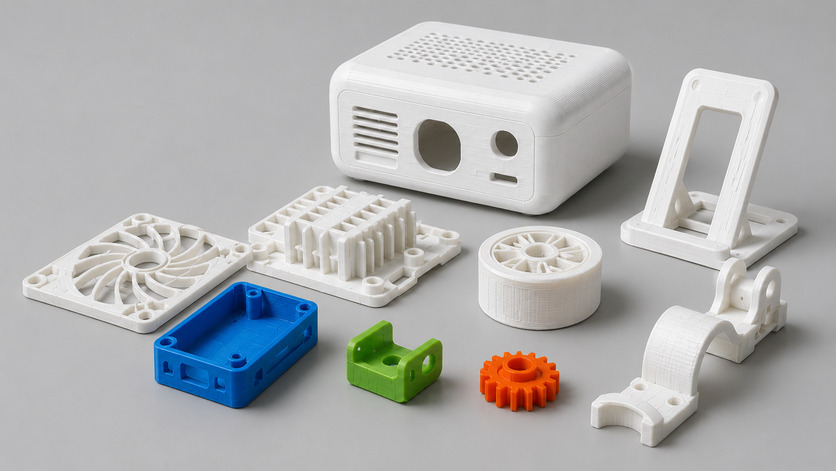
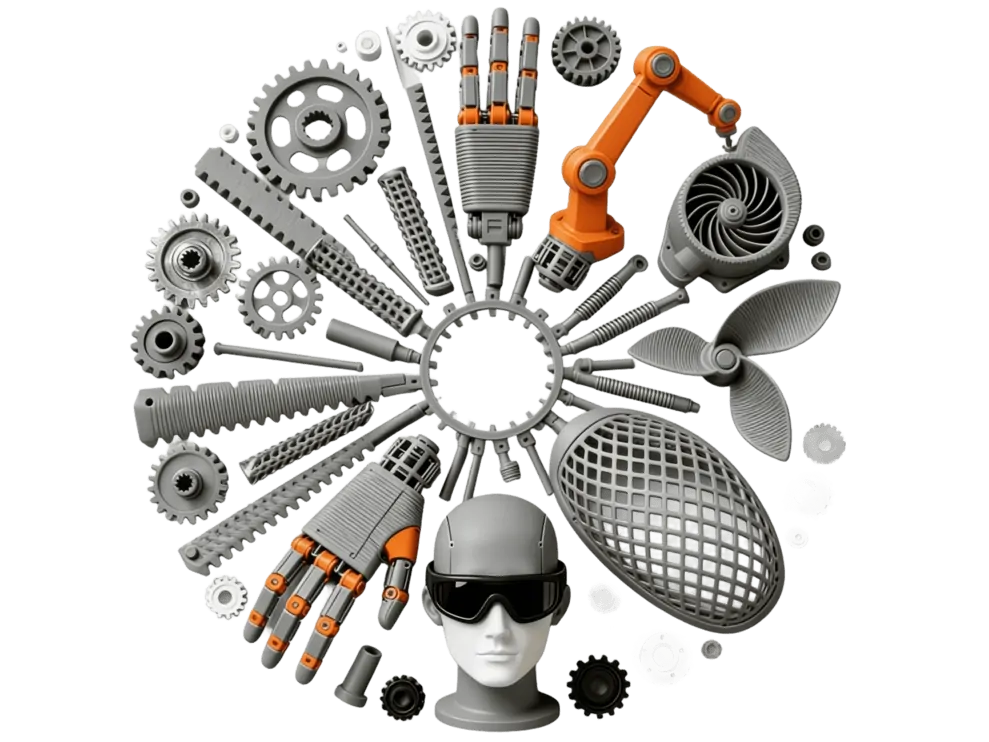
At NAITE TECH, we provide high-quality, production-grade 3D printing services tailored for engineers, product designers, and manufacturers who demand speed, precision, and reliable performance. From rapid prototyping to functional end-use parts, we deliver consistent results with advanced additive manufacturing technologies, premium materials, and strict quality control processes.

Whether you need one prototype or low-volume production, our 3D printing solutions help you accelerate product development and bring your ideas to life faster than ever.

Why Choose NAITE TECH for 3D Printing?


Comprehensive Additive Manufacturing Solutions

 
We offer a complete suite of industrial 3D printing technologies—including SLA, SLS, MJF, FDM, DLP, and Metal 3D printing—allowing us to support projects ranging from concept validation to production-grade functional parts.


Wide Range of Materials

    
From engineering plastics to high-performance resins and metal alloys, we offer an extensive selection of materials to meet the needs of various industries—automotive, consumer electronics, aerospace, robotics, medical devices, and more.


Engineering Support & DFM Optimization

  
Our engineering experts provide detailed DFM reviews, material recommendations, structural reinforcement suggestions, and manufacturability optimization to enhance your part’s performance while reducing cost and risk.


High Precision & Repeatabilit

  
With industrial-grade machines and strict quality control, we achieve tight tolerances, consistent dimensional accuracy, and excellent surface finishes suitable for functional prototypes and final products.


Fast Lead Time and Reliable Production

  
We support same-day printing for urgent projects and deliver globally with stable production schedules and flexible manufacturing capacity.


ISO-Certified Quality System

   
Our ISO 9001:2015–compliant processes ensure rigorous quality checks, full inspection reports, and traceability for every order.


3D Printing Services for Custom Prints

Below is a clear and intuitive overview of the main additive manufacturing processes we offer.Each card highlights what the process is, what materials it supports, its best applications, and what makes it stand out—helping you quickly determine the most suitable technology for your project.
FDM (Fused Deposition Modeling) 3D Printed Parts


FDM — Fused Deposition Modeling

    
Description: Melted thermoplastic filament is extruded layer by layer for rapid prototyping and large-format parts.
Materials: PLA, ABS, PETG, Nylon, TPU, Carbon Fiber
Applications: Concept models, Functional prototypes, Jigs & fixtures
Key Advantages: Lowest cost, Large build volume, Fast turnaround
Performance: 
Tolerances ±0.3–0.5 mm | Strength Medium | Cost ★☆☆☆☆
    
SLA (Stereolithography) 3D Printed Parts


SLA — Stereolithography

 
Description: UV laser cures liquid resin layer by layer, achieving ultra-smooth surfaces and high-detail prototypes.
Materials: Standard resin, Tough resin, Clear resin, Flexible resin
Applications: Presentation models, Medical & dental models, Master patterns
Key Advantages: Excellent surface finish, Tight tolerances, High detail
Performance:
 Tolerances ±0.1–0.2 mm | Strength Low–Medium | Cost ★★☆☆☆
SLS (Selective Laser Sintering) 3D Printed Parts


SLS — Selective Laser Sintering

 
Description: Laser fuses nylon powder to create strong, functional parts without support structures.
Materials: PA12, PA11, Glass-filled Nylon
Applications: Functional components, Housings, Hinges
Key Advantages: Durable & strong, No supports needed, Complex geometries possible

Performance: 
Tolerances ±0.2–0.3 mm | Strength High | Cost ★★★☆☆
 
 
MJF (Multi-Jet Fusing) 3D Printed Parts


MJF — Multi Jet Fusion

 
Description: Fuses nylon powder using precision agents for high-strength, consistent, industrial parts.
Materials: PA12, PA12-GB
Applications: End-use components, Snap-fit parts, Small batch production
Key Advantages: Smooth surfaces, High repeatability, Industrial-grade
Performance: 
Tolerances ±0.15–0.25 mm | Strength High | Cost ★★★☆☆
 
 
Metal 3D Printing (DMLSSLM) 3D Printed Parts


Metal 3D Printing (DMLS/SLM)

 
Description: High-power laser melts metal powder to create fully dense, high-strength metal parts.
Materials: Aluminum, Stainless Steel, Titanium, Inconel
Applications: Aerospace parts, Medical implants, High-performance mechanisms
Key Advantages: Metal-grade strength, Complex internal channels, Lightweight structures
Performance: 
Tolerances ±0.1–0.2 mm | Strength Very High | Cost ★★★★☆
 
 
PolyJet Multi-Material Full-Color Printed Parts


PolyJet — Multi-Material / Full-Color

    
Description: Jets photopolymer droplets and cures instantly, enabling multi-color, multi-material printing.
Materials: Rigid resin, Flexible resin, Transparent, Color materials
Applications: Design prototypes, Medical models, Consumer product mock-ups
Key Advantages: Multi-material, Full-color, Ultra-fine resolution
Performance: 
Tolerances ±0.05–0.15 mm | Strength Low–Medium | Cost ★★★★☆

3D Printing Material Options

Choosing the right material is crucial for ensuring your 3D printed part meets the functional, aesthetic, and mechanical requirements of your project. At NAITE TECH, we offer a wide range of 3D printing materials suitable for prototyping, functional testing, and end-use production.Our selection spans plastics, engineering plastics, elastomers, and metals, allowing you to balance strength, stiffness, temperature resistance, flexibility, and cost according to your design needs.
PLA 3D Printed Parts


PLA

   
Description: Biodegradable thermoplastic, ideal for concept models and visual prototypes.
Applications: Concept models, prototyping, educational models
Key Advantages: Easy to print, low cost, good surface finish
 
ABS 3D Printed Parts


ABS

  
Description: Durable thermoplastic with better toughness and heat resistance than PLA.
Applications: Functional prototypes, housings, mechanical parts
Key Advantages: Good mechanical properties, moderate heat resistance, versatile
 
PETG 3D Printed Parts


PETG

   
Description: Chemically resistant thermoplastic, perfect for functional parts.
Applications: Mechanical components, snap-fits, medium-stress prototypes
Key Advantages: Impact resistant, durable, easy post-processing
   
Nylon 3D Printed Parts


Nylon

   
Description: High-strength engineering plastic for functional components.
Applications: Gears, hinges, mechanical parts
Key Advantages: Excellent durability, wear resistance, flexible in thin walls
 
 
TPU&TPE 3D Printed Parts


TPU / TPE

   
Description: Flexible elastomer for vibration-resistant, bendable parts.
Applications: Seals, gaskets, flexible hinges
Key Advantages: High elasticity, vibration absorption, impact resistance
 
   
Metal 3D Printed Parts


Metal 3D Printing (Al, SS, Ti)

   
Description: Laser-melted metal parts with mechanical strength comparable to machined metal.
Applications: Aerospace components, medical implants, high-performance mechanical parts
Key Advantages: Fully dense, high-strength, heat resistant, complex geometries

Material Performance Comparison Table

 Material Tensile Strength Stiffness (Modulus) Heat Resistance Elongation / Flexibility


 PLA 50–70 MPa Medium 60–65°C Low


 ABS 40–50 MPa Medium 90–100°C Medium


 PETG 50–55 MPa Medium 75–80°C Medium


 Nylon (PA12) 55–75 MPa High 120–150°C High


 TPU / TPE 20–35 MPa Low 60–80°C Very High


 Aluminum (Metal) 250–350 MPa High 200–250°C Low


 Stainless Steel 500–700 MPa Very High 500–600°C Low


 Titanium 900–1100 MPa Very High 600–700°C Low


NAITE TECH Material Selection Tips:

  Engineering vs Standard Plastics: Engineering plastics like Nylon, PEEK offer higher strength and temperature resistance for functional and end-use parts, whereas standard plastics like PLA/ABS are ideal for rapid prototypes.
  Flexibility Considerations: Elastomers such as TPU/TPE allow bending, compression, or vibration absorption—perfect for seals, gaskets, and flexible hinges.
  Metal Selection: Metals provide ultimate mechanical strength and thermal resistance, suitable for aerospace, medical, and automotive applications.
  Design Optimization: Material choice influences wall thickness, overhang support, and post-processing compatibility.

3D Printing Capabilities — Technical Specifications

At NAITE TECH, our 3D printing services cover a wide range of technologies, materials, and precision levels, enabling both rapid prototyping and end-use production. Below, you can find detailed specifications for our key 3D printing capabilities, including achievable tolerances, surface finishes, and key considerations for designing parts for additive manufacturing.

Technology

Material Compatibility

Layer Resolution

Typical Tolerance

Max Build Size (X×Y×Z)

Min Feature Size

Surface Finish Options

Post-Processing

Notes

FDM

PLA, ABS, PETG, TPU

50–300 μm

±0.3–0.5 mm

300 × 300 × 400 mm

0.4 mm

As printed, Polishing, Vapor smoothing

Optional sanding, coating

Economical, suitable for large prototypes

SLA

Standard & engineering resins

25–100 μm

±0.1–0.2 mm

145 × 145 × 175 mm

0.3 mm

Ultra-smooth, Polishing

Minimal sanding

High detail, small parts, precise features

SLS

Nylon (PA12), TPU, composite powders

60–150 μm

±0.2–0.3 mm

380 × 380 × 380 mm

0.5 mm

Slightly rough, bead blasting

Optional bead blasting

Strong, durable, functional parts

MJF

Nylon, TPU

80–120 μm

±0.15–0.25 mm

380 × 380 × 380 mm

0.4 mm

Smooth & uniform

Optional bead blasting

Industrial-grade repeatability

PolyJet

Photopolymers

16–32 μm

±0.05–0.15 mm

490 × 390 × 200 mm

0.1 mm

Ultra-smooth, Full-color

Minimal sanding

Multi-material, high resolution

DMLS / SLM

Al, SS, Ti, CoCr

20–40 μm

±0.1–0.2 mm

250 × 250 × 325 mm

0.2 mm

Metallic finish, Post-machining

Polishing, machining

Fully dense metal parts, high strength

Additional Notes on Accuracy & Design:

Tolerances may vary with part size, orientation, and material. Secondary finishing can improve surface quality but may increase lead time.  Consider design for additive manufacturing (DFAM) to minimize support structures.  Build orientation affects mechanical properties and surface finish.

Design Considerations for Optimal 3D Printing

1.Wall Thickness & Support Structures
Ensure minimum recommended wall thickness; avoid ultra-thin walls and excessive overhangs. Proper supports help maintain accuracy and reduce post-processing.
2.Holes & Threads
Small holes may require post-processing; threads may need tapping or slight oversizing for functional fit.
3.Material Selection
Choose material based on functional requirements: PLA/ABS for prototyping, engineering plastics for durability, TPU for flexibility, metals for high-strength parts.
4.Post-Processing & Surface Finishing
Polishing, sanding, coating, or painting can improve aesthetics and precision. Early planning reduces production time.
5.Orientation Optimization
Proper part orientation affects strength, surface quality, and support requirements. Optimize for layer adhesion and minimal supports.

3D Printing Post Processing & Surface Finishing

Post-processing plays a critical role in improving surface quality, dimensional accuracy, and functional performance of 3D printed parts.
At NAITE TECH, surface finishing methods are selected based on printing technology, material behavior, and end-use requirements.

Support Removal & Cleaning

 
Support Removal & Cleaning For 3d Fdm & Slaprinting (1)

Compatible with: FDM / SLA

 
Removal of breakaway or soluble support structures to restore part geometry, internal features, and assembly interfaces without damaging critical surfaces.
 

UV Post-Curing

 
3D SLA Printing UV Post-Curing Compatible with: SLA


Controlled UV curing enhances mechanical strength, dimensional stability, and thermal performance by fully polymerizing printed resin parts.


Sanding & Manual Polishing

 
3D Printing Sanding & Manual Polishing

Compatible with: FDM / SLA / SLS / MJF


Progressive sanding and polishing reduce layer lines, smooth edges, and improve surface consistency for functional and aesthetic components.


Bead Blasting / Sandblasting

 
3D Printing Bead Blasting & Sandblasting

Compatible with: SLS / MJF


Fine abrasive blasting removes residual powder and produces a uniform matte surface finish without affecting dimensional accuracy.

Vapor Polishing

 
Vapor Polishing for 3D Printing

Compatible with: SLA (selected resins)


Chemical vapor smoothing improves surface clarity and transparency, commonly used for optical, cosmetic, or display-grade parts.

Dyeing & Coloring

 
Dyeing & Coloring for 3D Printing SLS & MJF

Compatible with: SLS / MJF


 Penetrative dyeing delivers consistent color throughout the part while maintaining mechanical properties and tight tolerances.

Painting & Surface Coating

 
Painting & Surface Coating for 3D Printing

Compatible with: FDM / SLA / SLS / MJF


Cosmetic painting and protective coatings enhance appearance, UV resistance, and environmental durability for end-use or presentation parts.

Tumbling (Vibratory Finishing)

 
Tumbling Vibratory Finishing for 3D Printing

Compatible with: SLS / MJF


Batch finishing process that smooths edges and surfaces, ideal for high-volume production of small functional components.

CNC Secondary Machining

 
CNC Secondary Machining for 3D Printing

Compatible with: FDM / SLS / MJF


Post-machining improves flatness, hole precision, threads, and critical mating surfaces where tight tolerances are required.

Surface finishing options are selected based on printing technology, material performance, functional requirements, and cosmetic expectations to ensure optimal results for both prototypes and production parts.

Our 3D Printing Workflow

At NAITE TECH, we provide a seamless end-to-end 3D printing process, ensuring high-quality parts from design to delivery. Our workflow is designed for efficiency, precision, and transparency, giving you confidence in every project.

Quality Assurance at NAITE TECH

At NAITE TECH, quality is at the core of every 3D printing and CNC manufacturing project. Our comprehensive quality assurance system ensures every part meets your exact specifications, functional requirements, and aesthetic standards. We follow rigorous inspection protocols from material receipt to final delivery.

Our Quality Assurance Process

3D Printing Applications

At NAITE TECH, our 3D printing capabilities support a wide range of industries, enabling rapid prototyping, functional parts, and end-use components. Explore how 3D printing transforms product development across diverse sectors.


Robotics

  
Description: Precision 3D printed components for robotic joints, sensors, and structural parts.
Applications: Actuators, grippers, custom enclosures
Advantage: Lightweight, precise, and customizable for complex geometries
Optional Image: Robotic arm component


Medical

  
Description: Custom medical devices, surgical guides, and anatomical models.
Applications: Prosthetics, implants, diagnostic models
Advantage: High accuracy, biocompatible materials, patient-specific solutions
Optional Image: Surgical guide or prosthetic model


Automotive

  
Description: Functional prototypes and end-use parts for automotive design and production.
Applications: Engine components, interior trims, fixtures
Advantage: Fast iteration, lightweight structures, durable engineering materials
Optional Image: Dashboard prototype


Consumer Electronics

  
Description: Enclosures, connectors, and aesthetic prototypes for electronics products.
Applications: Housings, button panels, display mounts
Advantage: Fine detail, smooth surfaces, quick customization
Optional Image: Electronic device casing


Aerospace

  
Description: Lightweight, high-strength components for aircraft and spacecraft applications.
Applications: Ducts, brackets, complex structural parts
Advantage: Strong, heat-resistant, weight-optimized designs
Optional Image: Aircraft bracket


Industrial Equipment

  
Description: Durable and functional parts for machinery and industrial tooling.
Applications: Fixtures, jigs, gears, housing components
Advantage: Rapid prototyping, complex geometries, high mechanical strength
Optional Image: Gear assembly


Product Design

  
Description: High-fidelity prototypes and concept models for consumer product development.
Applications: Showpieces, mockups, design verification models
Advantage: Fast iteration, visually appealing, supports multiple materials
Optional Image: Product prototype


Design Guidelines for 3D Printing

Proper design is critical for successful 3D printing. Following best practices not only improves part quality and functionality but also reduces post-processing, errors, and delays. At NAITE TECH, we provide clear design guidelines to help you optimize your parts for additive manufacturing.
 Design Rule Recommendation Notes & Tips
 Minimum Wall Thickness 0.8–1.2 mm (varies by technology & material) Ensure walls are strong enough to print without warping; thicker walls increase stability.
 Minimum Hole Size ≥ 0.5 mm for SLA/FDM, ≥ 1 mm for SLS/MJF Small holes may require post-processing; round holes print more reliably than square.
 Overhangs Max 45° without support Steeper angles require support structures; consider reorienting parts to minimize supports.
 Feature Spacing At least 1 mm between features Prevents fusing of close features and ensures dimensional accuracy.
 Surface Finish Expectations Ra 0.2–0.4 μm for SLA, Ra 0.3–0.6 μm for FDM/SLS Post-processing can improve surface finish; plan for sanding, polishing, or coating if needed.
 Tolerance Rules ±0.1–0.3 mm for SLA, ±0.2–0.5 mm for FDM/SLS Consider part shrinkage and layer resolution; use engineering fit guidelines for mating parts.
 Reinforcement Suggestions Add ribs or fillets for thin or tall features Improves structural strength and reduces warping or breakage during printing.

Additional Notes:

  Orientation Optimization: Print orientation affects mechanical strength, surface quality, and support requirements. Align critical features to reduce stress and improve finish.
  Material Considerations: Different materials have varying minimum wall thickness, overhang capability, and tolerances—always select the design rule based on chosen material.
  Hollow Sections & Internal Channels: Use sufficient wall thickness and support structures; consider drainage holes for resin prints.
  Post-Processing Awareness: Some finishes or plating may require extra material clearance or tolerances.

Case Studies — Real Projects We Delivered

At NAITE TECH, we take pride in delivering high-quality 3D printed and CNC parts to clients across various industries. Explore real-world projects that showcase our expertise, innovative solutions, and commitment to precision.

Case Study Template

Medical Surgical Guide Prototype
   

Medical Surgical Guide Prototype

 
Country: Germany
Industry: Medical Devices
Part Overview:
Custom surgical guide with intricate channels and patient-specific geometry
3D Printing Technology Used:
SLA (Stereolithography)
Material:Biocompatible resin
Surface Finish:Polished and sterilizable
Challenges & Solutions:
Extremely fine channels required high precision. 
Solution: Optimized layer height, orientation, and support placement to ensure accuracy without compromising structural integrity.
Results:
Tolerances achieved: ±0.1 mm
Delivery: 5 business days
Cost: Reduced by 15% compared to traditional manufacturing
Robotics Gripper Component Prototype
     

Robotics Gripper Component Prototype

 
Country: USA
Industry: Robotics
Part Overview:  Lightweight robotic gripper component with complex geometry
3D Printing Technology Used:
 SLS (Selective Laser Sintering)
Material:Nylon PA12
Surface Finish: Sand-blasted, functional finish
Challenges & Solutions: Thin walls and overhangs posed risk of warping. Solution: Optimized support-free design, adjusted orientation, and layer parameters.
 
 
Results:
Tolerances: ±0.2 mm
Delivery: 7 days
Cost: 20% savings versus CNC machining
 
Aerospace Structural Bracket Prototype
    

Aerospace Structural Bracket Prototype

    
Country: Japan
Industry: Aerospace
Part Overview:
Lightweight structural bracket with internal channels
3D Printing Technology Used:
DMLS / SLM Metal Printing
Material:Titanium Ti6Al4V
Surface Finish: Machined contact surfaces, polished elsewhere
Challenges & Solutions:
Internal channels and thin walls required support-free metal printing. Solution: Optimized build orientation, support-free design, and simulation for thermal stress.
Results:
Tolerances: ±0.05 mm
Delivery: 14 days
Cost: Reduced lead time by 25%
 

3D Printing vs CNC Machining vs Injection Molding — Comparison Table

Choosing the right manufacturing method is crucial for achieving the desired quality, cost, and lead time. Here’s a detailed comparison of 3D printing, CNC machining, and injection molding to help you make informed decisions.

Feature / Criteria

3D Printing

CNC Machining

Injection Molding

Best For

Rapid prototyping, complex geometries, small batches

Precision parts, functional prototypes, medium production

High-volume production, consistent parts

Materials

Plastics, resins, metals, composites

Metals, plastics, engineering plastics

Thermoplastics, elastomers

Dimensional Accuracy

±0.1–0.3 mm (depending on technology)

±0.005–0.02 mm

±0.05–0.2 mm

Surface Finish

Ra 0.2–0.6 μm (may require post-processing)

Ra 0.2–0.8 μm

Smooth, often requires little post-processing

Complexity / Design Freedom

Very high, supports internal channels and lattice structures

Moderate, limited by tooling

Low–moderate, requires mold design

Lead Time

Fast for single/low-volume parts

Medium, depends on setup and machining

Long initial lead time due to mold creation

Cost Efficiency

Cost-effective for low-volume & prototypes

Moderate for low-to-medium volumes

Highly cost-effective for high-volume production

Strength & Mechanical Properties

Varies by material; engineering plastics and metal printing provide functional strength

Excellent for metals & engineering plastics

Good for thermoplastics; limited for high-strength metals

Customization / Iteration

Very easy; digital files can be updated quickly

Moderate; reprogramming and tooling adjustments needed

Difficult; mold modification required

Post-Processing

Often required (polishing, coating, support removal)

Optional depending on tolerance & finish

Usually minimal

Comparative Supplementary Explanation:

  3D Printing: Ideal for rapid prototyping, complex designs, and low-volume parts; supports multiple materials and fast iterations.
  CNC Machining: Suitable for high-precision functional parts, complex metals, and parts that require tight tolerances.
  Injection Molding: Best for mass production with consistent quality and low per-unit cost, but upfront tooling investment is required.
Technology Material Typical Part Size Price Range (USD) Typical Lead Time Notes
SLA
Standard resins Small to medium $20 – $150 2–5 business days High-detail prototypes, presentation models
SLS Nylon / Polyamide Medium to large $50 – $300 5–8 business days Durable, functional parts; support-free design
MJF Nylon / PA12 Medium to large $60 – $350 5–10 business days Strong, repeatable parts suitable for low- to me
PolyJet Photopolymers Small to medium $80 – $400 3–7 business days Multi-material, full-color, high-resolution models
Metal (DMLS / SLM) Stainless steel, Titanium Small to medium $200 – $1500 10–20 business days Functional metal parts; includes post-processing, heat treatment, finishing
Notes:Prices and lead times may vary based on geometry, post-processing, and batch quantity.

Factors Affecting Cost & Lead Time:

  Material Selection – Different resins, engineering plastics, or metals vary in cost and processing complexity.
  Part Size & Geometry – Larger or more intricate parts increase material usage and printing time.
  Printing Technology – SLA/PolyJet excels in detail; SLS/MJF provide strength; metal printing is costlier and slower.
  Quantity / Batch Size – Higher volume reduces per-part cost but can affect total lead time.
  Post-Processing – Polishing, coating, dyeing, or CNC machining adds time and cost.

FAQs – 3D Printing Services

  • Q10: How do I know if 3D printing is the right process for my project?

    If your project requires fast iteration, complex geometries, low tooling cost, or short lead times, 3D printing is often an ideal solution.
    Our engineers can evaluate your design and recommend whether 3D printing, CNC machining, or molding is the most suitable manufacturing method.


  • Q9: How long does 3D printing take?

    Lead times depend on part size, complexity, material, and quantity.
    Prototypes can often be delivered within a few days, while batch production timelines are defined based on project scope and finishing requirements.
  • Q8: What file formats do you accept for 3D printing?

    We accept common 3D file formats including STL, STEP, IGES, and OBJ.
    Our engineering team can also review and optimize files for printability, strength, and cost efficiency before production.
  • Q7: Can 3D printing be combined with CNC machining or injection molding?

    Yes. 3D printing is often used alongside CNC machining for hybrid parts or as a bridge to injection molding.
    We support design validation, prototype iterations, and tooling development within a single integrated manufacturing workflow.
  • Q6: What post-processing options are available for 3D printed parts?

    We offer a full range of post-processing services, including support removal, UV curing, sanding, bead blasting, dyeing, painting, vapor smoothing, and CNC secondary machining.
    Post-processing methods are selected based on printing technology and functional or cosmetic requirements.
  • Q5: How do you ensure quality and consistency in 3D printing?

    Our quality control process includes material verification, print parameter validation, in-process inspection, and post-print dimensional checks.
    For batch production, standardized process settings and inspection plans are used to ensure repeatable quality across all parts.


  • Q4: Is 3D printing suitable for functional or end-use parts?

    Yes. Many 3D printed parts are used directly as functional components, especially in jigs, fixtures, housings, enclosures, and custom mechanical parts.
    For higher durability or appearance requirements, post-processing and surface finishing options are available.
  • Q3: What tolerances can 3D printed parts achieve?

    Typical tolerances range from ±0.2 mm to ±0.3 mm, depending on printing technology, material, and part geometry.
    For critical features, secondary CNC machining or post-processing can be applied to achieve tighter tolerances where required.
  • Q2: What materials are available for 3D printing?

    We support a wide range of engineering plastics and composite materials, such as ABS, PLA, Nylon (PA6 / PA12), TPU, PETG, carbon fiber–reinforced polymers, and high-performance resins.
    Material selection is guided by mechanical strength, heat resistance, chemical stability, and end-use conditions.
  • Q1: Which 3D printing technologies do you offer?

    We provide multiple industrial-grade 3D printing technologies, including FDM, SLA, SLS, and MJF.
    Each process is selected based on material requirements, dimensional accuracy, surface quality, and intended application—from rapid prototyping to low- and medium-volume production.

Start Your 3D Printing Project Today

Getting your custom 3D printed or CNC machined part has never been easier. Submit your CAD files and specifications online, and receive a fast, accurate quote tailored to your project. NAITE TECH ensures confidentiality, quality, and expert support for every submission.
If there are any CNC machining issues.
Please contact us.
Capabilities
Service
Support
COPYRIGHT © 2025 CHANGZHOU NAITE METAL TECHNOLOGY CO., LTD. ALL RIGHTS RESERVED.