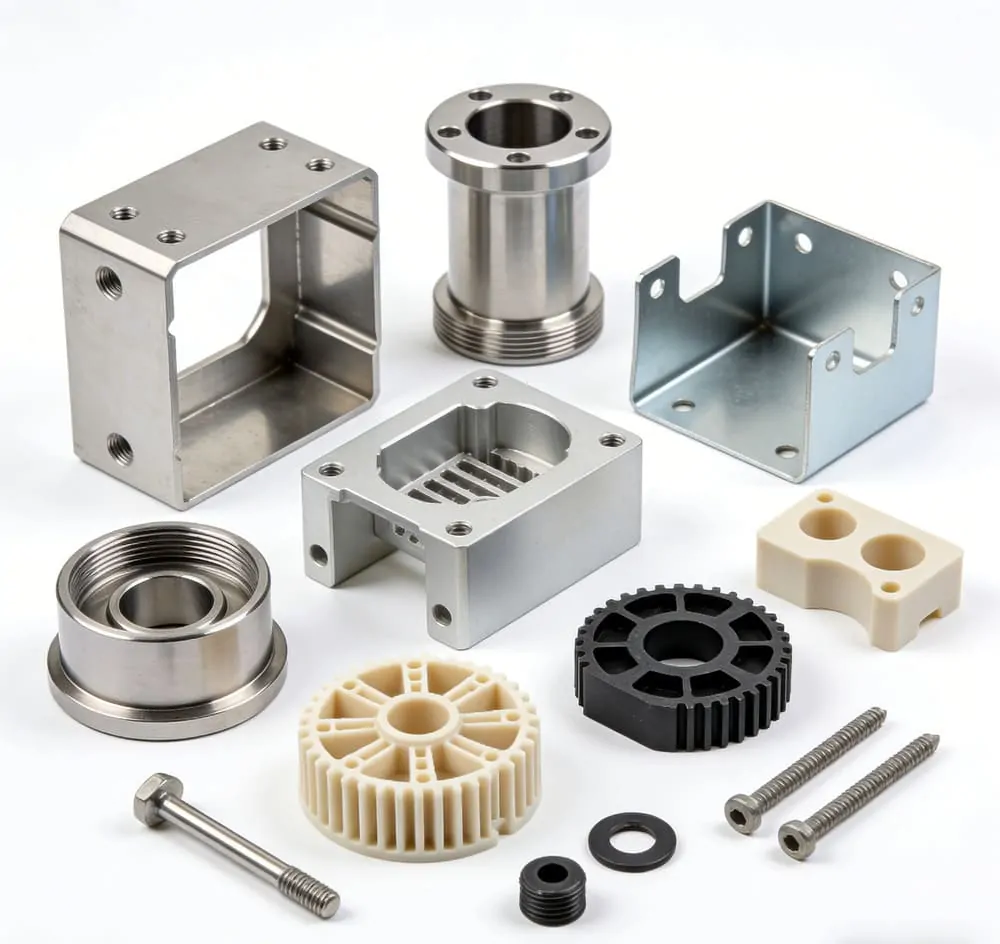
Medical Device Parts Manufacturing Services

Precision CNC Machining & 3D Printing for Medical Device Components

NAITE TECH provides precision medical device parts manufacturing services, supporting prototyping, low-volume production, and bridge manufacturing. With advanced CNC machining, 3D printing, and finishing capabilities, we deliver high-precision, biocompatible components for medical and healthcare applications.


We specialize in manufacturing complex, high-precision components for medical devices, surgical instruments, and diagnostic equipment.

Our capabilities support tight tolerances, excellent surface finishes, and material compliance required in the medical industry, ensuring reliable performance in critical applications.

All your designs are secure and confidential
Tight Tolerance​​​​​​​
Up to ±0.01 mm (depending on geometry and material)
Surface Finish
As low as Ra 0.4 μm with polishing or electropolishing​​​​​​​
Lead Time
Prototype parts in as fast as 3–7 days​​​​​​​
Material Options
Stainless steel (316L), titanium (Ti-6Al-4V), PEEK, PTFE

Medical Manufacturing Capabilities at a Glance

These capabilities reflect our ability to meet the strict precision, surface quality, and consistency requirements of medical device manufacturing. From micro-scale features to high-precision assemblies, NAITE TECH ensures reliable production performance across every stage, from prototyping to small-batch production.


Tolerance Capability: Up to ±0.01 mm for precision medical components
Surface Roughness: As low as Ra 0.4 μm (with polishing or electropolishing)
Minimum Feature Size: Down to 0.2 mm for micro machining applications
Lead Time: As fast as 3–7 days for prototyping
Production Volume: From 1 piece to low- and mid-volume production
Material Support: Stainless steel, titanium, PEEK, PTFE, and other medical-grade materials
Surface Finishing: Electropolishing, passivation, anodizing, precision polishing
Inspection Capability: CMM inspection and full dimensional reports available

Challenges in Medical Device Manufacturing

Medical device manufacturing requires not only high precision, but also strict control over materials, surface quality, and production consistency. Components are often used in sensitive environments where reliability, cleanliness, and dimensional accuracy are critical.


Key challenges include:
Ensuring biocompatibility and material safety for medical applications
Achieving ultra-smooth surface finishes to reduce contamination and bacterial adhesion
Maintaining tight tolerances for precise assembly and functional performance
Supporting complex geometries for minimally invasive and compact devices
Ensuring repeatability and consistency across production batches
Meeting strict quality expectations for inspection, traceability, and documentation


At NAITE TECH, these challenges are addressed through optimized machining strategies, controlled finishing processes, and rigorous inspection systems.

Why Medical Companies Choose NAITE TECH

Medical companies require manufacturing partners that can deliver not only precision, but also reliability and consistency. NAITE TECH combines advanced machining capabilities with strict process control to support medical applications.
 

Consistent Precision & Repeatability

 
We maintain stable machining processes and strict quality control to ensure consistent dimensional accuracy across every batch, reducing variability and improving assembly reliability.
 

Superior Surface Finish for Medical Use

 
Our finishing capabilities, including electropolishing and precision polishing, help achieve smooth, defect-free surfaces that meet medical cleanliness and performance requirements.
 

Medical-Grade Material Control

 
We support a wide range of certified materials and ensure proper handling and traceability, helping customers meet application-specific material requirements.
 

Fast Response & Engineering Support

 
Our engineering team provides fast feedback on manufacturability, helping optimize designs for cost efficiency, precision, and production feasibility.
NAITE TECH is not just a machining supplier—we are a manufacturing solution partner for medical programs.

Medical Parts We Manufacture

We manufacture a wide range of precision components for medical devices and equipment, supporting both prototyping and production needs.

Surgical instrument components such as forceps, clamps, and handles
Orthopedic device parts requiring high strength and precision
Diagnostic equipment components with tight dimensional requirements
Medical device housings and protective enclosures
Micro components for minimally invasive medical devices
Custom connectors, fittings, and precision assemblies

Our experience across different medical applications allows us to adapt to diverse design and performance requirements.

Manufacturing Processes for Medical Devices

We offer multiple manufacturing processes to meet the diverse needs of medical device production, from complex geometries to high-precision components.

How to Choose the Right Manufacturing Process for Medical Parts

Selecting the right manufacturing process is critical for achieving the required precision, surface quality, and cost efficiency in medical device production. The choice depends on part complexity, material, quantity, and application requirements.
Requirement Recommended Process
High precision & tight tolerances CNC Machining
Complex geometry / internal structures 3D Printing
Micro-scale features Micro Machining
Thin-wall enclosures Sheet Metal Fabrication
Rapid prototyping 3D Printing or CNC
Small batch production CNC Machining
Not sure which process is right for your project? Our engineering team can review your design and recommend the most suitable manufacturing solution based on your requirements.

Materials for Medical Applications

Selecting the right material is critical for ensuring performance, safety, and compliance in medical device manufacturing. We support a range of medical-grade materials that meet the requirements for strength, corrosion resistance, biocompatibility, and sterilization compatibility.
316L stainless steel medical device parts

Stainless Steel (e.g., 316L)


Corrosion Resistance | Biocompatibility | Strength


Stainless steel is one of the most widely used materials in medical manufacturing due to its excellent corrosion resistance and mechanical strength. Grade 316L is especially suitable for medical environments requiring high cleanliness and resistance to body fluids.


Excellent resistance to corrosion and oxidation
Suitable for repeated sterilization processes
Good mechanical strength for structural components
Compatible with electropolishing and passivation
 

Typical applications: surgical instruments, implants, medical fasteners

 
Titanium alloy medical device parts

Titanium (e.g., Grade 5 / Ti-6Al-4V)


High Strength-to-Weight Ratio | Biocompatibility | Corrosion Resistance


Titanium is widely used in high-performance medical applications due to its exceptional strength, low density, and superior biocompatibility. It is especially suitable for implantable devices and components requiring long-term reliability.


Outstanding biocompatibility for implant use
High resistance to corrosion in body environments
Lightweight with excellent mechanical strength
Suitable for complex precision machining
 

Typical applications: orthopedic implants, surgical implants, high-performance components

PEEK medical device parts

PEEK (Polyether Ether Ketone)


Biocompatibility | Chemical Resistance | Lightweight


PEEK is a high-performance engineering plastic commonly used in medical applications as an alternative to metal. It offers excellent chemical resistance, biocompatibility, and radiolucency.


Resistant to chemicals and sterilization processes
Lightweight alternative to metal components
Good dimensional stability and wear resistance
Suitable for precision machining
 

Typical applications: spinal implants, medical device components, insulating parts

PTFE medical device parts

PTFE (Polytetrafluoroethylene)


Low Friction | Chemical Resistance | Non-Stick


PTFE is used in medical applications requiring low friction, chemical resistance, and non-reactive surfaces.


Excellent chemical inertness
Low friction coefficient
Suitable for sealing and insulation applications
 

Typical applications: seals, gaskets, insulating components


Material Strength Weight Biocompatibility Typical Use
Stainless Steel High Medium Good Instruments
Titanium Very High Low Excellent Implants
PEEK Medium Very Low Excellent Lightweight components

Additional Materials We Support


We also support a wide range of engineering and medical-compatible materials for different applications:


Stainless Steel 304 / 17-4 PH
Aluminum (6061, 7075)
Medical-grade plastics (POM, Nylon, PC)
PPSU / PSU (for sterilizable components)
Copper alloys (for specific electrical applications)
 

Different materials are selected based on strength, biocompatibility, sterilization requirements, and application environment.

Not sure which material is best for your application? Our engineering team can recommend the most suitable material based on your performance requirements, environment, and compliance needs.

Surface Finishing for Medical Components

Surface finishing plays a critical role in medical applications, affecting cleanliness, corrosion resistance, and overall performance.


Naite-Tech-Electrophoretic-Coating-Surface-Treatment-Services


Electropolishing


Ultra-Smooth Surface | Improved Cleanliness | Corrosion Resistance


Electropolishing is a critical finishing process for stainless steel medical components requiring high cleanliness and biocompatibility. It removes microscopic surface irregularities, creating a smooth, passive surface that reduces contamination risk.


Achieves ultra-smooth surfaces (Ra as low as 0.4 μm)
Reduces bacterial adhesion and contamination risk
Enhances corrosion resistance in sterile environments
Improves cleanability for repeated sterilization
 

Typical applications: surgical instruments, implants, precision stainless steel components


Passivation


Passivation & Plating


Corrosion Resistance | Surface Purity | Oxidation Protection


Passivation is widely used for stainless steel medical components to remove free iron and enhance the natural oxide layer, improving corrosion resistance and long-term material stability.


Removes surface contaminants and embedded iron
Enhances resistance to corrosion and oxidation
Improves surface cleanliness for medical environments
Maintains dimensional integrity without altering part geometry
 

Typical applications: surgical tools, medical fasteners, stainless steel components


naite-tech-anodizing-surface-treatment-services


Anodizing


Corrosion Resistance | Surface Hardness | Sterilization Compatibility


Anodizing improves the corrosion resistance and surface durability of aluminum components used in medical devices. It is suitable for parts exposed to cleaning, disinfection, and controlled environments.


Enhances wear resistance and surface hardness
Provides stable performance under sterilization conditions
Maintains dimensional accuracy for precision parts
 

Typical applications: medical housings, enclosures, lightweight structural components


Precision Polishing & Surface Finishing (1) (1)


Precision Polishing & Surface Finishing


Smooth Surface | Aesthetic Quality | Reduced Friction

Polishing is used to improve surface smoothness and appearance for medical components requiring reduced friction and improved handling.


Improves surface finish for functional and visual requirements
Reduces friction in moving or contact components
Enhances overall product quality and usability
 

Typical applications: surgical instruments, contact surfaces, visible components


naite-tech-sandblasting-surface-treatment-services


Sandblasting


Matte Finish | Surface Uniformity | Pre-Treatment

Sandblasting is used to create a uniform matte surface and prepare parts for further finishing processes such as anodizing or coating.


Creates consistent surface texture
Improves coating adhesion for secondary processes
Removes minor surface imperfections
 

Typical applications: pre-treatment for anodizing, non-critical external surfaces


Laser Marking Engraving


Laser Marking


Permanent Marking | Traceability | High Precision

Laser marking is widely used in medical manufacturing to create permanent, high-precision markings on components without affecting material properties or dimensional accuracy. It is essential for part identification and traceability.


Provides permanent and wear-resistant markings
Does not affect surface integrity or tolerances
Supports high-resolution logos, serial numbers, and codes
Suitable for medical traceability requirements
 

Typical applications: surgical instruments, implants, identification marking, serial numbers

Quality Assurance & Compliance for Medical Manufacturing

Ensuring consistent quality and compliance is critical in medical device manufacturing. We implement strict quality control processes and inspection standards to meet the high requirements of precision, reliability, and traceability.

Precision Dimensional Inspection

Precision Inspection & Quality Control


Dimensional Accuracy | Process Verification | Quality Assurance


We apply comprehensive inspection methods throughout the production process to ensure every component meets design specifications and quality requirements.


CMM (Coordinate Measuring Machine) inspection for high-precision dimensions
Full dimensional inspection reports available upon request
In-process and final inspection for consistent quality control
Tight tolerance verification up to ±0.01 mm


Material Certification & Traceability

Material Traceability&Documentation


Full Traceability | Certified Materials | Documentation Support


We provide full material traceability to ensure transparency and compliance for medical applications.


Material certificates available (e.g., mill test reports)
Batch tracking for production traceability
Documentation support for quality verification
Controlled material sourcing


First Article Inspection (FAI)

Cleanliness & Surface Integrity


Contamination Control | Surface Quality | Sterilization Readiness


Medical components require high standards of cleanliness and surface quality, especially for critical and contact applications.


Controlled finishing processes to reduce contamination risk
Surface treatments supporting sterilization requirements
Clean handling and packaging procedures
Focus on minimizing surface defects and impurities
 
 
Process Control & Stability

Consistency & Process Control


Process Stability | Repeatability | Production Reliability


Stable and repeatable production is essential for medical device manufacturing.


Standardized machining and finishing processes
Process control to ensure repeatability across batches
Suitable for prototyping and small-batch production
Continuous monitoring of production quality


Surface Treatment Verification

Risk Management & Design Support


Design Optimization | Risk Reduction | Manufacturability


We support early-stage design evaluation to identify potential manufacturing risks and improve part feasibility for medical applications.


Design for manufacturability (DFM) feedback
Identification of tolerance and geometry risks
Material and process recommendations
Improved production efficiency and reduced defects


Final Inspection & Documentation

Packaging & Delivery Control


Protective Packaging | Clean Handling | Reliable Delivery


Proper packaging and handling are essential to maintain the quality and cleanliness of medical components during transportation.


Protective packaging to prevent damage and contamination
Clean handling processes for sensitive components
Organized labeling for easy identification
Reliable global shipping support
 

Medical Manufacturing Case Studies

Explore how we support medical device manufacturers with precision components, reliable quality, and fast turnaround.
Choosing NAITE TECH means choosing a partner committed to excellence. We have a certified quality system, rigorous inspection, complete material traceability, and detailed documentation to ensure that every part meets your exact requirements.

Medical Manufacturing FAQs

  • 12. CNC machining vs 3D printing for medical parts – which is better?

    Both CNC machining and 3D printing are widely used in medical manufacturing, and the best choice depends on your project requirements.

    • CNC Machining:
      • High precision (up to ±0.01 mm)
      • Excellent surface finish
      • Suitable for functional and end-use parts
    • 3D Printing:
      • Faster for prototyping
      • Ideal for complex geometries and internal structures
      • Lower cost for early-stage design validation

    In general:

    • Choose CNC machining for precision, strength, and final parts
    • Choose 3D printing for speed, complexity, and prototyping

    Not sure which process is right? Upload your design and we’ll recommend the best manufacturing solution.

  • 11. What is the best material for medical device components?

    The best material depends on your specific application requirements, including strength, biocompatibility, weight, and sterilization conditions.

    • Stainless Steel (316L): Ideal for surgical instruments and components requiring high strength and corrosion resistance
    • Titanium (Grade 5): Best for implants due to excellent biocompatibility and strength-to-weight ratio
    • PEEK: Suitable for lightweight, non-metallic medical components with good chemical resistance
    • PTFE: Used for low-friction and chemically resistant applications

    Choosing the right material requires balancing performance, environment, and manufacturing feasibility.

  • 10. How do I get started with my project?

    Simply upload your CAD file or send us your project requirements. Our team will review your design and provide a quotation along with manufacturing recommendations.


  • 9. What industries within medical do you support?

    We support a wide range of medical-related applications, including surgical instruments, medical device components, implants, and precision equipment parts.


  • 8. Can you help optimize my design for manufacturing?

    Yes, our engineering team provides design for manufacturability (DFM) feedback to help optimize your design, reduce risks, and improve production efficiency.


  • 7. How do you ensure part cleanliness for medical applications?

    We apply controlled finishing processes and clean handling procedures to minimize contamination risks. Surface treatments such as electropolishing and passivation also help improve cleanliness and corrosion resistance.


  • 6. Do you provide inspection reports and quality documentation?

    Yes, we can provide full dimensional inspection reports, CMM measurement data, and material certificates upon request to support quality verification and compliance needs.


  • 5. How fast can you deliver medical components?

    Lead time can be as fast as 3–7 days for prototyping, depending on part complexity and process requirements. We prioritize fast turnaround while maintaining high precision and quality.


  • 4. Can you handle small batch or prototype production?

    Yes, we specialize in both rapid prototyping and low- to mid-volume production. We support flexible quantities starting from 1 piece, making it ideal for product development and testing stages.


  • 3. Do you support medical-grade materials?

    Yes, we support a variety of medical-grade materials such as stainless steel (316L), titanium (Grade 5), PEEK, PTFE, and other engineering plastics suitable for medical environments.


  • 2. What surface finishes are available for medical parts?

    We offer a range of surface finishing options including electropolishing, passivation, anodizing, polishing, sandblasting, and laser marking. These processes help improve corrosion resistance, surface smoothness, and cleanliness for medical applications.


  • 1. What tolerances can you achieve for medical components?

    We can achieve tight tolerances up to ±0.01 mm depending on part geometry, material, and manufacturing process. For high-precision medical components, we ensure strict dimensional control through advanced CNC machining and inspection systems.


Get a Quote for Your Medical Project

We make it easy to get started. Simply upload your design files, and our engineering team will review your project to ensure optimal manufacturability, material selection, and cost efficiency.
 
Get expert feedback, manufacturing recommendations, and a detailed quotation within 24 hours.
If there are any CNC machining issues.
Please contact us.
Capabilities
Service
Support
COPYRIGHT © 2025 CHANGZHOU NAITE METAL TECHNOLOGY CO., LTD. ALL RIGHTS RESERVED.