You are here: Home » Capabilities » Casting Services

Custom Die Casting Services

— High Quality Die Cast Metal Parts.

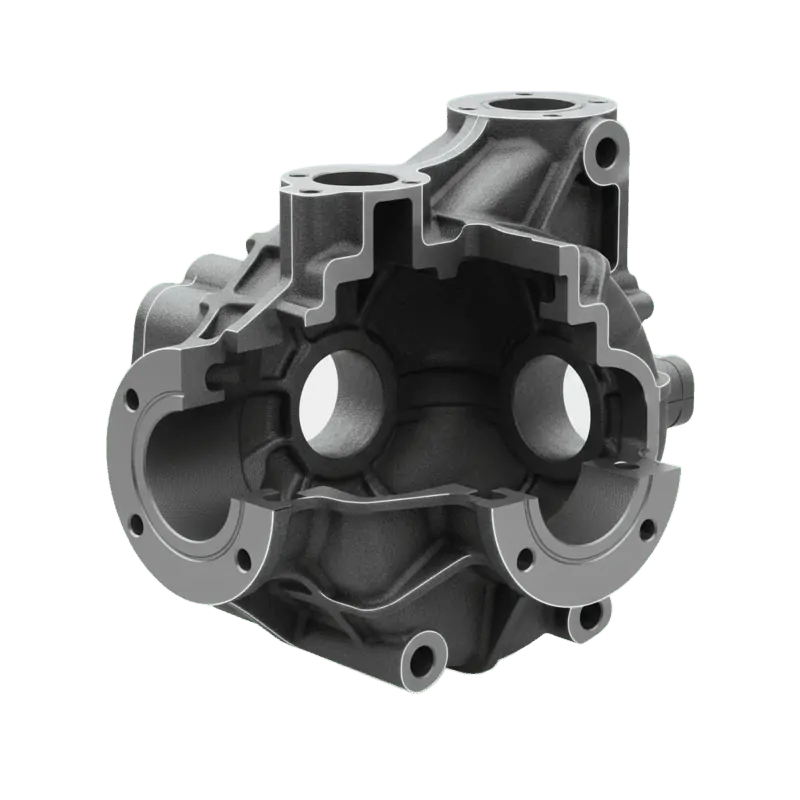
NAITE TECH delivers end-to-end metal casting solutions for prototypes, low-volume runs, and full-scale production. With integrated capabilities covering tooling, casting, heat treatment, CNC machining, surface finishing, and assembly, we support demanding industries including automotive, aerospace, robotics, and precision engineering.

From thin-walled, complex geometries to high-strength industrial components, our casting processes ensure consistent quality, strong mechanical performance, and tight tolerances—scalable from single prototypes to 10,000+ production parts with competitive lead times.

What Is Casting?

Metal casting is a manufacturing process that involves melting metal and pouring it into a mold to form near-net-shape components. It is widely used for structural, mechanical, and industrial parts that require durability, strength, and cost-effective production.


Compared with CNC machining or additive manufacturing, casting offers:
 Excellent cost efficiency for medium–high volume production
 Superior material strength suitable for load-bearing components
 Complex geometry capability (including undercuts & internal channels)
 Wide compatibility with metals such as aluminum, zinc, steel, iron, copper, and alloys.


At NAITE TECH, our casting solutions combine precision molding, strict quality control, and CNC post-machining to ensure final parts meet engineering and end-use requirements.

Our Casting Processes

This section includes complete explanations of major casting methods, optimized for procurement teams and design engineers.
Die Casting (High-Pressure Casting) Serve


Die Casting (High-Pressure Casting)

   
Best for high-volume production of complex aluminum, zinc, and magnesium components with excellent surface finish.
 
Description
Die casting uses high pressure to inject molten metal into steel molds, enabling high precision and rapid production. Ideal for aluminum, zinc, and magnesium components requiring structural integrity and fine features.

 
Applications
Electronics housings, automotive brackets, heat sinks, machinery enclosures.

 
Advantages
 High dimensional accuracy
  Smooth surface finish
Excellent repeatability
Suitable for thin-walled parts
Low per-unit cost at mass production   
Gravity & Permanent Mold Casting Serve


Gravity / Permanent Mold Casting

 
Best for medium-volume production of aluminum and zinc components with high mechanical strength.
 
Description
Molten metal is poured into reusable metal molds under gravity, producing dense, strong components with excellent dimensional repeatability.

 
Applications
Automotive structural parts, aluminum housings, medium-volume industrial components.

 
Advantages
High mechanical strength
Reusable molds reduce costs over multiple runs
Excellent dimensional repeatability
Suitable for medium-volume production
Reduced post-processing for many applications


Investment Casting (Lost Wax Casting) Serve


Investment Casting (Lost Wax Casting)

 
Best for producing highly detailed and intricate stainless steel, superalloy, and copper components.
 
Description
Investment casting, or lost-wax casting, uses wax patterns coated with ceramic to create molds, producing complex geometries with tight tolerances and excellent surface finishes. Suitable for small to medium batch production.

 
Applications
Aerospace components, medical instruments, precision machinery parts, valves and fittings.

 
Advantages
Exceptional surface finish
High dimensional accuracy
Supports complex geometries
Suitable for stainless steel and superalloys
Minimal post-processing required    
 
Low-Pressure Casting Serve


Low-Pressure Casting

 
Best for hollow or complex aluminum components needing reduced porosity and high structural integrity.
 
Description
Low-pressure casting injects molten metal into molds under controlled low pressure, reducing porosity and ensuring high-quality dense parts, suitable for functional prototypes and production parts.

 
Applications
Automotive lightweight components, aerospace structural parts, machinery housings, functional prototypes.

 
Advantages
L ow porosity, high density
Maintains structural integrity for thin or hollow parts
Suitable for complex shapes
Consistent quality across batches
Supports multiple alloys
Sand Casting Serve


Sand Casting

   
Best for large or heavy parts requiring a cost-effective, flexible solution.
 
Description
Sand casting involves pouring molten metal into sand molds. It is versatile, able to handle a wide variety of metals and alloys, and ideal for low- to medium-volume production of large components.


Applications
Industrial machinery housings, pump bodies, large structural parts, engine blocks.
 
Advantages
Cost-effective tooling
Flexible for multiple metals
Large part size capability
Suitable for low- to medium-volume production
Simple mold modification for design changes
 
 
Prototype Casting Serve


Prototype Casting

 
Best for early-stage functional testing and low-volume prototype parts.
 
Description
Prototype casting provides fast, cost-effective production of parts to validate design and functionality before mass production. Supports multiple alloys and surface finish options.

 
Applications
Proof-of-concept parts, design verification, functional testing, early-stage development components.

 
Advantages
Quick turnaround
Low cost for small quantities
Supports multiple materials
Enables design validation before full production
Can integrate post-processing as needed


Casting vs CNC Machining vs Forging — Process Comparison Guide

Choosing the right manufacturing process has a direct impact on cost, lead time, mechanical performance, and scalability.
The comparison below helps engineers and procurement teams quickly determine whether casting, CNC machining, or forging is the most suitable option for their application.

Material Performance Comparison Table

Comparison Factor Casting CNC Machining Forging
Best For Complex shapes, internal cavities, medium to high volume High precision, low to medium volume, tight tolerances High-strength, load-bearing components
Design Complexity ★★★★★ (excellent for complex geometries) ★★★☆☆ (limited by tool access) ★★☆☆☆ (geometry constrained by forging dies)
Dimensional Accuracy Medium–High (improved with machining) Very High Medium
Surface Finish (As-made) Medium–Good Excellent Rough (requires machining)
Material Utilization High (near-net shape Low–Medium (material removed) Very High
Mechanical Strength Medium–Hig Depends on material Very High (grain flow alignment)
Internal Structure Possible porosity (process dependent) Solid billet material Dense, refined grain structure
Tooling Cost Medium–High (molds required) Low (no mold) High (forging dies)
Per-Unit Cost Low at medium–high volumes High at volume Low at high volumes
Lead Time Medium Short Medium–Long
Scalability Excellent for mass production Limited scalability Excellent for high-volume structural parts
Typical Materials Aluminum, zinc, steel, iron, copper Almost all machinable metals & plastics Steel, aluminum, titanium
Post-Processing Machining, polishing, coating Minimal achining mandatory

NAITE TECH Recommendation

Many real-world projects combine processes for optimal results:
Casting + CNC Machining → Cost-effective precision components
Forging + CNC Machining → High-strength, tight-tolerance parts Our engineering team provides process selection consultation to help you balance performance, cost, and lead time.
Upload your CAD files to receive a free manufacturing recommendation.

Casting Materials We Support

Selecting the right casting material is critical to achieving the required mechanical performance, durability, corrosion resistance, and cost efficiency. At NAITE TECH, we support a wide range of metal casting materials, covering aluminum, zinc, steel, iron, copper-based alloys, and special alloys for demanding applications.
Our engineering team assists in material selection, performance optimization, and cost trade-off analysis to ensure each casting solution meets functional and commercial requirements.
Aluminum Alloys Cast Parts
 

Aluminum Alloys


Common Grades: A356, A360, A380, ADC12, AlSi10Mg
Best for: Lightweight, high-strength mechanical parts
Properties: Corrosion-resistant, good thermal conductivity, excellent machinability, favorable strength-to-weight ratio
Uses: Automotive components, robotics structures, electronics housings, aerospace structural parts

 Zinc Alloy Cast Parts
 

Zinc Alloys


Common Grades: Zamak 3, Zamak 5, Zamak 8, Zamak 12
Best for: High-precision, complex small components
Properties: Excellent fluidity, thin-wall capability, high dimensional stability, smooth surface finish
Uses: Connectors, brackets, consumer electronics, decorative and cosmetic components


Magnesium Alloys Casting Parts
 

Magnesium Alloys

  
Common Grades: AZ91D, AM60B
Best for: Ultra-lightweight components with high strength-to-weight ratio
Properties: Approximately 33% lighter than aluminum, excellent castability, good shock absorption
Uses: Automotive lightweight parts, aerospace structures, handheld devices, portable equipment housings
Stainless Steel Casting Parts
 

Stainless Steel


Common Grades: 304, 316, 316L, 410, 17-4PH
Best for: High-strength, corrosion-resistant precision parts
Properties: Excellent durability, wear resistance, corrosion resistance, suitable for harsh environments
Uses: Medical devices, industrial machinery, tooling components, aerospace and defense applications

Carbon & Alloy Steel Casting Parts
 

Carbon & Alloy Steel


Common Grades: 1020, 1045, 4130, 4140
Best for:Load-bearing and high-stress structural components
Properties: High toughness, excellent mechanical performance, good fatigue resistance
Uses: Gears, shafts, valves, automotive and heavy machinery components


Copper & Bronze Alloys Casting Parts
 

Copper & Bronze Alloys


Common Grades: C11000, C51000, C95400
Best for: Electrical components and wear-resistant parts
Properties: Excellent electrical and thermal conductivity, good corrosion and wear resistance
Uses: Electrical fittings, marine hardware, industrial bearings and bushings


Engineering Support Note

If you are unsure which casting material best fits your application, our engineers provide material selection consulting and DFM analysis to balance performance, manufacturability, and cost efficiency.

Casting Material Performance Comparison Table

This comparison helps engineers and buyers quickly evaluate material suitability based on functional performance and manufacturing behavior.

Material Category

Typical Alloys

Strength Level

Weight

Corrosion Resistance

Cost Level

Aluminum Alloys

A356, A380, ADC12

Medium–High

Light

Good

$$

Zinc Alloys

Zamak 3, 5

Medium

Medium

Moderate

$$

Magnesium Alloys

AZ91D, AM60B

Medium

Ultra-Light

Moderate

$$$

Stainless Steel

304, 316, 17-4PH

Very High

Heavy

Excellent

$$$$

Carbon & Alloy Steel

1020, 1045, 4140

High

Heavy

Low–Moderate

$$$

Copper & Bronze

C11000, C95400

Medium

Heavy

Good

$$$$

Gray Iron

ASTM A48

Medium

Heavy

Low

$

Ductile Iron

ASTM A536

High

Heavy

Moderate

$$

Engineering Selection Guidelines
Lowest cost + mass production: Zinc or aluminum die casting
Lightweight structural parts: Aluminum or magnesium alloys
High corrosion & strength requirements: Stainless steel investment casting
Heavy-duty mechanical loads: Ductile iron or alloy steel
Electrical or wear resistance needs: Copper or bronze alloys

Why NAITE TECH for Casting Services

NAITE TECH offers a fully integrated casting supply chain combining:

Multi-process casting capabilities (sand, die, investment, gravity, vacuum)
In-house CNC machining for precision finishing
Strong engineering support (DFM, mold flow review, manufacturability checks)
ISO-certified quality management
Competitive pricing for prototypes to mass production
Global delivery with stable lead times
Professional project management & transparent communication


Our workflow eliminates outsourcing risks, shortens delivery time, and ensures consistent quality for every order—from simple brackets to high-performance aerospace-grade components.

NAITE TECH Casting Capabilities - Technical Specifications

Whether you require lightweight die-cast aluminum parts, complex investment-cast stainless components, or large sand-cast housings, NAITE TECH provides full-spectrum casting capabilities supported by advanced tooling, simulation, CNC machining, and finishing resources.
Casting Size & Weight Range
Die Casting: Up to 600 × 600 mm; part weight 5 g – 8 kg
Investment Casting: 10 mm micro parts up to 250 mm complex structures
Sand Casting: Up to 1 ton for industrial equipment and heavy machinery
Gravity Casting: Up to 20 kg aluminum components
Vacuum Die Casting: Medium-sized structural parts up to 10 kg
Casting Surface Finish Range
As-cast finish: 
Ra 3.2–12.5 μm
Post-machined finish:  Ra 0.8–1.6 μm
Polished finish: Ra 0.2–0.4 μm  
Shot-blasted finish:Ra matte surface texture, uniform appearance

CNC Machining Tolerance Reference Table (Unit: mm)

Casting Process Typical Tolerance Notes
Die Casting ±0.05 mm – ±0.10 mm Best precision; excellent repeatability
Investment Casting ±0.08 mm – ±0.15 mm Suitable for intricate geometries
Gravity Casting ±0.10 mm – ±0.20 mm Good stability; better than sand casting
Sand Casting ±0.20 mm – ±0.50mm Depends on mold quality & part size
After post-machining, final tolerances can reach ±0.005–0.01 mm depending on geometry.

Post-Machining & Finishing Services

Casting rarely achieves final tolerances or surface quality without secondary operations.NAITE TECH provides complete post-processing for functional and cosmetic requirements.

CNC Machining (Post-Cast Precision Finishing)

 
3-axis, 4-axis, 5-axis CNC
Hole drilling, tapping, threading
Surface milling & contour finishing
Achievable tolerance: ±0.005–0.01 mm
Ideal for: mounting interfaces, high-precision holes, sealing surfaces.

Surface Finishing Options

 
Shot blasting
Sand blasting
Tumbling
Powder coating
Electrophoresis
Anodizing
Painting
Polishing
Electroplating (nickel, chrome, zinc, tin)

Heat Treatment (Strength Optimization)

    
T4/T5/T6 treatments for aluminum
Solution treatment & aging
Stress-relief annealing
Hardening processes for steel alloys
Benefits: increased strength, hardness, stability.

Assembly & Sub-Assembly Services

 
Optional integration for OEM buyers:
Multi-component assembly
Mechanical integration
Inserts installation
Threaded fasteners
Welding or soldering
Functional testing

Quality Assurance at NAITE TECH (ISO 9001:2015 Compliant)

We maintain a rigorous, multi-layered quality system built for engineering-grade casting production.


Incoming Material Verification


  Alloy certification review
  Chemical composition validation
Mechanical property checksEnsures every batch meets engineering specifications.


Mold & Tooling Inspection

          
Dimensional inspection of steel molds
Mold flow simulation verification
Gate, runner & venting optimizationReduces casting defects from the source.


In-Process Casting Monitoring

    
Temperature tracking (molten metal, molds)
Pressure and cycle stability (for die casting)
Shell integrity tests (for investment casting)
Cooling-time consistency monitoringEnsures uniform density and structural integrity.


X-Ray & NDT Defect Inspection

    
For critical components:
X-ray porosity inspection
Dye penetrant testing
Magnetic particle inspection
Ultrasonic testing Detects voids, cracks, porosity, inclusions.


CNC Machining Quality Control

    
First Article Inspection (FAI)
In-process dimensional checks
2D drawing tolerance validation
Tool wear tracking


Final Quality Inspection

          
CMM measurement
Surface roughness test
Hardness test
Dimensional accuracy reports


Full Documentation & Reports

    
For engineering and OEM procurement:
Material certificates
CMM reports
Surface finish documentation
Heat treatment records
Batch traceability reports

Our Casting Workflow

Casting rarely achieves final tolerances or surface quality without secondary operations.NAITE TECH provides complete post-processing for functional and cosmetic requirements.

Design Guidelines for Casting

Proper casting-oriented design is essential to achieving optimal part quality, dimensional accuracy, and cost efficiency.Following these proven design guidelines helps minimize defects, reduce tooling revisions, and shorten production lead times.

Key Design Parameters for Casting

Design Factor Recommended Guidelines Engineering Notes
Minimum Wall Thickness Aluminum: ≥ 2.5 mm
Zinc: ≥ 1.0 mm
Steel: ≥ 3.0 mm
Uniform wall thickness improves metal flow and reduces shrinkage defects
Wall Thickness Uniformity Variation ≤ ±20% Avoid sudden thickness changes to prevent porosity and hot spots
Draft Angle Die Casting: ≥ 1°
Sand Casting: ≥ 2–3°
Investment Casting: ≥ 0.5
Ensures easy mold release and reduces tool wear
Fillet & Corner Radius Internal radius ≥ wall thickness × 0.5 Sharp corners concentrate stress and restrict metal flow
Hole Diameter ≥ 2.0 mm (cast-in)
Smaller holes recommended for secondary machining
Improves dimensional consistency and reduces core breakage
Boss & Rib Design Rib thickness ≤ 60% of wall thickness Enhances stiffness without increasing weight or causing sink marks
Tolerance Expectation Die Casting: ±0.05–0.1 mm
Investment Casting: ±0.1–0.2 mm
Final tolerance depends on part size and post-machining
Part Size Limitation Die Casting: Ra 1.6–3.2 μm
Investment Casting: Ra 3.2–6.3 μm
Secondary finishing improves cosmetic and functional surfaces
Surface Finish (As-Cast) Best for medium-sized components Extremely large parts may favor sand casting
Post-Processing Allowance Add 0.3–0.5 mm machining allowance Ensures final dimensional accuracy

Design Best Practices for Reliable Casting

Maintain Consistent Wall Thickness
Uniform sections allow even cooling and reduce the risk of warping, shrinkage cavities, and internal porosity.
Use Generous Fillets and Rounded Transitions
Smooth geometry improves molten metal flow, enhances mechanical strength, and prolongs mold life.
Optimize Rib and Boss Structures
Well-designed ribs increase rigidity while controlling material usage and cooling behavior.
Avoid Sharp Corners and Deep Pockets
These features often trap gas or cause incomplete filling during the casting process.
Design for Machining Where Needed
Critical tolerance areas, sealing surfaces, and threaded features are best finished by CNC machining.

Casting Process–Specific Considerations  

Die Casting: Best for thin-walled, high-volume parts requiring excellent surface finish
Investment Casting: Ideal for complex geometries with tight tolerances
Sand Casting: Suitable for larger components and lower tooling costs
Gravity Casting: Balanced option for medium volumes and improved mechanical properties

Engineering Support from NAITE TECH

   
Our engineering team performs Design for Manufacturability (DFM) analysis on every casting project, helping you:
Identify potential defects before tooling
Optimize geometry for cost and performance
Reduce lead time and tooling iterations

Casting Services FAQs

Get a Quote for Your Casting Project

From Prototype Tooling to Mass Production — Fast, Accurate, Reliable
Upload your CAD files and receive a professional engineering review and competitive quotation for your casting project.
NAITE TECH supports die casting, investment casting, sand casting, and hybrid manufacturing solutions tailored to your application.
Contact us

*Please upload only step/stl/pdf/dwg files. Size limit is 25MB.

If there are any CNC machining issues.
Please contact us.
Capabilities
Service
Support
COPYRIGHT © 2025 CHANGZHOU NAITE METAL TECHNOLOGY CO., LTD. ALL RIGHTS RESERVED.