Metal 3D Printing Service for Complex Metal Prototypes & Production Parts

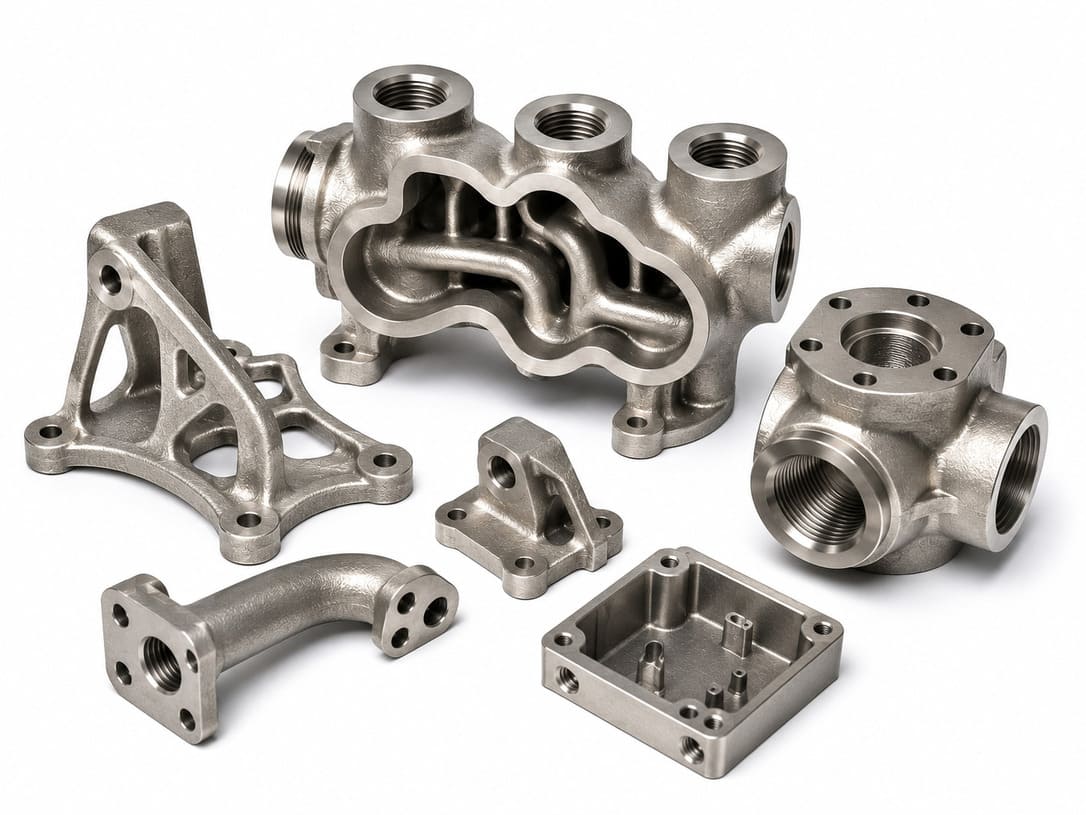
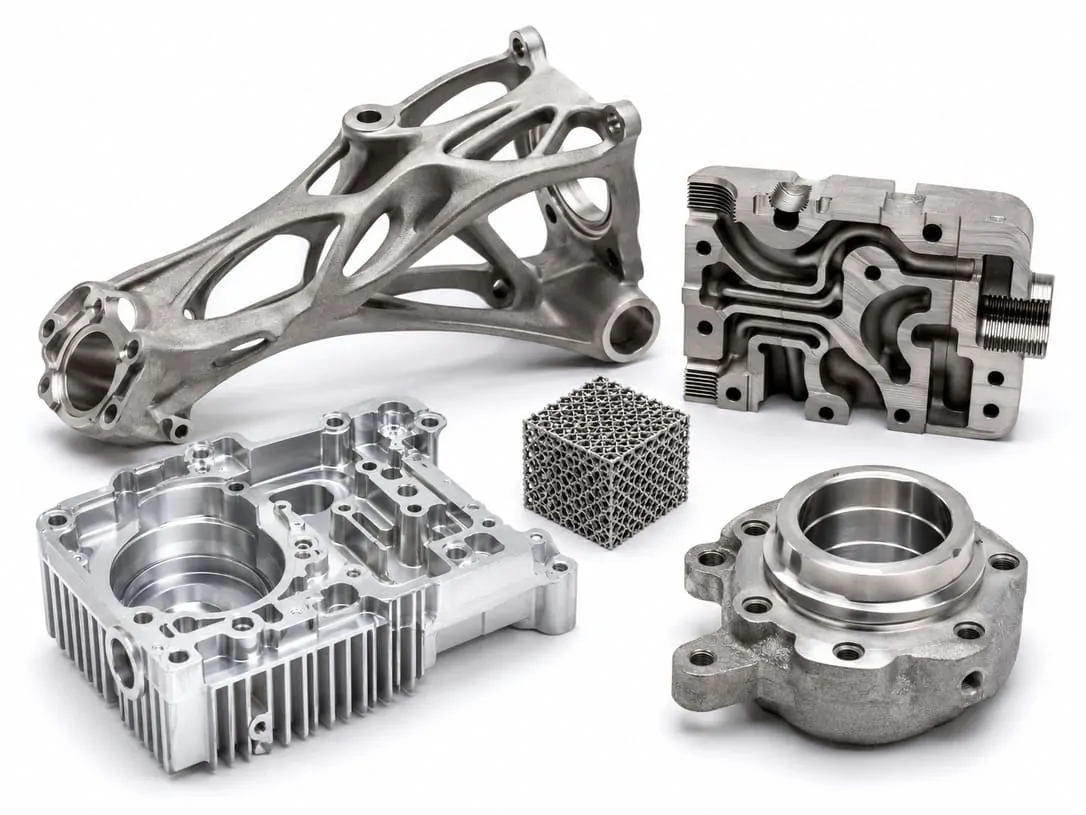
NAITE TECH provides metal 3D printing services for complex, strong, lightweight, and functional metal prototype and production parts.

From titanium, stainless steel, aluminum, and tool steel components to lightweight structures, internal channels, functional prototypes, aerospace parts, medical components, and low-volume metal production, we manufacture custom 3D printed metal parts for demanding engineering applications.
 
DMLS & SLM Metal 3D Printing Available
Titanium, Stainless Steel, Aluminum & Tool Steel Materials
Complex Metal Geometries & Internal Channels
Lightweight Structures & Functional Metal Parts
Prototype & Low-Volume Production Support
Heat Treatment, CNC Machining & Surface Finishing Available
Dimensional Inspection & Material Reports Available
Engineering Review Before Production
MOQ From 1 Piece
5–12 Day Typical Lead Time
12-Hour Fast Quotation Response
NDA Support Available
 All uploaded CAD files are securely protected and handled under NDA upon request.
DMLS & SLM Printing | Titanium, Stainless Steel & Aluminum | Complex Metal Parts | CNC Secondary Machining | Inspection Reports | 12-Hour Quote

Metal 3D Printing Solutions for Complex Metal Parts

NAITE TECH supports custom metal 3D printed parts for complex geometries, lightweight structures, internal channels, functional prototypes, and low-volume metal production. Metal 3D printing is ideal when traditional machining, casting, or fabrication cannot easily produce the required shape, weight reduction, or internal structure.
Metal 3D Printing Solutions
    Need Complex Metal Parts for Your Project?
    Upload your CAD files and share your material, quantity, tolerance, heat treatment, surface finish, CNC machining,
     inspection, and application requirements. Our engineers will review your project and recommend the right metal 3D printing solution.

     Metal material recommendation     DMLS / SLM process review
     Support structure and orientation review    Heat treatment and CNC machining suggestions
     Surface finishing options     Lead time and cost review

    Metal 3D Printing Capabilities

    NAITE TECH provides DMLS and SLM metal 3D printing services for complex metal prototypes, lightweight structures, internal channels, functional metal parts, and low-volume production components. Our metal 3D printing capabilities support titanium, stainless steel, aluminum, tool steel, and other engineering metal materials with post-processing and inspection options.
    NAITE TECH's professional technical team reminds you
    Tolerance, lead time, mechanical performance, and final surface quality may vary depending on material, part geometry, wall thickness, support structures, build orientation, heat treatment, CNC machining, finishing, quantity, and inspection requirements.
    Not Sure If Your Metal Part Is Suitable for 3D Printing?
    Upload your CAD files for material selection, DMLS / SLM process review, wall thickness check, support structure review, heat treatment planning, CNC machining review, finishing suggestions, inspection options, and fast quotation.
     Metal material recommendation
     DMLS / SLM process review
     Support structure and orientation review
     Heat treatment and finishing suggestions
    CNC secondary machining review
     Lead time and cost review

    How to Order Metal 3D Printed Parts

    Ordering custom metal 3D printed parts from NAITE TECH is simple. Upload your CAD files, share your material and application requirements, and our engineers will review your design, recommend the right metal printing solution, and provide a fast quotation.
    1. Upload CAD Files & Requirements
    Send your 3D models, drawings, quantity, material preference, tolerance requirements, heat treatment needs, surface finish, CNC machining requirements, inspection needs, and application details.

    Accepted Files: STL, STEP, STP, OBJ, IGES, SLDPRT, 3MF
    Helpful Information: Material, quantity, tolerance, critical dimensions, threads, mating surfaces, heat treatment, finishing, and inspection requirements​​​​​​​
    2. Engineering Review & Fast Quote
    Our engineers review your part geometry, wall thickness, support structures, build orientation, material selection, tolerance requirements, heat treatment, CNC secondary machining, surface finishing, and inspection needs before quotation.

    You Will Receive: Material recommendation, DMLS / SLM process review, manufacturability feedback, heat treatment suggestions, CNC machining review, lead time, and quotation details
    3. Metal Printing, Post-Processing & Delivery
    After confirmation, your parts are metal 3D printed, support-removed, heat treated if required, CNC machined if needed, surface finished, inspected, packaged, and shipped according to your requirements.

    Production Support: DMLS / SLM printing, support removal, stress relief, heat treatment, CNC machining, polishing, blasting, coating, dimensional inspection, material documentation, and global delivery​​​​​​​
    Ready to Start Your Metal 3D Printing Project?
    Upload your CAD files and share your material, quantity, tolerance, heat treatment, CNC machining, surface finish, inspection, and application requirements. Our engineers will review your project and provide a fast quotation.
    12-Hour Quote | MOQ From 1 Piece | DMLS & SLM Printing | CNC Secondary Machining | Inspection Reports | NDA Available​​​​​​​

    What Is Metal 3D Printing?

    Metal 3D printing is an additive manufacturing process that uses a high-powered laser to fuse fine metal powder layer by layer into solid metal parts. Common processes include DMLS and SLM, which are widely used to produce complex metal prototypes, lightweight structures, internal channels, functional components, and low-volume production parts.

    Unlike traditional CNC machining, casting, or fabrication, metal 3D printing can create complex geometries, lattice structures, hollow features, conformal cooling channels, and integrated functional designs that are difficult or impossible to manufacture with conventional methods.

    Metal 3D printed parts are often post-processed after printing. Depending on the material and application, this may include support removal, stress relief, heat treatment, CNC secondary machining, polishing, bead blasting, coating, dimensional inspection, and material documentation.

    How Does Metal 3D Printing Work?
    Metal 3D printing builds parts directly from metal powder. A thin layer of powder is spread across the build platform, and a laser selectively melts or sinters the powder according to the CAD model. The platform then lowers, a new powder layer is applied, and the process repeats until the full metal part is completed.

    After printing, parts are removed from the build plate, cleaned, support-removed, and post-processed based on final performance, accuracy, surface finish, and inspection requirements.​​​​​​​
    Why Choose Metal 3D Printing?
    Need Help Evaluating Your Metal Part?
    Upload your CAD files and share your material, tolerance, heat treatment, CNC machining, surface finish, inspection, and application requirements. Our engineers will review your design and recommend the right metal 3D printing solution.​​​​​​​
    1. Complex Metal Geometries​​​​​​​
    Metal 3D printing can produce lattice structures, internal channels, undercuts, hollow sections, conformal cooling paths, and integrated features that are difficult to machine or cast.​​​​​​​
    2. Lightweight & Functional Metal Parts​​​​​​​
    Titanium, aluminum, stainless steel, and other metal materials can be used to create lightweight, strong, and functional parts for aerospace, medical, robotics, automotive, and industrial applications.​​​​​​​
    3. Prototype to Low-Volume Production​​​​​​​
    Metal 3D printing supports fast metal prototyping, design validation, replacement parts, custom components, pilot production, and low-volume production without traditional tooling.

    Metal 3D Printing Materials & Surface Finishing Options

    NAITE TECH provides metal 3D printing materials and post-processing options for complex metal prototypes, lightweight structures, functional components, and low-volume production parts. Our engineers help you choose the right metal material, heat treatment, CNC secondary machining, surface finish, and inspection option based on strength, weight, corrosion resistance, heat resistance, accuracy, appearance, and final application requirements.

    Metal Material Options

    • Stainless steel metal 3D printed parts for industrial prototypes manifolds and functional components
       

      Stainless Steel

      Stainless steel is widely used for strong, durable, corrosion-resistant metal parts, functional prototypes, tooling components, housings, brackets, and industrial applications.

      Best For: Functional prototypes, brackets, housings, tooling parts, industrial components
      Key Features: High strength | Corrosion resistance | Good durability | Functional performance


    • Titanium metal 3D printed lightweight parts with topology optimized structures
       

      Titanium

      Titanium is suitable for lightweight, high-strength, corrosion-resistant metal parts used in aerospace, medical, robotics, and high-performance engineering applications.

      Best For: Aerospace parts, medical components, lightweight structures, high-performance prototypes
      Key Features: High strength-to-weight ratio | Corrosion resistance | Biocompatibility | Lightweight performance

    • Aluminum metal 3D printed functional parts for lightweight housings robotics and engineering applications
       

      Aluminum

      Aluminum is used for lightweight metal prototypes, heat management parts, housings, brackets, drone components, robotics parts, and engineering samples.

      Best For: Lightweight brackets, housings, drone parts, robotics components, heat management parts
      Key Features: Lightweight | Good thermal performance | Machinability | Engineering-grade performance

    • Tool steel metal 3D printed tooling inserts with conformal cooling channels
       

      Tool Steel

      Tool steel is suitable for tooling inserts, molds, dies, wear-resistant parts, and components that require higher hardness and durability after heat treatment.

      Best For: Tooling inserts, mold components, wear-resistant parts, industrial tooling
      Key Features: High hardness | Wear resistance | Heat treatment capability | Tooling performance

    • Nickel alloy metal 3D printed parts for high-temperature aerospace and energy applications
       

      Nickel-Based Alloys

      Nickel-based alloys are suitable for high-temperature, corrosion-resistant, and demanding industrial applications such as aerospace, energy, and high-performance engineering parts.

      Best For: High-temperature parts, turbine components, energy parts, aerospace applications
      Key Features: Heat resistance | Corrosion resistance | High-performance alloy properties | Demanding applications

    • Cobalt chrome metal 3D printed precision parts for medical dental and wear-resistant applications
       

      Cobalt Chrome

      Cobalt chrome is used for high-strength, wear-resistant, corrosion-resistant, and biocompatible metal parts, especially in medical, dental, and precision engineering applications.

      Best For: Dental parts, medical components, wear-resistant parts, precision metal parts
      Key Features: High strength | Wear resistance | Corrosion resistance | Biocompatibility

    Surface Finishing & Post-Processing Options

    • Metal 3D printing support removal before and after post-processing
       

      Support Removal

      Remove support structures after printing and prepare parts for heat treatment, machining, finishing, inspection, or assembly.

      Best For: All metal 3D printed parts, complex geometries, internal features, functional prototypes
      Key Benefit: Clean metal parts ready for further post-processing

    • Stress relief and heat treatment for metal 3D printed parts
       

      Stress Relief & Heat Treatment

      Stress relief, aging, solution treatment, or other heat treatment processes can improve dimensional stability, mechanical performance, hardness, and final part reliability.

      Best For: Functional metal parts, aerospace components, tooling parts, high-performance prototypes
      Key Benefit: Improved stability, strength, hardness, and performance

    • CNC secondary machining of metal 3D printed parts
       

      CNC Secondary Machining

      CNC machining is available for critical dimensions, precision holes, threads, mating surfaces, sealing areas, flatness, and tight tolerance features.

      Best For: Precision metal parts, assembly surfaces, threaded holes, mating features, functional areas
      Key Benefit: Improved accuracy and assembly-ready performance

    • Polished metal 3D printed parts with improved surface smoothness and appearance
       

      Polishing

      Polishing can improve surface smoothness, appearance, and touch feel for visible surfaces, presentation samples, medical parts, and customer-facing components.

      Best For: Appearance surfaces, medical parts, presentation samples, smooth metal prototypes
      Key Benefit: Smoother and more refined surface appearance


    • Bead blasted metal 3D printed parts with a uniform matte surface finish
       

      Bead Blasting / Sandblasting

      Bead blasting or sandblasting creates a uniform matte surface, removes minor surface marks, and improves final visual consistency.

      Best For: Functional prototypes, housings, brackets, industrial components, visual samples
      Key Benefit: Uniform matte finish and improved surface consistency

    • Coating plating passivation and anodizing options for selected metal 3D printed parts
       

      Coating / Plating

      Coating, plating, passivation, anodizing for selected materials, or other surface treatments can improve corrosion resistance, wear resistance, appearance, or application performance.

      Best For: End-use metal parts, corrosion-resistant parts, wear-resistant components, appearance parts
      Key Benefit: Improved protection, appearance, and functional performance

    • Dimensional inspection and material documentation for metal 3D printed parts

      Inspection & Material Documentation

      Dimensional inspection, material information, inspection reports, and project documentation are available based on customer requirements.

      Best For: Aerospace, medical, robotics, automotive, industrial, and high-performance applications
      Key Benefit: Better quality control and project confidence

    Need Help Choosing the Right Metal Material or Finish?​​​​​​​
    Upload your CAD files and share your material, tolerance, heat treatment, CNC machining, surface finish, quantity, inspection, and application requirements. Our engineers will review your project and recommend the right metal material, printing process, post-processing plan, lead time, and quotation details.

    Stainless Steel | Titanium | Aluminum | Tool Steel | Heat Treatment | CNC Secondary Machining | Inspection Reports
    1. Metal Material Selection
    Choose suitable stainless steel, titanium, aluminum, tool steel, nickel alloy, or cobalt chrome based on strength, weight, corrosion resistance, heat resistance, and application needs.​​​​​​​
    2. Heat Treatment & CNC Machining Review​​​​​​​
    Review stress relief, heat treatment, critical dimensions, threaded holes, mating surfaces, sealing areas, and CNC secondary machining requirements before production.​​​​​​​
    3. Surface Finish & Inspection Recommendation​​​​​​​
    Confirm support removal, polishing, bead blasting, sandblasting, coating, plating, dimensional inspection, material documentation, packaging, and delivery requirements.​​​​​​​

    Common Applications for Metal 3D Printed Parts

    Metal 3D printing is ideal for complex, lightweight, high-strength, and functional metal parts that are difficult to manufacture with traditional machining, casting, or fabrication. NAITE TECH supports custom metal 3D printed parts for aerospace, medical, robotics, automotive, tooling, energy, and industrial applications.

    Aerospace & Drone Components

    Produce lightweight metal brackets, housings, mounts, engine-related components, drone parts, and structural prototypes with complex geometries and weight-saving designs.

    Best For: Lightweight brackets, drone components, aerospace prototypes, mounts, structural parts
    Material Options: Titanium, aluminum, stainless steel, nickel-based alloys
    Post-Processing: Stress relief, heat treatment, CNC machining, polishing, blasting, inspection
    Key Benefit: Lightweight metal structures with strong functional performance

    Medical & Dental Components

    Manufacture titanium, cobalt chrome, and stainless steel parts for medical models, surgical guides, dental components, orthopedic prototypes, and precision medical applications.

    Best For: Dental parts, surgical guides, medical components, orthopedic prototypes, anatomical models
    Material Options: Titanium, cobalt chrome, stainless steel
    Post-Processing: Support removal, polishing, heat treatment, CNC machining, inspection, documentation
    Key Benefit: Complex and biocompatible metal parts for medical and dental applications

    Robotics & Automation Parts

    Create lightweight, strong, and custom metal parts for robotic arms, grippers, brackets, sensor mounts, end-effectors, housings, and automation systems.

    Best For: Robot brackets, grippers, end-effectors, sensor mounts, custom automation parts
    Material Options: Aluminum, titanium, stainless steel, tool steel
    Post-Processing: CNC machining, tapping, polishing, bead blasting, coating, inspection
    Key Benefit: Custom metal parts with reduced weight and integrated functions

    Automotive & Motorsport Parts

    Produce lightweight metal prototypes, brackets, housings, ducts, manifolds, heat management parts, and performance components for automotive and motorsport development.

    Best For: Lightweight brackets, manifolds, housings, ducts, performance prototypes
    Material Options: Aluminum, stainless steel, titanium, nickel-based alloys
    Post-Processing: Heat treatment, CNC machining, blasting, coating, inspection
    Key Benefit: Faster development of lightweight and performance-focused metal parts

    Tooling Inserts & Conformal Cooling

    Manufacture metal tooling inserts, mold components, dies, conformal cooling channels, and heat management parts that are difficult to machine traditionally.

    Best For: Tooling inserts, mold inserts, cooling channels, dies, heat management parts
    Material Options: Tool steel, stainless steel, aluminum, nickel-based alloys
    Post-Processing: Stress relief, heat treatment, CNC machining, polishing, coating, inspection
    Key Benefit: Integrated cooling channels and improved tooling performance

    Industrial & Energy Components

    Support complex metal components for industrial equipment, fluid systems, energy applications, replacement parts, manifolds, valves, nozzles, and custom engineering projects.

    Best For: Manifolds, valves, nozzles, replacement parts, custom metal components, industrial prototypes
    Material Options: Stainless steel, titanium, aluminum, nickel-based alloys, cobalt chrome
    Post-Processing: Support removal, heat treatment, CNC machining, polishing, blasting, coating, inspection
    Key Benefit: Complex metal parts for demanding industrial applications

    Need Metal 3D Printed Parts for Your Application?

    Upload your CAD files and tell us your application, material, quantity, tolerance, heat treatment, CNC machining, surface finish, inspection, and documentation requirements. Our engineers will review your project and recommend the right metal 3D printing process, material, post-processing plan, lead time, and quotation details.

     Metal material recommendation  DMLS / SLM process review  Heat treatment and CNC machining suggestions  Surface finishing options  Dimensional inspection support  Material documentation available
    Aerospace | Medical | Robotics | Automotive | Tooling | Industrial Applications

    Metal 3D Printing vs CNC Machining vs Investment Casting

    Metal 3D printing is ideal for complex metal parts, lightweight structures, internal channels, and low-volume production without tooling. CNC machining is better for high-precision machined features and simpler metal geometries, while investment casting is often more suitable for higher-volume metal parts after tooling is completed.
    Comparison Factor Metal 3D Printing CNC Machining Investment Casting
    Best For Complex metal prototypes, lightweight structures, internal channels, low-volume metal parts Precision machined parts, tight tolerance features, simple-to-moderate geometries Higher-volume metal parts, cast shapes, repeatable production after tooling
    Design Freedom Very high; suitable for lattice structures, hollow sections, internal channels, and integrated features Medium; limited by tool access, cutter size, and machining direction Medium; limited by mold design, casting rules, and tooling constraints
    Materials Titanium, stainless steel, aluminum, tool steel, nickel alloys, cobalt chrome Aluminum, stainless steel, steel, titanium, brass, copper, plastics, and more Stainless steel, carbon steel, aluminum, bronze, superalloys, and other castable metals
    Typical Tolerance ±0.1–0.3 mm; tighter areas may need CNC secondary machining High precision; tight tolerances possible depending on material and geometry Moderate; machining may be needed for critical dimensions
    Surface Finish As-printed surface is rougher; polishing, blasting, coating, or CNC machining may be needed Good machined surface; additional finishing available Cast surface; polishing, machining, blasting, or coating may be needed
    Tooling Cost No mold tooling required No mold tooling required Tooling required
    Lead Time Faster for complex prototypes and low-volume parts Fast for machined prototypes and simple metal parts Longer initial lead time due to tooling
    Production Quantity Prototypes, custom parts, replacement parts, low-volume production Prototypes, low-volume to medium-volume production Medium to high-volume production
    Cost Advantage Better for complex, lightweight, low-volume metal parts Better for simpler precision metal parts Better when production volume justifies tooling cost
    Not Sure Which Manufacturing Process Is Best?​​​​​​​
    Upload your CAD files and share your material, quantity, tolerance, surface finish, heat treatment, CNC machining, inspection, and application requirements. Our engineers will review your project and recommend the right manufacturing process.
     Process selection support  Metal material recommendation  Tolerance and surface finish review  CNC secondary machining suggestion  Cost and lead time comparison  Inspection and documentation support
    1

    Choose Metal 3D Printing When You Need

    Complex metal geometries, internal channels, lattice structures, lightweight parts, functional metal prototypes, custom components, replacement parts, or low-volume metal production without tooling.​​​​​​​
    2

    Choose CNC Machining When You Need

    Tight tolerances, precise threads, flat mating surfaces, sealing areas, smooth machined surfaces, or simpler metal parts where subtractive machining is more efficient.​​​​​​​
    3

    Choose Investment Casting When You Need

    Medium to high-volume metal production, repeatable cast parts, lower unit cost after tooling, and part designs suitable for casting and post-machining.​​​​​​​

    Metal 3D Printing Design Guidelines
    Good metal 3D printed parts start with proper design preparation. Wall thickness, internal channels, support structures, build orientation, powder removal, heat treatment, CNC machining allowance, and surface finish requirements can all affect printability, strength, accuracy, cost, and final part performance.
    NAITE TECH engineers review your CAD files before production and provide DFM feedback to help improve manufacturability, material selection, post-processing planning, and final part quality.
    View more
    • 1. Minimum Wall Thickness

      Thin walls may deform, crack, or become difficult to print depending on material, geometry, orientation, and heat treatment requirements.

      General Guideline:
      Use 0.8–1.5 mm for small metal features and 1.5–3.0 mm for larger or functional metal parts. Thicker walls may be recommended for high-load, heat-treated, or CNC-machined areas.

    • 2. Support Structures & Build Orientation

      Overhangs, thin features, complex shapes, and heat-sensitive areas may require support structures. Build orientation can affect strength, surface finish, support marks, dimensional accuracy, and cost.

      General Guideline:
      Identify cosmetic surfaces, critical dimensions, sealing areas, threads, and mating surfaces so our engineers can review orientation and support placement.

    • 3. Internal Channels & Powder Removal

      Internal channels, hollow sections, manifolds, and lattice structures should be designed with powder removal in mind.

      General Guideline:
      Add suitable powder escape holes and avoid long, fully enclosed channels unless cleaning, inspection, and application requirements have been reviewed.

    • 4. CNC Machining Allowance

      Critical holes, threads, flat surfaces, sealing areas, bearing seats, and tight-tolerance features usually require CNC secondary machining after printing.

      General Guideline:
      Mark all precision features clearly and allow machining stock on critical surfaces where tighter tolerance or smoother finish is required.

    • 5. Heat Treatment & Distortion Control

      Stress relief, heat treatment, or aging may be required to improve dimensional stability, mechanical performance, hardness, and reliability.

      General Guideline:
      Share your material, strength, hardness, heat resistance, and final application requirements so we can review suitable post-processing options.

    • 6. Surface Finish Requirements

      As-printed metal surfaces are usually rougher than CNC-machined surfaces. Polishing, bead blasting, sandblasting, coating, or CNC machining may be needed for appearance, sealing, assembly, or performance.

      General Guideline:
      Specify cosmetic surfaces, functional surfaces, sealing areas, and surface roughness requirements before quotation.

    • 7. Inspection & Documentation Needs

      Metal parts used in aerospace, medical, robotics, automotive, tooling, or industrial applications may require inspection reports, material information, or additional documentation.

      General Guideline:
      Provide drawings with critical dimensions, tolerance requirements, material specifications, inspection points, and documentation needs.

    Quality Support for Metal 3D Printed Parts

    NAITE TECH provides quality support for metal 3D printed parts from engineering review to printing, support removal, heat treatment, CNC secondary machining, surface finishing, inspection, packaging, and delivery. We help ensure your metal parts meet the required material, strength, tolerance, surface finish, assembly, and application requirements before shipment.

    1. Engineering Review Before Printing

    Our engineers review your CAD files, wall thickness, support structures, build orientation, internal channels, powder removal, material selection, tolerance requirements, heat treatment needs, CNC machining areas, and surface finish requirements before production.​​​​​​​

    2. Material & Process Control

    We review metal material selection, DMLS / SLM process requirements, support strategy, build orientation, stress relief, heat treatment, and post-processing steps based on your application and performance needs.​​​​​​​

    3. Heat Treatment & CNC Machining Support

    Stress relief, heat treatment, CNC secondary machining, drilling, tapping, polishing, bead blasting, coating, and other post-processing options are available for improved accuracy, stability, surface finish, and assembly performance.​​​​​​​

    4. Dimensional Inspection Available

    Critical dimensions, holes, threads, mating surfaces, sealing areas, assembly points, and functional features can be inspected based on your drawings and project requirements.​​​​​​​

    Representative Metal 3D Printing Project Examples

    Explore common metal 3D printing project examples for complex metal prototypes, lightweight components, internal channels, functional metal parts, and low-volume production. These examples show how NAITE TECH helps customers choose the right metal material, printing process, heat treatment, CNC secondary machining, surface finish, and inspection option based on application requirements.

    Specialized in product
    Have a Similar Metal 3D Printing Project?

    Upload your CAD files and tell us your material, tolerance, heat treatment, CNC machining, surface finish, quantity, inspection, documentation, and application requirements. Our engineers will review your project and recommend the right metal 3D printing process, material, post-processing plan, lead time, and quotation details.

    Why Choose NAITE TECH for Metal 3D Printing?

    Choose NAITE TECH for custom metal 3D printing services with DMLS and SLM process support, engineering-grade metal materials, heat treatment, CNC secondary machining, surface finishing, dimensional inspection, and project documentation for complex metal parts.

    1. Engineering Metal Material Support

    We support stainless steel, titanium, aluminum, tool steel, nickel-based alloys, cobalt chrome, and other metal materials based on strength, weight, corrosion resistance, heat resistance, hardness, and application requirements.​​​​​​​

    2. DMLS & SLM Process Review

    Our engineers review part geometry, wall thickness, internal channels, lattice structures, support structures, build orientation, powder removal, and manufacturability before production.​​​​​​​

    3. Heat Treatment & CNC Secondary Machining

    Stress relief, heat treatment, CNC machining, drilling, tapping, polishing, bead blasting, coating, and other post-processing options are available for improved accuracy, strength, surface finish, and assembly performance.​​​​​​​

    4. Inspection Reports & Quality Support

    Critical dimensions, holes, threads, mating surfaces, sealing areas, and functional features can be inspected based on your drawings. Material information, inspection reports, and project documentation are available upon request.

    FAQs About Metal 3D Printing

    • How do I get a fast metal 3D printing quote from NAITE TECH?

      Upload your CAD files and share your material, quantity, tolerance, heat treatment, CNC machining, surface finish, inspection, documentation, and application requirements. Our engineers will review your project and provide material recommendations, DFM feedback, lead time, and quotation details.

    • What file formats do you accept for metal 3D printing quotes?

      We accept common 3D model formats including STL, STEP, STP, OBJ, IGES, SLDPRT, and 3MF. Technical drawings with critical dimensions, tolerances, material requirements, threads, surface finish, heat treatment, and inspection needs help us provide a more accurate quote.

    • What should I consider when designing parts for metal 3D printing?

      Important design factors include wall thickness, support structures, build orientation, internal channels, powder removal, heat treatment distortion, CNC machining allowance, surface finish, inspection points, and material performance requirements.

    • How long does metal 3D printing take?

      Typical lead time is 5–12 days for many metal 3D printing projects. Lead time may vary depending on material, part size, geometry, quantity, heat treatment, CNC machining, surface finishing, inspection, and documentation requirements.

    • Is metal 3D printing suitable for low-volume production?

      Yes. Metal 3D printing is suitable for prototypes, custom components, replacement parts, pilot production, and low-volume metal production, especially when tooling cost is not justified or the design is difficult to machine or cast.

    • Is metal 3D printing better than CNC machining?

      Metal 3D printing is better for complex geometries, internal channels, lightweight structures, lattice designs, and low-volume complex metal parts. CNC machining is better for simpler geometries, tight tolerances, smooth machined surfaces, and precision features.

    • What surface finishes are available for metal 3D printed parts?

      Surface finishing options include support removal, polishing, bead blasting, sandblasting, coating, plating, passivation, anodizing for selected materials, CNC machining, and other post-processing methods based on appearance and functional requirements.

    • Do metal 3D printed parts need heat treatment?

      Many metal 3D printed parts require stress relief, heat treatment, aging, or other thermal processes to improve dimensional stability, mechanical performance, hardness, and reliability. The requirement depends on material and final application.

    • Do metal 3D printed parts need CNC machining?

      CNC secondary machining is often recommended for critical dimensions, holes, threads, flat mating surfaces, sealing areas, bearing seats, and tight-tolerance features. Metal 3D printing creates the complex shape, while CNC machining improves precision where required.

    • What tolerance can metal 3D printing achieve?

      Typical metal 3D printing tolerance is around ±0.1–0.3 mm, depending on material, part size, geometry, wall thickness, support structures, build orientation, heat treatment, and post-processing requirements. Tighter tolerances usually require CNC secondary machining.

    • Can metal 3D printed parts be used as functional parts?

      Yes. Metal 3D printed parts can be used for functional prototypes, engineering testing, assembly validation, replacement parts, and selected end-use applications. Final performance depends on material, design, heat treatment, post-processing, inspection, and application conditions.

    • What materials are available for metal 3D printing?

      Common metal 3D printing materials include stainless steel, titanium, aluminum, tool steel, nickel-based alloys, cobalt chrome, and other engineering metal materials depending on strength, weight, corrosion resistance, heat resistance, hardness, and application requirements.

    • What is the difference between DMLS and SLM?

      DMLS and SLM are metal powder bed fusion processes that use a laser to fuse metal powder layer by layer. Both are used to manufacture strong metal parts with complex geometries. The best process depends on material, part geometry, strength requirements, and application needs.

    • What is metal 3D printing best for?

      Metal 3D printing is best for complex metal prototypes, lightweight structures, internal channels, lattice designs, functional metal parts, custom components, replacement parts, and low-volume metal production without tooling.

    Get Complex Metal Prototypes & Production Parts with Metal 3D Printing

    Need titanium brackets, stainless steel manifolds, aluminum housings, lightweight structures, internal channels, tooling inserts, or low-volume metal production parts? Send us your CAD files and project requirements. Our engineers will help you choose the right metal material, DMLS / SLM process, heat treatment, CNC secondary machining, surface finish, and inspection plan.

    What to Send:
    CAD files, technical drawings, quantity, material, tolerance, critical dimensions, threads, mating surfaces, heat treatment, CNC machining, surface finish, inspection, documentation, and application details.

    What You Receive:
     Metal material recommendation
     DMLS / SLM process review
     Support structure and build orientation feedback
     Heat treatment and CNC machining suggestions
     Surface finishing options
     Lead time and quotation
     Inspection reports and material documentation options
    12-Hour Quote | MOQ From 1 Piece | DMLS & SLM Printing | Titanium, Stainless Steel & Aluminum | CNC Secondary Machining | Inspection Reports | NDA Available
    If there are any CNC machining issues.
    Please contact us.
    Capabilities
    Service
    Support
    COPYRIGHT © 2025 CHANGZHOU NAITE METAL TECHNOLOGY CO., LTD. ALL RIGHTS RESERVED.