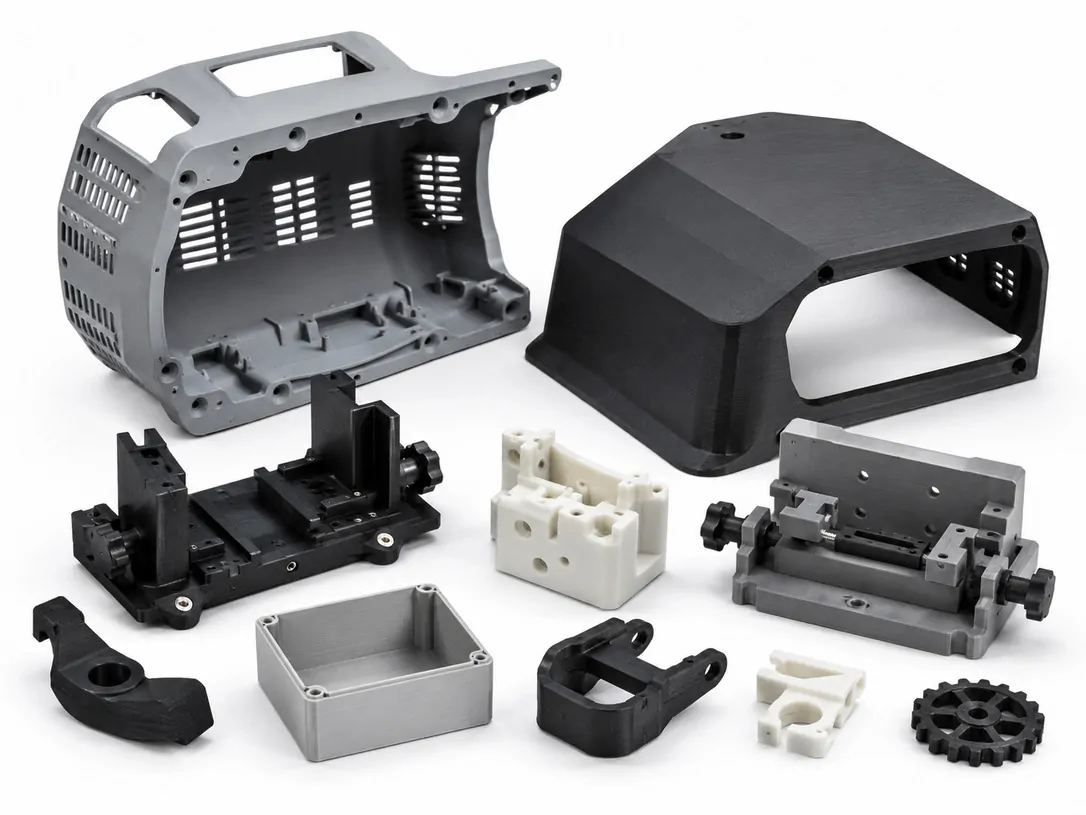
FDM 3D Printing Service for Large Plastic Prototypes, Jigs & Fixtures

NAITE TECH provides FDM 3D printing services for large, cost-effective, and functional plastic prototype parts.

From concept models, plastic housings, jigs, fixtures, tooling aids, and assembly samples to functional testing parts, we manufacture FDM printed components for design validation, engineering review, manufacturing support, and fast product iteration.
 
Large Plastic Prototype Parts
ABS, PLA, PETG, Nylon & PC Materials Available
Ideal for Jigs, Fixtures & Tooling Aids
Cost-Effective Design Validation
Prototype Parts from 1 Piece
2–5 Day Typical Lead Time
Sanding, Painting, Inserts & Assembly Available
Engineering Review Before Production
Inspection Reports & NDA Support Available
12-Hour Fast Quotation Response
 All uploaded CAD files are securely protected and handled under NDA upon request.
Large Plastic Parts | Jigs & Fixtures | ABS, PETG, Nylon & PC | MOQ From 1 Piece | 2–5 Day Lead Time | 12-Hour Quote

FDM 3D Printing Solutions for Design & Manufacturing Support

NAITE TECH supports FDM 3D printed plastic parts from early concept models to large prototypes, jigs, fixtures, tooling aids, and functional testing samples. With cost-effective thermoplastic materials, large part capability, and fast design iteration, FDM is ideal for product teams that need practical plastic parts for design validation and manufacturing support.

Concept Models

Produce low-cost plastic models for early product ideas, shape review, size confirmation, and internal design discussion.

Best For: Concept validation, form study, product mockups, early design review
Recommended Materials: PLA, ABS, PETG
Finishing Options: Support removal, sanding, painting

Large Plastic Prototypes

Create large FDM printed housings, covers, panels, mockups, and structural plastic parts for design validation and engineering review.

Best For: Large housings, product mockups, covers, panels, display models
Recommended Materials: ABS, PETG, PLA, PC
Finishing Options: Support removal, sanding, bonding, painting

Jigs, Fixtures & Tooling Aids

Manufacture practical plastic jigs, fixtures, positioning tools, inspection aids, and production support parts without tooling.

Best For: Assembly fixtures, inspection jigs, positioning tools, manufacturing aids
Recommended Materials: PETG, ABS, Nylon, PC
Finishing Options: Support removal, sanding, threaded inserts, assembly​​​​​​​

Functional Testing Parts

Produce functional plastic samples for fit checks, assembly review, ergonomic testing, and limited performance validation.

Best For: Fit testing, assembly samples, brackets, housings, functional prototypes
Recommended Materials: ABS, PETG, Nylon, PC
Finishing Options: Support removal, sanding, inserts, inspection​​​​​​​
Need Large Plastic Prototypes or Manufacturing Aids?
Upload your CAD files and share your material, size, quantity, tolerance, 
surface finish, and application requirements. Our engineers will review your  FDM project
and recommend the right material,  printing strategy, finishing process, lead time, and quotation details.​​​​​​​

 FDM material recommendation
 DFM feedback before production
 Large part and support review
 Surface finishing suggestions
 Lead time and cost review 

FDM 3D Printing Capabilities for Plastic Parts

NAITE TECH provides FDM 3D printing services for large, cost-effective, and functional plastic prototype parts. Our FDM capabilities support concept models, large housings, jigs, fixtures, tooling aids, assembly samples, and functional testing parts.
Tolerance, lead time, build size, and final surface quality may vary depending on material, part geometry, wall thickness, print orientation, support structures, quantity, and post-processing requirements.

Get a Fast FDM 3D Printing Quote

Upload your CAD files and tell us your material, size, quantity, tolerance, surface finish, and application requirements. NAITE TECH engineers will review your FDM project and provide material recommendations, DFM feedback, printing strategy, lead time, and quotation details.
  • What You Can Upload

    3D models: STL, STEP, STP, OBJ, IGES, SLDPRT, 3MF
    2D drawings with tolerance and critical dimensions
    Material, quantity, color, and surface finish requirements
    Application details for functional testing, assembly, jigs, fixtures, or low-volume production​​​​​​​

  • What You Will Receive

    FDM material recommendation
    DFM feedback before production
    Wall thickness and support structure review
    Large part splitting and bonding suggestions
    Estimated lead time and quotation
    Inspection and packaging options if required

  • Why Submit Your Files to NAITE TECH?

    12-Hour Quote Response
    MOQ From 1 Piece
    Nylon PA12 Available
    Engineering Review Before Production
    Finishing Options Available
    Inspection Reports & NDA Support

What Is FDM 3D Printing?

FDM, or fused deposition modeling, is a 3D printing process that extrudes thermoplastic filament layer by layer to create plastic prototype parts, jigs, fixtures, housings, tooling aids, and functional testing samples.

FDM 3D printing is widely used for large plastic prototypes, concept models, assembly fixtures, manufacturing aids, product mockups, and functional samples that require cost-effective production and fast design iteration.

Compared with SLA 3D printing, FDM is better suited for larger and lower-cost plastic prototypes rather than smooth, clear, high-detail resin parts. Compared with SLS and MJF, FDM is often more economical for simple large parts, jigs, fixtures, and early-stage design validation.

Why Choose FDM 3D Printing?

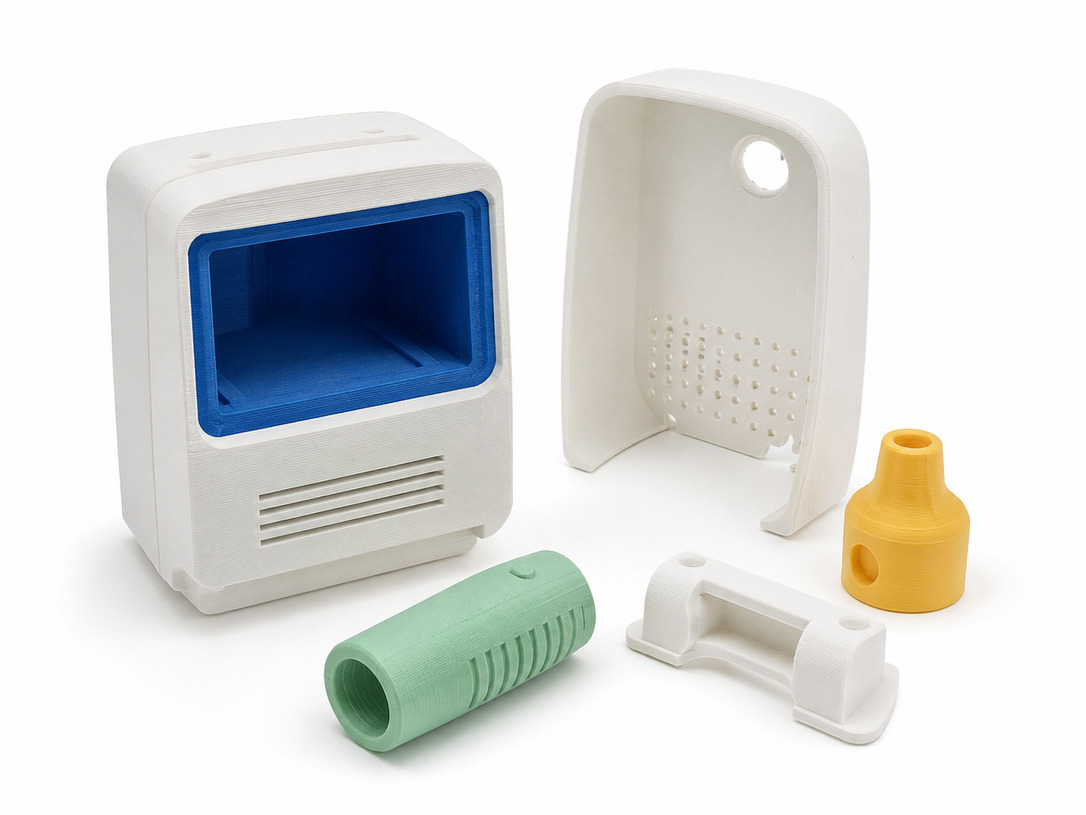
Large Plastic Prototype Parts
FDM is suitable for large housings, covers, panels, mockups, and plastic prototype parts that need practical size validation and engineering review.

Cost-Effective Design Validation
FDM is a practical option for early product development when teams need fast, affordable models for shape review, assembly checks, and design iteration.

Multiple Thermoplastic Materials
PLA, ABS, PETG, Nylon, PC, carbon fiber filled filaments, and other plastic materials are available based on strength, heat resistance, stiffness, and application requirements.

Ideal for Jigs, Fixtures & Tooling Aids
FDM can produce assembly fixtures, inspection jigs, positioning tools, manufacturing aids, and low-cost production support parts without mold tooling.

Finishing & Assembly Options
FDM printed parts can be support-removed, sanded, painted, bonded, fitted with threaded inserts, assembled, inspected, and packaged based on project requirements.

​​​​​
Need Large Plastic Prototypes or FDM Printed Fixtures?
Upload your CAD files and our engineers will review your design, material, tolerance, surface finish, size, and application requirements.
  FDM material recommendation    Large part and support review  Surface finishing suggestions    Lead time and cost review    Inspection and packaging options

FDM Materials & Surface Finishing Options

FDM 3D printing uses thermoplastic filament materials to produce cost-effective plastic prototypes, large models, jigs, fixtures, tooling aids, and functional testing parts. NAITE TECH offers multiple FDM material options and post-processing services to improve strength, heat resistance, surface finish, appearance, assembly performance, and final part usability.

FDM Materials for Plastic Prototype Parts

  • PLA
    FDM PLA concept models for low-cost prototype and early design validation
     

    PLA

    A cost-effective FDM material for concept models, visual mockups, and early-stage design validation.

    Best For: Concept models, display mockups, shape review, low-cost prototypes
    Key Properties: Low cost | Easy to print | Good visual quality | Suitable for early validation
    Typical Lead Time: 2–4 Days
    Relative Cost: $


  • ABS
    FDM ABS plastic housing prototype for sanding painting and functional testing
     

    ABS

    A widely used thermoplastic material for stronger plastic prototypes, housings, fixtures, and functional testing samples.

    Best For: Housings, covers, jigs, fixtures, functional prototypes
    Key Properties: Stronger than PLA | Good toughness | Heat resistance | Good for sanding and painting
    Typical Lead Time: 3–5 Days
    Relative Cost: $$

  • FDM PETG functional plastic parts for brackets guards jigs and prototypes
     

    PETG

    A durable and practical FDM material with good impact resistance and chemical resistance for functional plastic parts.

    Best For: Functional prototypes, brackets, guards, covers, jigs, fixtures
    Key Properties: Tough | Good impact resistance | Chemical resistance | Good dimensional stability
    Typical Lead Time: 3–5 Days
    Relative Cost: $$

  • FDM Nylon functional testing parts for tough mechanical prototype applications
     

    Nylon

    A strong and durable FDM material for functional testing parts, brackets, tooling aids, and parts that require better toughness.

    Best For: Functional samples, brackets, clips, tooling aids, mechanical parts
    Key Properties: Tough | Wear resistant | Good strength | Functional performance
    Typical Lead Time: 4–7 Days
    Relative Cost: $$$

  • FDM Polycarbonate PC strong prototypes for heat-resistant functional parts
     

    Polycarbonate / PC

    A high-performance FDM material for parts that require higher strength, stiffness, heat resistance, and durability.

    Best For: Strong functional prototypes, fixtures, housings, testing parts
    Key Properties: High strength | High heat resistance | Durable | Good stiffness
    Typical Lead Time: 5–8 Days
    Relative Cost: $$$

  • FDM carbon fiber filled filament parts for lightweight stiff structural prototypes
     

    Carbon Fiber Filled Filaments

    Reinforced FDM materials for lightweight, stiff, and stronger functional parts, jigs, fixtures, and structural prototype components.

    Best For: Lightweight brackets, stiff fixtures, tooling aids, structural prototypes
    Key Properties: High stiffness | Lightweight | Improved strength | Engineering performance
    Typical Lead Time: 5–9 Days
    Relative Cost: $$$$


Surface Finishing for FDM 3D Printed Parts

  • FDM support removal process for plastic 3D printed parts
     

    Support Removal

    Basic post-processing to remove support structures from FDM printed parts before sanding, painting, assembly, or inspection.

    Best For: All FDM printed parts, large prototypes, jigs, fixtures, functional samples
    Result: Cleaner part geometry | Better handling | Ready for sanding | Ready for inspection
    Additional Lead Time: Included or 1 Day
    Relative Cost: $

  • Sanding FDM plastic parts to reduce layer lines and improve surface smoothness
     

    Sanding

    Surface smoothing process to reduce visible layer lines, support marks, and rough areas on FDM printed parts.

    Best For: Appearance prototypes, large housings, painted parts, handled parts
    Result: Reduced layer lines | Smoother surface | Better painting preparation | Improved touch feel
    Additional Lead Time: 1–3 Days
    Relative Cost: $$

  • Painted FDM plastic prototype with custom color finish for product presentation
     

    Painting

    Custom color finishing for FDM prototypes, appearance samples, large models, and product demonstration parts.

    Best For: Appearance models, product mockups, customer samples, display parts
    Result: Custom color | Improved appearance | Brand color matching | Presentation-ready finish
    Additional Lead Time: 2–5 Days
    Relative Cost: $$$

  • Before and after vapor smoothing for ABS FDM 3D printed plastic parts
     

    Vapor Smoothing

    Surface finishing option for selected FDM materials such as ABS to reduce visible layer lines and improve surface smoothness.

    Best For: ABS parts, appearance-sensitive prototypes, handled parts, display samples
    Result: Smoother surface | Reduced layer lines | Improved appearance | Better touch feel
    Additional Lead Time: 2–4 Days
    Relative Cost: $$$


  • FDM plastic parts with threaded inserts for stronger fastening and assembly testing
     

    Threaded Inserts

    Metal inserts can be added to FDM printed plastic parts for stronger fastening and repeated assembly testing.

    Best For: Housings, brackets, fixtures, assembly parts, functional prototypes
    Result: Stronger threads | Better assembly | Reusable fastening | Improved prototype usability
    Additional Lead Time: 1–3 Days
    Relative Cost: $$

  • FDM plastic parts assembly support for multi-part prototypes and fit testing
     

    Assembly

    Simple assembly support is available for multi-part prototypes, large models, housings, fixtures, and functional demonstration parts.

    Best For: Multi-part prototypes, large assemblies, product samples, testing fixtures
    Result: Assembly-ready parts | Better fit testing | Improved demonstration | Faster validation
    Additional Lead Time: 1–3 Days
    Relative Cost: $$

Important Notes
Lead time and relative cost are for general comparison only. Final quotation depends on part size, geometry, quantity, material, surface finish, support removal, tolerance, assembly, and inspection requirements.
Need Help Choosing the 
Right FDM Material or Finish?
​​​​​​​
Upload your CAD files and share your application, size, quantity, tolerance, color, surface finish, and strength requirements. Our engineers will recommend the right FDM material, printing strategy, finishing process, lead time, and quotation details.

ABS, PLA, PETG, Nylon & PC Available | Large Part Support | Sanding & Painting | Inserts & Assembly | Inspection Support | NDA Available
​​​​​​​
1. FDM Material Selection
Choose the right FDM material for cost, strength, heat resistance, toughness, stiffness, and functional testing requirements.
lALPDgQ9rjMQSTl4eA_120_120
2. Surface Finish Recommendation
Select support removal, sanding, painting, vapor smoothing, threaded inserts, or assembly based on your final use.
lALPDgQ9rjMQSTl4eA_120_120
3. Lead Time & Cost Review
Get practical production advice based on part size, geometry, quantity, material, support structures, finishing, and inspection needs.
lALPDgQ9rjMQSTl4eA_120_120

Common Applications for FDM 3D Printed Parts

FDM 3D printing is ideal for cost-effective plastic parts that require large size capability, fast design iteration, and practical manufacturing support. NAITE TECH supports FDM printed parts for concept models, large plastic prototypes, jigs, fixtures, functional testing parts, electronic housings, and production aids.

Concept Models

Low-cost FDM printed models for early product ideas, shape review, size confirmation, and internal design discussion.

Best For: Concept validation, form study, product mockups, early design review
Recommended Materials: PLA, ABS, PETG
Recommended Finishing: Support removal, sanding, painting

Large Plastic Prototypes

Large FDM printed housings, covers, panels, mockups, and structural plastic parts for design validation and engineering review.

Best For: Large housings, covers, panels, product mockups, display models
Recommended Materials: ABS, PETG, PLA, PC
Recommended Finishing: Support removal, sanding, bonding, painting

Jigs & Fixtures

Practical FDM printed jigs, fixtures, positioning tools, and inspection aids for assembly, production, and manufacturing support.

Best For: Assembly fixtures, inspection jigs, positioning tools, production aids
Recommended Materials: PETG, ABS, Nylon, PC
Recommended Finishing: Support removal, sanding, threaded inserts, assembly

Functional Testing Parts

FDM printed plastic parts for fit checks, assembly review, ergonomic testing, and limited functional validation.

Best For: Fit testing, assembly samples, brackets, housings, functional prototypes
Recommended Materials: ABS, PETG, Nylon, PC
Recommended Finishing: Support removal, sanding, inserts, inspection

Electronic Housings

Custom FDM printed enclosures, covers, brackets, sensor housings, buttons, and device shells for product development and testing.

Best For: Device enclosures, sensor housings, covers, buttons, prototype shells
Recommended Materials: ABS, PETG, PC, Nylon
Recommended Finishing: Sanding, painting, threaded inserts, assembly

Manufacturing Aids

FDM printed tooling aids, templates, holders, guides, guards, and production support parts for workshop and assembly line use.

Best For: Tooling aids, templates, holders, guides, guards, production support parts
Recommended Materials: PETG, ABS, Nylon, Carbon Fiber Filled Filaments
Recommended Finishing: Support removal, sanding, inserts, assembly

Need FDM Printed Parts for Your Application?

Upload your CAD files and tell us your application, material, size, quantity, tolerance, surface finish, and inspection requirements. Our engineers will review your design and recommend the right FDM material, printing strategy, finishing process, and production solution.

 FDM material recommendation
 DFM feedback before production
 Large part and support review
Surface finishing suggestions
 Lead time and cost review
Concept Models | Large Plastic Prototypes | Jigs & Fixtures | Functional Testing Parts | Electronic Housings | Manufacturing Aids

MJF vs SLS, SLA & FDM: Which 3D Printing Process Should You Choose?

FDM is ideal for large plastic prototypes, low-cost concept models, jigs, fixtures, manufacturing aids, and fast design validation. However, if your project requires smooth clear resin parts, strong nylon functional parts, or production-grade nylon components, SLA, SLS, or MJF may be a better option.

NAITE TECH engineers can review your CAD files and recommend the most suitable 3D printing process based on part size, material, tolerance, surface finish, strength, quantity, application, and budget.
Comparison Factor FDM 3D Printing SLA 3D Printing SLS 3D Printing MJF 3D Printing
Materials PLA, ABS, PETG, Nylon, PC, carbon fiber filled filaments Standard resin, clear resin, tough resin, high-temperature resin, flexible resin Nylon PA12, PA11, glass-filled nylon, TPU / flexible materials Nylon PA12, PA11, TPU, glass-filled PA12
Relative Cost $ $$ $$$ $$$
Typical Tolerance ±0.2–0.5 mm ±0.1–0.2 mm ±0.2–0.3 mm ±0.2–0.3 mm
Mechanical Strength Medium, depending on material and print orientation Medium, better for visual and fit-check prototypes High, suitable for strong nylon functional parts High, suitable for durable nylon prototype and production parts
Build Volume Up to 1000 × 1000 × 1000 mm Up to 600 × 600 × 400 mm Up to 600 × 600 × 400 mm Up to 380 × 284 × 380 mm
Layer Thickness 0.1–0.3 mm 0.025–0.1 mm 0.08–0.15 mm 0.08–0.1 mm
Minimum Feature Size Medium; larger features are recommended High; suitable for small details and fine features Good; suitable for functional details and complex geometry Good; suitable for functional details and repeatable production parts
Not Sure Which Process Is Best?
Upload your CAD files and tell us your material, size, quantity, tolerance, surface finish, strength, and application requirements. Our engineers will review your design and recommend whether FDM, SLA, SLS, MJF, or another process is best for your project.
 Process recommendation   Material selection support     DFM feedback before production   Lead time and cost review   Inspection and finishing options
1

Choose FDM When You Need

Large plastic parts, low-cost concept models, jigs, fixtures, tooling aids, functional testing samples, and fast design validation where visible layer lines are acceptable.​​​​​​​
2

Choose SLA When You Need

Smooth surface finish, clear resin parts, high-detail prototypes, appearance models, medical models, visual validation, or presentation-ready samples.​​​​​​​
3

Choose SLS or MJF When You Need

Strong nylon functional parts, snap-fit components, housings, brackets, complex geometries, end-use components, jigs, fixtures, or low-volume production without tooling. SLS is often suitable for complex nylon prototypes, while MJF is ideal for repeatable small-batch production.

FDM 3D Printing Design Guidelines
Good FDM printed parts start with proper design. Wall thickness, layer lines, holes, clearances, support structures, material selection, large part splitting, and surface finishing requirements can all affect strength, accuracy, appearance, lead time, and cost. NAITE TECH engineers review your CAD files before production and provide DFM feedback to help improve manufacturability.
View more
  • 1. Minimum Wall Thickness
    Thin walls may deform, break, or print poorly, especially on large parts or functional testing samples.

    General Guideline:
    1.0–1.5 mm for small plastic parts
    2.0–3.0 mm for larger or functional FDM parts
  • 2. Layer Lines & Surface Finish
    FDM parts are built layer by layer, so visible layer lines are normal. Sanding, painting, vapor smoothing, or other finishing options can improve appearance.

    General Guideline:
    Specify whether your part needs as-printed finish, sanding, painting, vapor smoothing, or presentation-ready appearance before quotation.
  • 3. Holes, Clearances & Fit
    Printed holes, slots, snap-fit areas, and mating features may vary depending on material, orientation, layer height, and post-processing.

    General Guideline:
    Add proper clearance for assembly parts and mark critical holes, fit areas, and mating surfaces on drawings.
  • 4. Support Structures
    Overhangs, bridges, deep cavities, and complex features may require support structures. Support removal can affect surface quality and finishing workload.

    General Guideline:
    Tell us which surfaces are cosmetic or functional so our engineers can optimize print orientation and support placement.
  • 5. Large Part Splitting & Bonding
    Large FDM parts may need to be split into sections for printing, bonding, sanding, painting, or easier shipping.

    General Guideline:
    For oversized housings, panels, covers, or mockups, our engineers can review split lines, bonding areas, and assembly methods before production.
  • 6. Material Selection
    FDM material choice affects cost, strength, heat resistance, stiffness, flexibility, surface finish, and part performance.

    General Guideline:
    Use PLA for low-cost concept models, ABS or PETG for practical prototypes, Nylon for tougher functional parts, and PC or carbon fiber filled materials for higher strength or stiffness needs.

Quality Support for FDM 3D Printed Parts

NAITE TECH provides quality support for FDM 3D printed plastic parts from engineering review to printing, support removal, post-processing, inspection, and delivery. We help ensure your FDM parts meet the required size, fit, material, surface finish, assembly, and application requirements before shipment.NAITE TECH provides quality support for MJF 3D printed nylon parts from engineering review to printing, powder removal, post-processing, inspection, and delivery. We help ensure your MJF parts meet the required strength, fit, surface finish, consistency, assembly, and application requirements before shipment.

1. Engineering Review Before Printing

Our engineers review your CAD files, wall thickness, holes, clearances, support structures, large part splitting, material selection, tolerance requirements, and surface finish needs before FDM printing.​​​​​​​

2. Material & Print Orientation Review

Material selection and print orientation can affect strength, surface quality, dimensional accuracy, and part performance. We review these factors before production to improve manufacturability.​​​​​​​

3. Dimensional Inspection Available

Key dimensions, holes, mating areas, assembly points, and functional surfaces can be inspected based on your drawings and project requirements.​​​​​​​

4. Reports, File Security & NDA Support

Inspection reports, material information, secure CAD file handling, and NDA support are available upon request for confidential prototype and product development projects.

Representative FDM 3D Printing Project Examples

Explore common FDM 3D printing project examples for large plastic prototypes, jigs, fixtures, housings, tooling aids, and functional testing parts. These examples show how NAITE TECH helps customers choose the right FDM material, printing strategy, surface finish, and inspection option based on part size, function, appearance, and application requirements.

Specialized in product
Have a Similar FDM 3D Printing Project?

Upload your CAD files and tell us your application, FDM material preference, surface finish, tolerance, size, quantity, and inspection requirements. Our engineers will review your project and recommend the right FDM material, printing strategy, finishing process, lead time, and quotation details.

Why Choose NAITE TECH for FDM 3D Printing?

Choose NAITE TECH for custom FDM 3D printing services with large plastic prototype support, thermoplastic material selection, surface finishing, engineering review, and quality inspection for cost-effective plastic prototype parts.

1. Large Plastic Prototype Support

We support large FDM printed housings, covers, panels, mockups, fixtures, tooling aids, and functional testing parts for product development and manufacturing support.​​​​​​​

2. FDM Material Selection Support

PLA, ABS, PETG, Nylon, PC, carbon fiber filled filaments, and other thermoplastic materials are available based on cost, strength, heat resistance, stiffness, and application requirements.​​​​​​​

3. Finishing & Assembly Options

Support removal, sanding, painting, vapor smoothing, threaded inserts, bonding, assembly, inspection, and packaging options are available to improve appearance and usability.​​​​​​​

4. Engineering Review & Quality Support

Our engineers review CAD files, wall thickness, part size, support structures, print orientation, material selection, tolerance needs, and surface finish requirements before production.

FAQs About FDM 3D Printing

  • How do I get a fast FDM 3D printing quote from NAITE TECH?

    Upload your CAD files and share your material, size, quantity, tolerance, surface finish, color, application, and inspection requirements. Our engineers will review your project and provide material recommendations, DFM feedback, lead time, and quotation details.

  • What file formats do you accept for FDM quotes?

    We accept common 3D model formats including STL, STEP, STP, OBJ, IGES, SLDPRT, and 3MF. Technical drawings with tolerance, material, finish, quantity, and critical dimensions help us provide a more accurate quote.

  • What should I consider when designing parts for FDM 3D printing?

    Important design factors include wall thickness, layer lines, holes, clearances, support structures, part orientation, material selection, large part splitting, bonding areas, surface finish, and tolerance requirements.

  • Is FDM suitable for jigs, fixtures, and manufacturing aids?

    Yes. FDM is widely used for assembly fixtures, inspection jigs, positioning tools, holders, guides, guards, templates, and other production support parts because it is cost-effective and fast to produce.

  • Can FDM parts be sanded, painted, or post-processed?

    Yes. FDM parts can be support-removed, sanded, painted, vapor smoothed for selected materials, fitted with threaded inserts, bonded, assembled, inspected, and packaged based on project requirements.

  • Is FDM stronger than SLA?

    FDM can be stronger for some functional plastic parts depending on material, infill, wall thickness, and print orientation. SLA usually offers smoother surface finish and finer detail, while FDM is often better for larger thermoplastic prototypes.

  • What is the difference between FDM and SLA 3D printing?

    FDM is better for large, cost-effective plastic prototypes, jigs, fixtures, and practical design validation. SLA is better for smooth, clear, high-detail resin prototypes and appearance models.

  • How long does FDM 3D printing take?

    Typical FDM lead time is 2–5 days for many plastic prototype parts. Larger parts, special materials, high quantity, sanding, painting, inserts, assembly, or inspection may require additional time.

  • What tolerance can FDM 3D printing achieve?

    Typical FDM tolerance is around ±0.2–0.5 mm, depending on part size, geometry, material, wall thickness, print orientation, support structures, and post-processing requirements.

  • Is FDM suitable for large plastic prototype parts?

    Yes. FDM is suitable for large plastic housings, covers, panels, mockups, fixtures, and prototype parts. Oversized parts can also be reviewed for splitting, bonding, sanding, painting, and assembly solutions.

  • What FDM materials are available for plastic prototype parts?

    Common FDM materials include PLA, ABS, PETG, Nylon, Polycarbonate / PC, carbon fiber filled filaments, and other thermoplastic materials depending on strength, heat resistance, stiffness, cost, and application requirements.

  • What types of parts are best suited for FDM 3D printing?

    FDM 3D printing is best for large plastic prototypes, concept models, jigs, fixtures, tooling aids, functional testing parts, housings, covers, panels, and low-cost design validation samples.

Get Large Plastic Prototypes, Jigs & Fixtures with FDM 3D Printing

Need FDM printed housings, concept models, jigs, fixtures, tooling aids, functional testing parts, or large plastic prototypes? Send us your CAD files and project requirements. Our engineers will help you choose the right FDM material, printing strategy, surface finish, tolerance, and production plan.

What to Send:
CAD files, drawings, part size, quantity, material, color, tolerance, surface finish, and application details.

What You Receive:
FDM material recommendation
DFM feedback before production
Large part and support review
Surface finishing suggestions
Lead time and quotation
Inspection and packaging options
12-Hour Quote | MOQ From 1 Piece | Nylon PA12 Available | End-Use Parts | Low-Volume Production | NDA Available
If there are any CNC machining issues.
Please contact us.
Capabilities
Service
Support
COPYRIGHT © 2025 CHANGZHOU NAITE METAL TECHNOLOGY CO., LTD. ALL RIGHTS RESERVED.