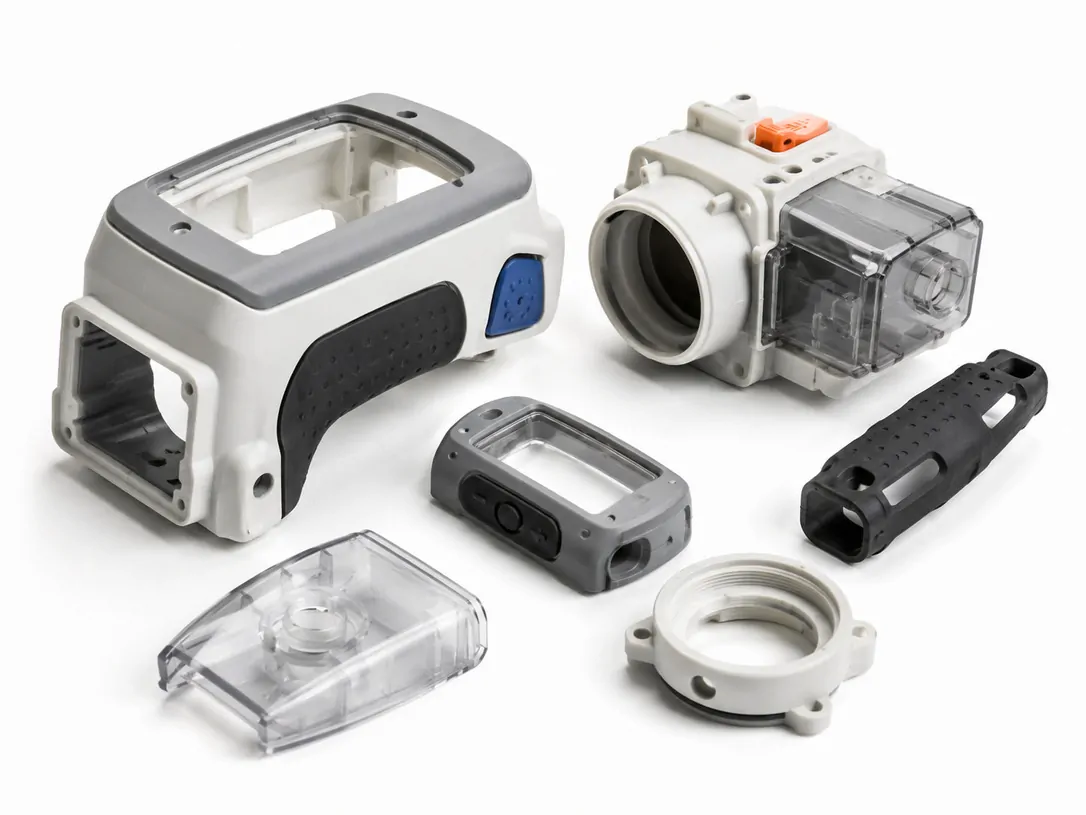



PolyJet 3D Printing Service for Multi-Material & Full-Color Prototypes

NAITE TECH provides PolyJet 3D printing services for realistic, high-detail, multi-material, and full-color prototype parts.

From product appearance models, transparent parts, rubber-like prototypes, medical models, overmold-like samples, and presentation-ready models to complex visual prototypes, we manufacture PolyJet printed parts for design validation, product demonstration, user testing, and engineering review.
 
Multi-Material 3D Printed Prototypes
Full-Color Prototype Parts Available
Rubber-Like & Transparent Material Options
Smooth Surface Finish & Fine Details
Ideal for Realistic Product Models
Prototype Parts from 1 Piece
3–7 Day Typical Lead Time
Painting, Polishing, Assembly & Finishing Support
Engineering Review Before Production
Inspection Reports & NDA Support Available
12-Hour Fast Quotation Response
 All uploaded CAD files are securely protected and handled under NDA upon request.
Multi-Material Parts | Full-Color Prototypes | Rubber-Like & Transparent Options | Smooth Surface Finish | MOQ From 1 Piece | 12-Hour Quote

PolyJet 3D Printing Solutions for Realistic Product Prototypes

NAITE TECH supports PolyJet 3D printed parts for realistic product models, full-color prototypes, multi-material samples, transparent features, rubber-like components, and presentation-ready prototypes. PolyJet is ideal when your project needs accurate appearance, fine detail, color, texture, flexibility, or multiple material properties in one model.
Realistic Product Models​​​​​​​
Create high-detail product models that closely represent the final product appearance, shape, color, texture, and user experience before tooling or mass production.

Best For: Product appearance models, design review samples, user testing models, presentation prototypes
Material Options: Rigid materials, full-color materials, transparent materials
Key Benefits: Realistic appearance, fine details, smooth surface finish, presentation-ready results
Full-Color Prototypes​​​​​​​
Produce full-color PolyJet prototypes for product demonstration, marketing review, design validation, and visual communication without separate painting for every color area.

Best For: Color prototypes, product demos, marketing samples, visual design validation
Material Options: Full-color materials, rigid materials, transparent features
Key Benefits: Color visualization, realistic product appearance, faster design review, reduced painting complexity​​​​​​​
Multi-Material Prototypes
Manufacture prototypes that combine rigid, flexible, transparent, or rubber-like sections in a single printed model for realistic design and function evaluation.

Best For: Multi-material samples, overmold-like prototypes, buttons, grips, seals, soft-touch areas
Material Options: Rigid materials, rubber-like materials, transparent materials, mixed Shore hardness options
Key Benefits: Rigid and flexible combinations, realistic touch feel, improved product testing, assembly-free demonstration​​​​​​​
Medical & Anatomical Models
Produce high-detail medical, dental, anatomical, and educational models with color, transparency, and different material properties for visualization, planning, training, and communication.

Best For: Medical models, anatomical models, dental models, surgical planning models, training samples
Material Options: Transparent materials, full-color materials, rigid materials, rubber-like materials
Key Benefits: High detail, visual clarity, realistic structure, multi-color communication​​​​​​​

Transparent & Clear Feature Prototypes
Create prototypes with transparent windows, lenses, fluid paths, covers, display areas, or clear design features for product evaluation and visual testing.

Best For: Transparent covers, display windows, light guides, fluid path models, visual inspection samples
Material Options: Transparent PolyJet materials, rigid materials, mixed material combinations
Key Benefits: Clear feature review, visual testing, product appearance validation, assembly demonstration
Overmold-Like Samples
Produce prototypes that simulate overmolded products with rigid bodies and soft-touch sections, helping teams evaluate grip, ergonomics, appearance, and user interaction.

Best For: Soft-touch grips, handles, buttons, seals, consumer product samples, ergonomic models
Material Options: Rigid materials, rubber-like materials, multiple Shore hardness options
Key Benefits: Overmold-like appearance, realistic touch feel, ergonomic testing, faster product validation​​​​​​​

Need Realistic PolyJet Prototypes for Product Review?
Upload your CAD files and share your color, material, transparency, rubber-like feature, surface finish, quantity, 
and application requirements. Our engineers will review your PolyJet project and recommend the right material combination,
 printing strategy, finishing process, lead time, and quotation details.

 PolyJet material recommendation  Multi-material feasibility review
 Full-color and appearance review  Transparent and rubber-like feature review
 Surface finishing suggestions         Lead time and cost review
​​​​​​​

PolyJet 3D Printing Capabilities for Multi-Material Parts

NAITE TECH provides PolyJet 3D printing services for high-detail, smooth, full-color, transparent, rubber-like, and multi-material prototype parts. Our PolyJet capabilities support realistic product models, medical models, appearance prototypes, overmold-like samples, user testing models, and presentation-ready parts.
Tolerance, lead time, color accuracy, transparency, flexibility, and final surface quality may vary depending on part geometry, material combination, wall thickness, print orientation, post-processing, and project requirements.

How to Order PolyJet 3D Printed Parts

Ordering custom PolyJet 3D printed parts from NAITE TECH is simple. Send us your CAD files, color references, material requirements, and application details. Our engineers will review your project and help you choose the right PolyJet material combination, full-color option, transparent feature, rubber-like section, surface finish, and production plan.
 12-Hour Quote Response MOQ 1 Piece Multi-Material Prototype Support Full-Color Prototype Options Transparent & Rubber-Like Materials Available Inspection Reports & NDA Support
1

1. Upload CAD Files & Project Requirements

Send your 3D models, drawings, color references, renderings, CMF requirements, material preferences, quantity, tolerance, transparency needs, rubber-like features, and application details.


Accepted Files: STL, STEP, STP, OBJ, IGES, SLDPRT, 3MF
Helpful Information: Color requirements, Shore hardness, transparent areas, surface finish, inspection needs

2

2. Engineering Review & Material Recommendation

Our engineers review your CAD files, part geometry, wall thickness, fine details, color requirements, multi-material feasibility, transparent features, rubber-like sections, and post-processing needs.


Review Includes: Material selection, full-color feasibility, Shore hardness review, transparent feature review, DFM feedback

3

3. Quotation & Production Confirmation

After reviewing your project requirements, we provide quotation details, recommended materials, estimated lead time, finishing suggestions, and inspection options for your approval.


Quote Includes: Material recommendation, production plan, lead time, finishing options, packaging and inspection support

4

4. PolyJet Printing, Finishing & Delivery

Your parts are printed, cleaned, post-processed, inspected, packaged, and shipped according to your confirmed requirements.


Production Support: PolyJet printing, support removal, polishing, painting, assembly, inspection, secure packaging, global delivery

Ready to Start Your PolyJet Project?
Upload your CAD files and share your color, material, transparency, rubber-like feature, quantity, tolerance, surface finish, and application requirements. Our engineers will review your project and provide a fast quotation.

What Is PolyJet 3D Printing?

PolyJet 3D printing is an additive manufacturing process that creates parts by jetting tiny droplets of liquid photopolymer material onto a build platform and curing each layer with UV light.

Because PolyJet prints with extremely thin layers, it can produce smooth surfaces, fine details, sharp edges, small features, and realistic visual effects. Unlike many single-material 3D printing processes, PolyJet can also combine rigid, flexible, transparent, rubber-like, and full-color materials in one printed model, making it ideal for realistic product prototypes and presentation-ready parts.

PolyJet is especially useful when a prototype needs to show not only the shape of a product, but also its color, texture, transparency, soft-touch areas, buttons, seals, grips, or overmold-like features. This makes it a strong choice for product design review, user testing, medical visualization, marketing samples, and pre-production presentation models.

Why Choose PolyJet 3D Printing?
Need Realistic Multi-Material Prototypes?​​​​​​​
Upload your CAD files and share your color, material, transparency, rubber-like feature, Shore hardness, surface finish, quantity, and application requirements. Our engineers will review your project and recommend the right PolyJet printing solution.
1
1. Realistic Appearance & Fine Details
PolyJet can produce smooth surfaces, sharp details, fine textures, full-color areas, and transparent features, making it ideal for realistic product models, medical models, visual prototypes, and presentation-ready samples.​​​​​​​
2
2. Multi-Material & Rubber-Like Features​​​​​​​
PolyJet can combine rigid, flexible, transparent, and rubber-like materials in one printed model. This helps simulate soft-touch grips, buttons, seals, clear windows, overmold-like features, and different Shore hardness areas.​​​​​​​
3
3. Better Product Review Before Tooling​​​​​​​
PolyJet helps product teams evaluate appearance, color, texture, transparency, ergonomics, user interaction, and material feel before tooling or mass production, reducing design risk and improving decision-making.​​​​​​​

PolyJet Materials, Colors, Shore Hardness & Finishing Options

PolyJet 3D printing supports rigid, transparent, rubber-like, full-color, and multi-material prototype parts. NAITE TECH helps you choose the right PolyJet material combination, color option, transparency level, Shore hardness, surface finish, and post-processing solution based on your product review and presentation requirements.

PolyJet Material Options

  • PolyJet rigid photopolymer prototypes with smooth surface and fine details
     

    Rigid Photopolymer Materials

    Rigid PolyJet materials are suitable for product appearance models, design review parts, medical models, housings, covers, and presentation prototypes that require smooth surfaces and fine details.

    Best For: Product models, visual prototypes, housings, covers, display samples
    Key Features: Smooth surface | Fine details | Rigid structure | Good visual quality


  • PolyJet full-color material prototypes for CMF review and realistic product models
     

    Full-Color Materials

    Full-color PolyJet materials are used for realistic color prototypes, product demonstrations, CMF review, medical visualization, marketing samples, and presentation models.

    Best For: Full-color prototypes, product demos, marketing samples, user testing models
    Key Features: Multi-color appearance | Realistic visual effect | Color communication | Presentation-ready finish

  • Transparent PolyJet material prototypes for clear windows fluid paths and visual models
     

    Transparent Materials

    Transparent PolyJet materials are used for clear windows, display areas, covers, lenses, fluid path models, medical visualization, and prototypes with visible internal structures.

    Best For: Clear features, transparent covers, display windows, fluid path models, visualization parts
    Key Features: Transparent appearance | Visual inspection | Clear feature review | Smooth surface

  • PolyJet rubber-like material prototypes for soft-touch grips buttons and flexible features
     

    Rubber-Like Materials

    Rubber-like PolyJet materials are suitable for soft-touch areas, grips, buttons, seals, gaskets, ergonomic samples, and flexible prototype features.

    Best For: Soft-touch areas, buttons, grips, seals, ergonomic models
    Key Features: Flexible feel | Rubber-like texture | Shore hardness options | User interaction testing

  • PolyJet multi-material combinations with rigid rubber-like transparent and colored sections
     

    Multi-Material Combinations

    PolyJet can combine rigid, flexible, transparent, rubber-like, and full-color areas in one printed model to simulate realistic product structure, appearance, and touch feel.

    Best For: Multi-material prototypes, overmold-like samples, complex product models, user testing samples
    Key Features: Rigid + flexible sections | Transparent areas | Color regions | Different material feel

  • PolyJet Shore hardness options with rubber-like samples for touch feel comparison
     

    Shore Hardness Options

    Different rubber-like Shore hardness options can be used to simulate soft, medium, or firmer touch areas for grips, buttons, seals, and overmold-like prototype features.

    Best For: Soft-touch testing, grip evaluation, buttons, seals, flexible product features
    Key Features: Different hardness levels | Touch feel simulation | Ergonomic testing | Material feel comparison

PolyJet Surface Finishing Options

  • PolyJet support removal and cleaning process for prototype parts
     

    Support Removal & Cleaning

    Remove support material and clean printed parts after production to prepare them for inspection, finishing, assembly, or presentation.

    Best For: All PolyJet printed parts, appearance models, medical models, presentation prototypes
    Key Benefit: Clean finished parts ready for review or further finishing

  • Polishing transparent PolyJet parts to improve clarity and smooth appearance
     

    Polishing

    Improve the surface clarity and appearance of transparent or visual PolyJet parts, especially for clear features, windows, display areas, and presentation samples.

    Best For: Transparent parts, clear windows, lenses, display models, visual prototypes
    Key Benefit: Improved clarity and smoother appearance

  • Painted PolyJet appearance prototype with custom color finish for product presentation
     

    Painting

    Apply custom colors, surface effects, or branding-style finishes when printed color alone is not enough for the final presentation requirement.

    Best For: Appearance models, product samples, marketing prototypes, presentation models
    Key Benefit: Better color control and presentation-ready appearance

  • PolyJet clear coating finish for transparent features and glossy prototype surfaces
     

    Clear Coating

    Add a protective or glossy clear coating to improve visual appearance, surface feel, and transparency effect for selected PolyJet parts.

    Best For: Transparent features, display samples, product models, presentation prototypes
    Key Benefit: Enhanced gloss, clarity, and surface protection


  • PolyJet prototype assembly support for multi-part product mockups and user testing models
     

    Threaded Inserts

    Combine multiple PolyJet printed parts or install components for product mockups, user testing models, medical models, and presentation-ready prototypes.

    Best For: Multi-part models, product mockups, demonstration samples, user testing prototypes
    Key Benefit: Ready-to-use prototype assemblies for review and presentation

  • PolyJet prototype inspection and packaging for secure delivery
     

    Assembly

    Dimensional checks, visual inspection, secure packaging, and project documentation are available based on your application and delivery requirements.

    Best For: Prototype delivery, presentation samples, confidential projects, international shipping
    Key Benefit: Better delivery control and project confidence

Need Help Choosing the Right PolyJet Material or Finish?​​​​​​​
Upload your CAD files and share your color, transparency, rubber-like feature, Shore hardness, surface finish, quantity, and application requirements. Our engineers will review your project and recommend the right PolyJet material combination, finishing process, lead time, and quotation details.​​​​​​​

Rigid Materials | Full-Color Options | Transparent Parts | Rubber-Like Materials | Finishing Support | Multi-Material Support
1. Material, Color & Transparency Selection
Choose suitable rigid, transparent, rubber-like, full-color, or multi-material options based on product appearance, touch feel, and review requirements.
2. Shore Hardness Review
Review soft-touch areas, grips, buttons, seals, flexible features, and Shore hardness requirements before production.
3. Finishing Recommendation
Confirm support removal, cleaning, polishing, painting, clear coating, assembly, inspection, and packaging options based on your final use.

Common Applications for PolyJet 3D Printed Parts

PolyJet 3D printing is ideal for prototypes that need realistic appearance, smooth surfaces, fine details, full-color features, transparent areas, rubber-like sections, or multi-material combinations. NAITE TECH supports PolyJet printed parts for product design review, user testing, medical visualization, marketing presentation, and pre-production validation.

Product Appearance Models

Create realistic product models that show final product shape, color, texture, surface quality, and design details before tooling or mass production.

Best For: Product models, design review samples, presentation prototypes, visual validation
Material Options: Rigid materials, full-color materials, transparent features
Key Benefit: Realistic appearance for faster design decisions

Full-Color Prototypes

Produce full-color prototype parts for product demonstration, CMF review, marketing samples, user testing, and visual communication.

Best For: Color prototypes, product demos, marketing samples, user testing models
Material Options: Full-color materials, rigid materials, transparent materials
Key Benefit: Color and appearance validation without complex painting

Multi-Material Prototypes

Manufacture prototypes that combine rigid, flexible, transparent, rubber-like, and full-color sections in one printed model.

Best For: Mixed-material samples, product mockups, buttons, grips, seals, transparent windows
Material Options: Rigid, flexible, transparent, rubber-like, and full-color combinations
Key Benefit: Realistic material contrast and touch-feel evaluation

Medical & Anatomical Models

Produce detailed medical, dental, anatomical, and educational models with color, transparency, and different material properties.

Best For: Medical models, anatomical models, dental models, surgical planning samples, training models
Material Options: Full-color materials, transparent materials, rigid materials, rubber-like materials
Key Benefit: Clear visual communication for planning, training, and education

Transparent Feature Prototypes

Create prototypes with clear windows, display areas, lenses, covers, fluid paths, or visible internal structures for visual evaluation.

Best For: Transparent covers, display windows, light guides, fluid path models, clear feature samples
Material Options: Transparent materials, rigid materials, multi-material combinations
Key Benefit: Better review of transparent features and internal structures

Overmold-Like Samples

Produce prototypes that simulate rigid bodies with soft-touch sections for grips, buttons, handles, seals, and ergonomic product areas.

Best For: Soft-touch grips, buttons, handles, seals, ergonomic models, consumer product samples
Material Options: Rigid materials, rubber-like materials, Shore hardness options
Key Benefit: Overmold-like appearance and touch feel before tooling

Need PolyJet Parts for Your Application?

Upload your CAD files and share your color, material, transparency, rubber-like feature, Shore hardness, quantity, surface finish, and application requirements. Our engineers will review your project and recommend the right PolyJet material combination, printing strategy, finishing process, lead time, and quotation details.

 Material and color recommendation  Multi-material feasibility review  Transparent feature review  Rubber-like section and Shore hardness review   Appearance and finishing suggestions  Lead time and cost review
Product Models | Full-Color Prototypes | Multi-Material Parts | Medical Models | Transparent Features | Overmold-Like Samples

MJF vs SLS, SLA & FDM: Which 3D Printing Process Should You Choose?

FDM is ideal for large plastic prototypes, low-cost concept models, jigs, fixtures, manufacturing aids, and fast design validation. However, if your project requires smooth clear resin parts, strong nylon functional parts, or production-grade nylon components, SLA, SLS, or MJF may be a better option.

NAITE TECH engineers can review your CAD files and recommend the most suitable 3D printing process based on part size, material, tolerance, surface finish, strength, quantity, application, and budget.
Comparison Factor PolyJet 3D Printing SLA 3D Printing FDM 3D Printing SLS / MJF 3D Printing
Best For Realistic product models, full-color prototypes, multi-material parts, rubber-like features, transparent details Smooth resin prototypes, clear parts, appearance models, fine details Large plastic prototypes, concept models, jigs, fixtures, tooling aids Strong nylon functional parts, snap-fit parts, housings, brackets, low-volume production
Materials Rigid, transparent, rubber-like, full-color, multi-material photopolymers Standard resin, clear resin, tough resin, high-temperature resin, flexible resin PLA, ABS, PETG, Nylon, PC, carbon fiber filled filaments Nylon PA12, PA11, TPU, glass-filled nylon
Color Options Full-color and multi-color options available Usually single-color resin, painting available Usually single-color filament, painting available Usually natural gray/white or black dyed parts
Multi-Material Capability Strong advantage; rigid, flexible, transparent, and color areas can be combined Limited Limited Limited
Surface Finish Smooth, high-detail, presentation-ready appearance Smooth resin surface with fine details Visible layer lines, finishing may be needed Fine textured nylon surface
Transparent Features Available for clear windows, covers, fluid paths, and visual models Clear resin available, polishing often needed Limited Limited
Rubber-Like Features Available with Shore hardness options Flexible resin available, but limited material combinations Flexible filament available, but lower detail TPU options available for flexible parts
Mechanical Strength Best for visual, review, and demonstration prototypes Good for appearance and fit-check prototypes Practical for large plastic prototypes and fixtures Stronger for functional nylon parts and end-use applications
Relative Cost $$$ $$ $ $$$
Typical Lead Time 3–7 days 2–5 days 2–5 days 3–7 days
Not Sure Which 3D Printing Process Is Best?​​​​​​​
Upload your CAD files and share your material, color, transparency, rubber-like feature, tolerance, surface finish, quantity, and application requirements. Our engineers will review your project and recommend the right 3D printing process.​​​​​​​
 Process selection support   Material recommendation
 Color and appearance review   Transparent and rubber-like feature review   Strength, tolerance, and cost comparison   Lead time and quotation support
1

Choose PolyJet When You Need

Full-color prototypes, multi-material parts, transparent areas, rubber-like features, overmold-like samples, realistic product models, medical visualization, user testing samples, or presentation-ready prototypes.​​​​​​​
2

Choose SLA When You Need

Smooth resin prototypes, clear parts, high-detail appearance models, small fine features, medical models, or presentation samples with lower cost than PolyJet.​​​​​​​
3

Choose SLS or MJF When You Need

Strong nylon functional parts, snap-fit components, housings, brackets, complex geometries, end-use components, jigs, fixtures, or low-volume production without tooling.

PolyJet 3D Printing Design Guidelines
Good PolyJet prototypes start with proper design preparation. Wall thickness, fine details, transparent areas, rubber-like sections, color requirements, material transitions, support removal, and surface finishing can all affect the final appearance, accuracy, clarity, flexibility, lead time, and cost.
NAITE TECH engineers review your CAD files before production and provide DFM feedback to help improve printability, appearance, material selection, and final prototype quality.
View more
  • 1. Minimum Wall Thickness
    Thin walls may become fragile, deform during cleaning, or affect the final appearance of PolyJet printed parts.

    General Guideline:
    Use 0.6–1.0 mm for small visual features and 1.0–2.0 mm for larger or functional prototype areas. Thicker walls may be recommended for transparent, rubber-like, or assembly parts.
  • 2. Fine Details & Small Features
    PolyJet can produce fine textures, small features, sharp edges, text, logos, and detailed visual elements, but very small features should still be reviewed before printing.

    General Guideline:
    Clearly mark critical details, text, logos, textures, and cosmetic surfaces in your CAD files or drawings.
  • 3. Transparent Areas
    Transparent PolyJet parts may require polishing, clear coating, or special finishing to improve clarity and final appearance.

    General Guideline:
    Identify clear windows, lenses, display areas, fluid paths, or visible internal structures before quotation so we can review material and finishing options.
  • 4. Rubber-Like Sections & Shore Hardness
    Rubber-like PolyJet features can simulate soft-touch grips, buttons, seals, gaskets, and overmold-like areas, but thickness and geometry affect flexibility.

    General Guideline:
    Share your required Shore hardness, touch feel, flexibility, and use case so our engineers can recommend suitable material combinations.
  • 5. Multi-Material Transitions
    PolyJet can combine rigid, flexible, transparent, rubber-like, and full-color areas in one model. Clear material boundaries help improve the final result.

    General Guideline:
    Separate different material zones clearly in the CAD file and specify which areas should be rigid, flexible, transparent, colored, or rubber-like.
  • 6. Color & Appearance Requirements
    For full-color PolyJet prototypes, color references, CMF files, product renderings, or sample images help improve communication before production.

    General Guideline:
    Provide color codes, renderings, product images, texture requirements, or appearance notes when color and presentation quality are important.
  • 7. Support Removal & Surface Finish
    PolyJet parts require support removal and cleaning after printing. Some surfaces may show slight marks depending on orientation and geometry.

    General Guideline:
    Tell us which surfaces are cosmetic, transparent, functional, or assembly-critical so we can review print orientation and finishing needs.

Quality Support for PolyJet 3D Printed Parts

NAITE TECH provides quality support for PolyJet 3D printed parts from engineering review to material selection, printing, support removal, finishing, inspection, packaging, and delivery. We help ensure your PolyJet prototypes meet the required appearance, color, transparency, surface finish, material feel, and application requirements before shipment.

1. Engineering Review Before Printing

Our engineers review your CAD files, wall thickness, fine details, color requirements, transparent areas, rubber-like sections, Shore hardness needs, material transitions, tolerance requirements, and finishing expectations before production.​​​​​​​

2. Material, Color & Appearance Check

We review material combinations, full-color requirements, transparent features, rubber-like areas, surface texture, and cosmetic surfaces to help improve the final appearance and presentation quality of your PolyJet parts.​​​​​​​

3. Cleaning, Finishing & Visual Inspection

PolyJet printed parts are cleaned after printing and checked for surface quality, support removal marks, transparent areas, fine details, color appearance, assembly features, and presentation requirements.​​​​​​​

4. Dimensional Inspection Available

Key dimensions, holes, mating areas, assembly points, transparent features, and functional surfaces can be inspected based on your drawings and project requirements.​​​​​​​

Representative PolyJet 3D Printing Project Examples

Explore common PolyJet 3D printing project examples for realistic product models, full-color prototypes, transparent features, rubber-like sections, medical models, and overmold-like samples. These examples show how NAITE TECH helps customers choose the right material combination, color option, Shore hardness, finishing process, and inspection support based on prototype requirements.

Specialized in product
Have a Similar PolyJet 3D Printing Project?

Upload your CAD files and tell us your color, material, transparency, rubber-like feature, Shore hardness, surface finish, quantity, tolerance, and inspection requirements. Our engineers will review your project and recommend the right PolyJet material combination, printing strategy, finishing process, lead time, and quotation details.

Why Choose NAITE TECH for PolyJet 3D Printing?

Choose NAITE TECH for custom PolyJet 3D printing services with multi-material prototype support, full-color appearance review, transparent and rubber-like material options, finishing support, engineering review, and quality inspection for realistic product prototypes.

1. Multi-Material Prototype Support

We support PolyJet printed prototypes with rigid, transparent, rubber-like, full-color, and multi-material combinations to help simulate realistic product appearance, structure, and touch feel.​​​​​​​

2. Material, Color & Appearance Review

Our engineers review your material requirements, color references, transparent areas, surface texture, Shore hardness, cosmetic surfaces, and presentation needs before production.​​​​​​​

3. Finishing & Assembly Options

Support removal, cleaning, polishing, painting, clear coating, assembly, visual inspection, dimensional checks, and packaging options are available based on your final use.​​​​​​​

4. Engineering Review & Quality Support

We review CAD files, wall thickness, fine details, material transitions, multi-material feasibility, transparent features, rubber-like sections, tolerance needs, and finishing requirements before printing.​​​​​​​

FAQs About PolyJet 3D Printing

  • How do I get a fast PolyJet 3D printing quote from NAITE TECH?

    Upload your CAD files and share your color, material, transparency, rubber-like feature, Shore hardness, quantity, tolerance, surface finish, and application requirements. Our engineers will review your project and provide material recommendations, DFM feedback, lead time, and quotation details.

  • What file formats do you accept for PolyJet quotes?

    We accept common 3D model formats including STL, STEP, STP, OBJ, IGES, SLDPRT, and 3MF. Drawings, renderings, color references, CMF files, and product images can help us provide better material and appearance recommendations.

  • What should I prepare for a PolyJet quote?

    Please provide CAD files, drawings, quantity, material requirements, color references, transparent areas, rubber-like sections, Shore hardness requirements, surface finish, tolerance, inspection needs, and application details.

  • Is PolyJet suitable for functional end-use parts?

    PolyJet is mainly recommended for visual prototypes, product review models, user testing samples, medical models, and presentation prototypes. For stronger functional nylon parts or end-use components, SLS or MJF may be a better choice.

  • Can PolyJet parts be polished, painted, or finished?

    Yes. PolyJet parts can be cleaned, polished, painted, clear coated, assembled, visually inspected, dimensionally checked, and packaged based on appearance, transparency, presentation, and delivery requirements.

  • How long does PolyJet 3D printing take?

    Typical PolyJet lead time is 3–7 days for many prototype projects. Lead time may vary depending on part size, material combination, color requirements, quantity, finishing, assembly, inspection, and packaging needs.

  • What tolerance can PolyJet 3D printing achieve?

    Typical PolyJet tolerance is around ±0.1–0.2 mm, depending on part size, geometry, wall thickness, material combination, print orientation, support removal, finishing, and inspection requirements.

  • What is the difference between PolyJet and SLA 3D printing?

    PolyJet is better for full-color, multi-material, transparent, rubber-like, and realistic product prototypes. SLA is often better for smooth single-material resin parts, clear resin prototypes, fine-detail appearance models, and lower-cost resin samples.

  • Is PolyJet suitable for transparent parts?

    Yes. Transparent PolyJet materials can be used for clear windows, display areas, covers, fluid path models, lenses, medical visualization, and prototypes with visible internal structures. Polishing or clear coating may be recommended when better clarity is required.

  • Can PolyJet combine rigid and rubber-like materials in one part?

    Yes. PolyJet can combine rigid, flexible, transparent, rubber-like, and colored material areas in one printed model, making it suitable for overmold-like samples, soft-touch grips, buttons, seals, and ergonomic product prototypes.

  • Can PolyJet 3D printing produce full-color prototypes?

    Yes. PolyJet can produce full-color prototype parts for product appearance review, CMF evaluation, marketing samples, user testing, medical visualization, and presentation models.

  • What materials are available for PolyJet 3D printing?

    PolyJet materials include rigid photopolymers, transparent materials, rubber-like materials, full-color materials, and multi-material combinations. Different material options can be selected based on appearance, flexibility, transparency, color, Shore hardness, and application requirements.

  • What is PolyJet 3D printing best for?

    PolyJet 3D printing is best for realistic product models, full-color prototypes, multi-material samples, transparent features, rubber-like parts, medical models, overmold-like prototypes, user testing models, and presentation-ready samples.

Get Realistic Multi-Material & Full-Color Prototypes with PolyJet 3D Printing

Need full-color product models, multi-material prototypes, transparent features, rubber-like sections, medical models, overmold-like samples, or presentation-ready prototypes? Send us your CAD files and project requirements. Our engineers will help you choose the right PolyJet material combination, color option, Shore hardness, surface finish, and production plan.

What to Send:
CAD files, drawings, quantity, color references, CMF requirements, material options, transparent areas, rubber-like features, Shore hardness, surface finish, tolerance, and application details.

What You Receive:
PolyJet material recommendation  Full-color and appearance review  Multi-material feasibility feedback  Transparent and rubber-like feature review  Finishing suggestions  Lead time and quotation  Inspection and packaging options
12-Hour Quote | MOQ From 1 Piece | Full-Color Options | Multi-Material Support | Transparent & Rubber-Like Materials | NDA Available
If there are any CNC machining issues.
Please contact us.
Capabilities
Service
Support
COPYRIGHT © 2025 CHANGZHOU NAITE METAL TECHNOLOGY CO., LTD. ALL RIGHTS RESERVED.