- Home
- Capabilities
- Solution
- Material
- Industry
- Resources
- Request a Quote
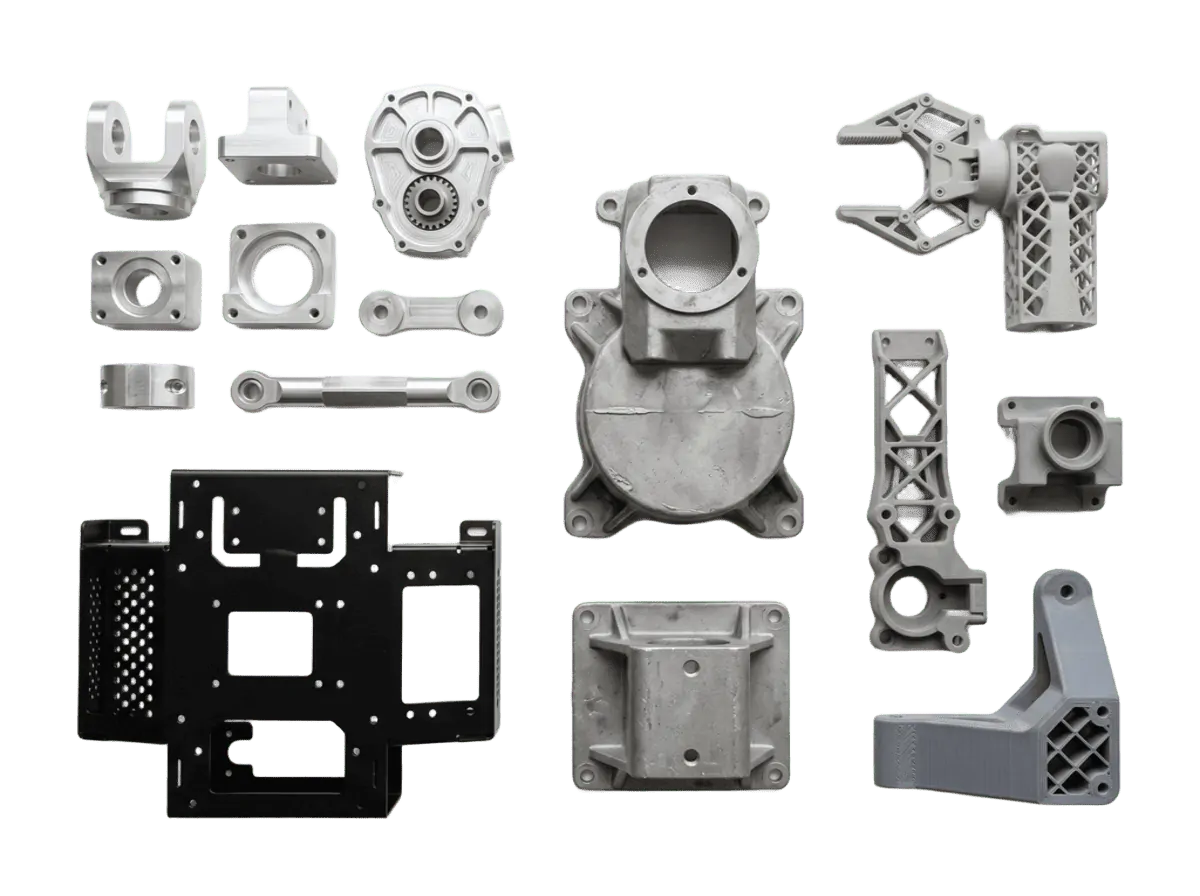
Best for high-precision metal and plastic parts requiring tight tolerances, structural strength, and repeatable quality.
Typical applications:
Motor housings, brackets, shafts, gearbox parts, structural frames
Suitable for lightweight enclosures, chassis, covers, panels, and structural assemblies.
Typical applications:
Robot enclosures, mounting plates, frames, control box housings
Ideal for concept verification, functional testing, and fast design iteration before tooling or production.
Typical applications:
Prototype housings, testing fixtures, assembly validation parts
Lightweight | Corrosion Resistance | Machinability
Aluminum alloys are widely used in robotics manufacturing for lightweight structures, high machinability, and corrosion resistance.
Excellent strength-to-weight ratio for robotic assemblies
Good corrosion resistance for long-term durability
Excellent machinability for precision CNC components
Compatible with anodizing and surface finishing
Suitable for lightweight structural applications
Typical applications: robot housings, brackets, frames, motor mounts
Strength | Wear Resistance | Corrosion Protection
Stainless steel is commonly used for robotics parts requiring durability, wear resistance, and structural stability.
High mechanical strength and rigidity
Excellent wear resistance for moving components
Good corrosion resistance in demanding environments
Suitable for precision machined components
Reliable long-term dimensional stability
Typical applications: shafts, fasteners, brackets, structural parts
Conductivity | Thermal Performance | Precision
Copper and brass are used for robotics components requiring electrical conductivity or thermal management.
Excellent electrical conductivity
Good thermal performance
Suitable for precision machined parts
Corrosion resistance available
Good dimensional stability
Typical applications: connectors, heat sinks, conductive parts
Wear Resistance | Low Friction | Durability
Bronze is commonly used for robotics components requiring wear resistance, low friction, and reliable performance in moving assemblies.
Excellent wear resistance for repeated motion
Low friction properties for sliding applications
Good corrosion resistance
Suitable for precision machined components
Reliable long-term durability
Typical applications: bushings, bearings, gears, wear plates, sliding components
Ultra-Lightweight | Structural Efficiency | Machinability
Magnesium alloys are suitable for robotics projects focused on reducing component weight.
Extremely lightweight material option
Good machinability for custom parts
Suitable for portable robotic systems
Helps improve movement efficiency
Good structural performance
Typical applications: lightweight housings, frames, covers
High Strength | Lightweight | Performance
Titanium alloys are ideal for robotics applications requiring lightweight performance and high structural strength.
High strength-to-weight ratio
Excellent corrosion resistance
Lightweight for performance optimization
Suitable for demanding environments
Ideal for high-performance robotic systems
Typical applications: lightweight frames, structural parts, precision assemblies
Corrosion Resistance | Wear Protection | Appearance
Anodizing is widely used for aluminum robotics components to improve corrosion resistance, surface hardness, and visual appearance.
Improved corrosion resistance
Enhanced surface hardness
Available in multiple colors
Better wear resistance
Clean and professional finish
Typical applications: aluminum housings, brackets, frames, covers
Durability | Protection | Appearance
Powder coating provides durable surface protection and improved appearance for robotics structural components and enclosures.
Excellent surface durability
Corrosion protection
Available in various colors and textures
Suitable for external parts
Cost-effective finishing solution
Typical applications: enclosures, frames, covers, structural parts
Conductivity | Corrosion Resistance | Surface Performance
Electroplating improves surface conductivity, corrosion resistance, and wear performance for selected robotics components.
Improved corrosion resistance
Enhanced conductivity options
Better wear resistance
Decorative and functional finishing
Suitable for specialty components
Typical applications: connectors, conductive parts, precision components
Surface Texture | Consistency | Preparation
Sandblasting creates a clean and uniform surface finish while preparing parts for additional coatings or finishing.
Uniform matte surface texture
Surface cleaning and preparation
Improved coating adhesion
Visual consistency improvement
Suitable for metal components
Typical applications: machined parts, housings, brackets, aluminum components
Corrosion Protection | Cleanliness | Surface Stability
Passivation improves corrosion resistance and surface cleanliness for stainless steel robotics parts.
Enhanced corrosion resistance
Improved surface cleanliness
No dimensional impact
Suitable for stainless steel parts
Long-term protection benefits
Typical applications: shafts, brackets, stainless steel assemblies
Identification | Traceability | Branding
Laser marking provides permanent part identification, branding, and traceability for robotics components.
Permanent marking solution
High precision detail
No material contact required
Suitable for serial numbers and logos
Clean professional appearance
Typical applications: branded parts, serial numbers, traceable components