
- Home
- Capabilities
- Solution
- Material
- Industry
- Resources
- Request a Quote
Views: 0 Author: Site Editor Publish Time: 2026-06-03 Origin: Site
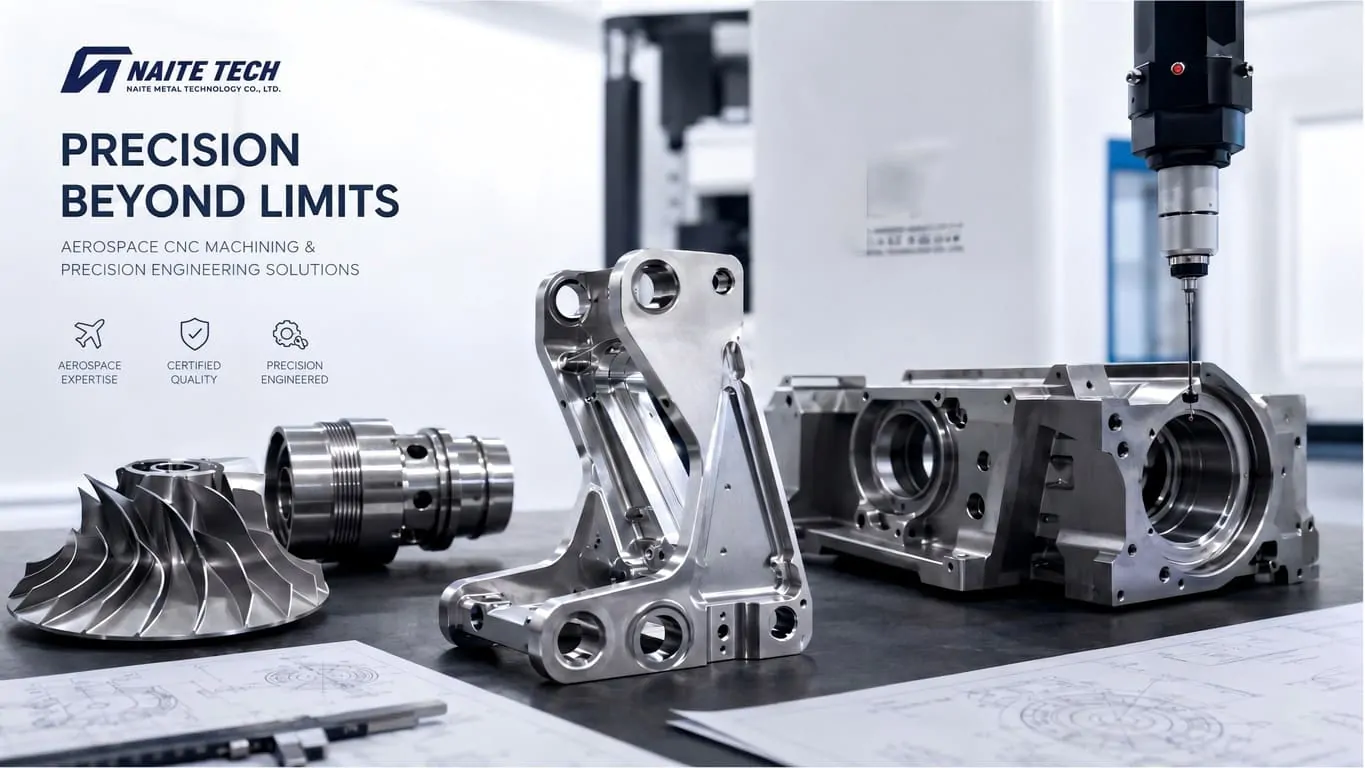
Aerospace CNC machining is used to manufacture mission-critical components that demand extreme dimensional accuracy, lightweight performance, material reliability, and complete process consistency.
From aircraft structural assemblies and turbine engine components to satellite hardware and UAV systems, aerospace parts often require complex geometries, difficult-to-machine alloys, and highly controlled production standards.
Unlike general industrial machining, aerospace manufacturing leaves little room for variation. A small deviation in tolerance, material traceability, or surface integrity can affect assembly fit, thermal performance, fatigue resistance, or long-term operational reliability.
This is why aerospace manufacturers frequently rely on advanced 5-axis milling capabilities, precision turning technologies, certified inspection workflows, and tightly controlled production documentation.
Common aerospace CNC materials include:
• Aluminum aerospace alloys (7075, 2024, 6061)
• Titanium grades such as Ti-6Al-4V
• Nickel-based superalloys including Inconel
• Engineering plastics such as PEEK and ULTEM
• Specialty stainless steels for structural and corrosion-resistant applications
Many buyers initially focus on machine count or quoted price. In aerospace production, experienced sourcing teams usually evaluate different factors first:
√ process stability
√ inspection capability
√ material certification control
√ geometry complexity handling
√ repeatability between prototype and production batches
A supplier capable of holding tight tolerances on aluminum prototypes may not necessarily manage titanium thermal distortion, thin-wall deformation, or aerospace documentation requirements during scaled production.
Understanding how aerospace CNC machining processes, materials, tolerances, inspection standards, and supplier capabilities interact is critical when selecting a manufacturing partner for high-precision applications.
In this guide, we'll cover aerospace machining methods, engineering material selection, quality control requirements, cost drivers, and practical supplier evaluation considerations used across modern aerospace manufacturing.
Related capabilities often involved in aerospace production include multi-axis machining services, high-precision turning operations, advanced metal finishing solutions, and custom component manufacturing workflows.
Aerospace CNC machining refers to the precision manufacturing of aircraft, spacecraft, satellite, and UAV components using computer-controlled machining technologies.
The process is used to produce parts that require highly controlled dimensional accuracy, repeatable quality, complex geometries, and reliable material performance under demanding operating conditions.
Typical aerospace machined components include:
• aircraft brackets
• structural housings
• landing gear components
• turbine and engine parts
• hydraulic fittings
• sensor enclosures
• satellite assemblies
• precision UAV hardware
Unlike conventional industrial production, aerospace machining frequently involves difficult materials, thin-wall structures, tight geometric tolerances, and extensive quality documentation requirements.
Many aerospace components must maintain dimensional stability under vibration, thermal cycling, high loads, corrosion exposure, or elevated operating temperatures.
As a result, aerospace manufacturing often relies on specialized production methods such as simultaneous 5-axis machining, precision rotational machining processes, high-accuracy inspection systems, and controlled post-processing workflows.
Although both use computer-controlled equipment, aerospace manufacturing requirements are substantially different from general CNC production.
Manufacturing Factor | Aerospace CNC Machining | Standard CNC Machining |
|---|---|---|
Typical Tolerance | Extremely tight | Moderate |
Material Complexity | Titanium, Inconel, aerospace alloys | Standard metals |
Geometry Complexity | High | Medium |
Inspection Requirements | Extensive | Basic |
Material Traceability | Often required | Sometimes optional |
Documentation | Strict | Limited |
Production Risk | High consequence | Lower consequence |
One of the most common sourcing misconceptions is assuming aerospace machining simply means "higher precision CNC."
In practice, aerospace production usually involves a broader manufacturing control system.
Experienced aerospace suppliers often manage:
— material certification tracking
— tooling optimization for exotic alloys
— process repeatability validation
— in-process inspection checkpoints
— dimensional reporting workflows
— production consistency between qualification runs and scaled manufacturing
For example, machining Ti-6Al-4V aerospace parts is rarely only a programming challenge. Tool wear behavior, heat accumulation, cutting parameter stability, and deformation management frequently become equally important variables.
This is one reason aerospace buyers commonly prioritize manufacturing discipline and process control alongside machining capability.
From prototype development to production-scale aerospace programs, manufacturers frequently combine advanced CNC milling technologies, tight-tolerance part production, engineered surface treatment options, and application-specific machining expertise to meet demanding performance requirements.
Precision is not simply a quality target in aerospace manufacturing — it directly affects component performance, assembly integrity, operational reliability, and long-term service life.
Aircraft, spacecraft, satellites, and UAV systems operate in environments where mechanical loads, vibration, temperature fluctuation, pressure variation, and weight limitations create extremely demanding engineering requirements.
In these conditions, small dimensional deviations can create disproportionately large downstream consequences.
For aerospace manufacturers, machining accuracy is often tied not only to part quality, but also to certification readiness, assembly success rates, and production repeatability.
Many aerospace components require exceptionally controlled dimensional accuracy to ensure proper fit, alignment, sealing performance, and load distribution.
Critical assemblies may involve:
• precision mating surfaces
• thin-wall structures
• threaded interfaces
• high-speed rotating components
• complex multi-axis geometries
Tolerance requirements frequently become more demanding when machining titanium alloys, turbine hardware, precision housings, or flight-critical assemblies.
Even minor dimensional variation can contribute to:
— assembly interference
— vibration instability
— accelerated wear
— reduced fatigue performance
— sealing failure
Manufacturers supporting aerospace applications commonly rely on ultra-precision machining workflows, advanced coordinate measurement capabilities, and tightly monitored process validation procedures to maintain consistency throughout production.
Weight optimization is one of the primary engineering objectives across aerospace programs.
Lower mass can improve:
• fuel efficiency
• payload capacity
• maneuverability
• launch economics
• overall system performance
This requirement pushes designers toward lightweight materials, topology-optimized geometries, and thin-wall component designs.
However, reduced material volume typically increases machining complexity.
Thin sections may deform during clamping.
Complex cavities can introduce vibration issues.
Heat-sensitive alloys may respond unpredictably under aggressive cutting conditions.
Supplier Insight:
Reducing weight is rarely only a design exercise.
From a manufacturing perspective, aggressive lightweighting often changes fixture strategy, toolpath planning, machining sequence, and inspection methodology.
Experienced aerospace suppliers frequently evaluate manufacturability alongside geometry optimization to prevent hidden production risks before parts reach the machine.
Complex lightweight aerospace components are often produced using multi-axis metal cutting solutions, high-performance milling strategies, and precision structural part machining methods.
Many aerospace systems operate under elevated temperatures or repeated thermal cycling conditions.
Engine components, propulsion systems, exhaust hardware, and certain space applications may expose materials to severe thermal environments.
This drives widespread use of:
• titanium alloys
• nickel superalloys
• heat-resistant stainless steels
• engineering polymers
These materials deliver excellent strength-to-weight performance and thermal stability, but frequently introduce significant machining challenges.
Common production difficulties include:
— rapid tool wear
— heat concentration
— chip evacuation problems
— dimensional instability
— extended machining cycles
Successfully machining aerospace materials often requires optimized cutting parameters, tooling selection, coolant management, and robust process control strategies.
Manufacturers frequently combine difficult-material machining expertise, high-temperature alloy processing capability, and specialized finishing technologies when producing demanding aerospace components.
Precision in aerospace manufacturing extends beyond dimensional measurement.
Documentation, traceability, and process accountability often form part of the production requirement.
Depending on application and customer expectations, aerospace programs may require:
• material certification records
• inspection reports
• First Article Inspection documentation
• process verification records
• dimensional validation reports
• batch traceability control
For suppliers, this means machining capability alone is usually insufficient.
Reliable aerospace manufacturing frequently depends on disciplined quality systems, controlled documentation workflows, and repeatable production governance.
Many production delays in aerospace projects do not originate from machining errors.
Documentation gaps, incomplete inspection records, material traceability issues, or process inconsistency between prototype and production batches can create equally significant challenges.
Buyers evaluating aerospace suppliers often review operational discipline and quality infrastructure as carefully as machine capabilityCompanies supporting aerospace production commonly invest in manufacturing quality assurance systems, process verification procedures, certified production management workflows, and advanced dimensional inspection resources to support demanding customer requirements.
CNC machining is widely used across aerospace manufacturing because it supports high dimensional accuracy, repeatable quality, complex geometries, and compatibility with advanced engineering materials.
From commercial aviation and defense systems to satellites and unmanned platforms, aerospace CNC machining helps produce components that must perform reliably under demanding operational conditions.
While applications vary by industry segment, several categories of aerospace components are particularly well suited for precision machining.
Structural aerospace parts frequently require a balance between lightweight design, mechanical strength, and dimensional stability.
Typical examples include:
• brackets
• support frames
• housings
• mounting interfaces
• structural connectors
• reinforcement components
Many of these parts incorporate pockets, ribs, internal cavities, and thin-wall geometries intended to reduce weight while maintaining structural integrity.
Producing these features often requires careful fixture planning, optimized cutting strategies, and machining methods capable of maintaining accuracy across multiple surfaces.
Lightweight aerospace structures can appear straightforward in CAD models but become significantly more challenging during production.
Thin sections may shift during clamping..
Internal cavities can amplify vibration.
Material removal strategy frequently influences final dimensional stability.
For this reason, aerospace manufacturers often evaluate machinability and process risk during early-stage design reviews rather than waiting for production validation.
Engine systems operate under some of the harshest environments in aerospace engineering.
Components exposed to elevated temperature, pressure, rotational loads, and thermal cycling require materials and manufacturing methods capable of maintaining performance consistency.
Common aerospace machined engine components include:
• turbine hardware
• compressor parts
• precision shafts
• heat-resistant housings
• fuel system elements
• sealing interfaces
These applications frequently involve titanium alloys, nickel superalloys, and high-performance stainless steels.
Compared with conventional metal cutting, aerospace engine manufacturing often introduces increased tool wear, thermal management challenges, and tighter process control requirements.
Suppliers producing propulsion-related parts typically depend on production experience with difficult high-temperature alloys to maintain dimensional consistency across demanding applications.
Landing gear assemblies and flight control systems require precision manufacturing because they directly influence mechanical movement, alignment, and operational safety.
Common examples include:
• actuator components
• bearing housings
• precision pins
• hydraulic interfaces
• linkage assemblies
• motion control hardware
Many of these parts combine tight tolerances with demanding surface requirements and fatigue performance expectations.
Achieving repeatable production quality frequently depends on controlled machining parameters, robust inspection procedures, and stable manufacturing processes across multiple production lots.
Satellite hardware and space-related applications often push aerospace machining requirements even further.
Mass reduction, dimensional precision, thermal stability, and material reliability become especially important in orbital environments.
Typical machined space components include:
• satellite housings
• communication system enclosures
• thermal management structures
• sensor supports
• precision instrument frames
• propulsion subsystem hardware
Space applications frequently place greater emphasis on documentation discipline, process consistency, and contamination control than many conventional industrial programs.
Successful production often depends not only on machining capability, but also on operational control throughout inspection, handling, finishing, and packaging stages.
Unmanned aerial systems continue to expand across commercial, industrial, mapping, inspection, and defense sectors.
As UAV designs evolve toward lighter structures and higher performance requirements, precision machining remains an important manufacturing solution for critical hardware.
Common UAV CNC machined components include:
• lightweight frames
• camera mounts
• propulsion brackets
• connector interfaces
• navigation hardware
• sensor housings
Many UAV projects prioritize rapid iteration, reduced lead times, and flexible production quantities.
As a result, manufacturers supporting unmanned platforms often combine prototyping agility with production scalability to support changing design cycles and shorter development timelines.
Some aerospace suppliers support these programs using manufacturing workflows tailored for complex unmanned platform components, particularly where lightweight geometry, tight packaging space, and multi-material requirements intersect.
Aerospace components rarely rely on a single manufacturing method.
Depending on geometry complexity, material behavior, dimensional requirements, and production volume, aerospace manufacturers often combine multiple machining technologies within the same production workflow.
Selecting the appropriate machining process influences not only dimensional accuracy, but also production efficiency, tooling stability, surface integrity, inspection workload, and overall manufacturing cost.
Understanding where each machining method performs best can help engineers and sourcing teams make better production decisions.
3 axis machining remains widely used in aerospace production for components with relatively accessible geometries and straightforward machining requirements.
Common applications include:
• brackets
• plates
• simple housings
• mounting structures
• support components
Because cutting movement is limited to three linear axes, 3 axis machining is typically suited for features that can be reached from fewer orientations.
For simpler aerospace components, this approach can offer:
• stable production efficiency
• predictable setup conditions
• reduced programming complexity
• cost-effective manufacturing
However, parts containing deep cavities, compound angles, multi-surface geometries, or intricate internal features frequently require more advanced machining approaches.
5 axis machining plays a central role in modern aerospace manufacturing.
Complex aerospace components often contain angled surfaces, organic geometries, undercuts, deep cavities, and multi-directional features that cannot be efficiently produced using conventional setups.
By enabling simultaneous movement across multiple axes, 5 axis machining supports improved access to difficult features while reducing repositioning requirements.
This approach is commonly used for:
• turbine components
• impellers
• structural aerospace brackets
• complex housings
• propulsion hardware
• precision aerospace assemblies
Compared with repeated multi-setup production, 5 axis machining can help reduce accumulated positioning error, shorten setup cycles, and improve machining consistency on highly complex parts.
Many aerospace manufacturers rely on manufacturing methods designed for complex multi-angle geometries when producing parts that demand tight dimensional control across multiple surfaces.
Choosing between 3 axis and 5 axis machining is not simply a machine selection decision.
Part geometry, setup count, tolerance accumulation risk, feature accessibility, and production scalability often influence which process delivers the best manufacturing outcome.
In aerospace production, reducing setups frequently improves repeatability, lowers fixture complexity, and minimizes dimensional variation across complex components.
Rotational aerospace components frequently depend on turning technologies to achieve dimensional consistency, concentricity, and precision surface control.
Typical turned aerospace components include:
• shafts
• connectors
• bushings
• threaded fittings
• hydraulic interfaces
• precision cylindrical parts
CNC turning is widely used where rotational symmetry and tight diameter control are critical requirements.
For smaller, highly precise components, Swiss machining can provide additional advantages through enhanced support near the cutting zone and improved stability during machining.
These capabilities become especially relevant for:
• miniature aerospace connectors
• precision pins
• medical-grade aerospace fasteners
• small high-tolerance cylindrical parts
Manufacturers supporting these applications often depend on production strategies optimized for precision rotational components to maintain dimensional repeatability at scale.
Electrical Discharge Machining (EDM) is commonly used in aerospace manufacturing when conventional cutting methods become impractical or inefficient.
Because EDM removes material through controlled electrical discharge rather than mechanical cutting force, it can support intricate features and difficult materials that challenge traditional machining processes.
Typical aerospace EDM applications include:
• narrow slots
• internal corners
• precision openings
• hardened materials
• delicate geometry features
• complex conductive alloys
Wire EDM is frequently used for precision profile cutting, while sinker EDM can support specialized cavity formation and intricate feature generation.
In aerospace manufacturing, EDM often complements conventional machining rather than replacing it.
Some aerospace components require dimensional refinement or surface characteristics that extend beyond conventional milling or turning operations.
Grinding and precision finishing methods can support:
• tighter dimensional correction
• improved surface quality
• refined sealing interfaces
• enhanced functional contact surfaces
These processes become especially important in applications involving rotating assemblies, bearing interfaces, sealing features, and demanding surface integrity requirements.
Aerospace manufacturers frequently combine machining operations with post-machining treatments intended to improve dimensional refinement and functional surface performance depending on application requirements.
Material selection plays a major role in aerospace CNC machining because it influences mechanical performance, thermal behavior, corrosion resistance, weight optimization, manufacturability, and production cost.
Unlike general industrial manufacturing, aerospace material decisions are rarely based on strength alone.
Engineers frequently evaluate a combination of factors including:
• strength-to-weight ratio
• thermal stability
• fatigue resistance
• environmental exposure
• machining behavior
• certification requirements
• lifecycle cost considerations
Different aerospace applications often prioritize different material characteristics.
Structural aircraft components may emphasize lightweight performance.
Engine systems typically require elevated heat resistance.
Space applications may focus more heavily on thermal stability and material reliability under extreme operating conditions.
Aluminum remains one of the most widely used aerospace machining materials because it combines relatively low weight, good machinability, and favorable mechanical performance.
Common aerospace aluminum grades include:
• 7075 aluminum
• 2024 aluminum
• 6061 aluminum
Among these materials, 7075 is frequently selected for applications requiring high strength and favorable weight characteristics.
2024 aluminum is commonly used where fatigue resistance becomes important.
6061 is often chosen for applications requiring balanced machinability, corrosion resistance, and manufacturing flexibility.
Compared with titanium or nickel superalloys, aluminum generally supports faster machining speeds and lower tooling stress.
However, lightweight aerospace aluminum parts can still introduce production challenges when thin walls, deep pockets, or complex structural geometries are involved.
Titanium alloys occupy a critical position in aerospace manufacturing due to their exceptional strength-to-weight ratio, corrosion resistance, and elevated temperature performance.
Ti-6Al-4V remains one of the most recognized aerospace titanium grades.
Typical titanium aerospace applications include:
• structural airframe hardware
• engine components
• aerospace fasteners
• brackets
• thermal-resistant assemblies
While titanium offers excellent engineering properties, machining behavior is significantly more demanding compared with aluminum.
Manufacturers frequently encounter:
— concentrated heat generation
— accelerated tool wear
— lower material removal efficiency
— cutting instability
— deformation management challenges
Successfully machining aerospace titanium components often depends on production expertise developed around heat-sensitive high-performance alloys rather than machine power alone.
Titanium machining capability is often evaluated by spindle power, tooling brands, or advertised machine specifications.
In real aerospace production, process stability frequently depends on cutting parameter control, heat management strategy, toolpath planning, fixturing approach, and the supplier's experience with repeatable titanium manufacturing.
Consistent results usually come from process discipline rather than equipment claims alone.
Nickel-based superalloys are frequently used in aerospace applications that require exceptional thermal resistance and mechanical stability under extreme operating conditions.
Inconel grades commonly appear in:
• turbine systems
• exhaust components
• combustion-related assemblies
• heat-exposed aerospace hardware
These materials can maintain strength at temperatures where many conventional alloys begin losing mechanical performance.
However, from a machining perspective, nickel superalloys often present some of the most difficult manufacturing conditions in aerospace production.
Common challenges include:
• severe tool wear
• elevated cutting temperatures
• work hardening tendencies
• reduced machining efficiency
• increased process sensitivity
Producing reliable aerospace components from these alloys frequently requires conservative machining strategies, controlled cutting conditions, and specialized manufacturing experience.
Certain aerospace applications continue to rely on stainless steels where corrosion resistance, mechanical strength, or environmental durability become important design considerations.
Common aerospace stainless grades may include:
• 17-4PH
• 15-5PH
• 316L
• specialized precipitation-hardening alloys
These materials are frequently used for:
• fittings
• support hardware
• housings
• mechanical interfaces
• corrosion-sensitive assemblies
Depending on alloy type and heat treatment condition, machining behavior can vary significantly between grades.
Not all aerospace components are manufactured from metal alloys.
Engineering plastics and high-performance polymers remain important across aerospace production because they can offer lightweight performance, chemical resistance, electrical insulation properties, and design flexibility.
Common aerospace polymers include:
• PEEK
• ULTEM
• PTFE
• specialized engineering thermoplastics
These materials may be used in:
• insulation systems
• aerospace interiors
• lightweight housings
• electrical assemblies
• specialized structural support functions
Material selection for aerospace plastics often requires balancing thermal behavior, dimensional stability, mechanical performance, and application environment requirements.
In aerospace manufacturing, dimensional accuracy is only one part of the quality requirement.
Successful aerospace production often depends on how tolerances, inspection systems, documentation practices, and manufacturing controls work together throughout the production lifecycle.
Because aerospace components may operate under vibration, thermal loading, pressure variation, cyclic stress, and critical assembly conditions, small dimensional deviations can affect much more than part appearance.
Tolerance strategy directly influences:
• assembly fit
• load distribution
• motion performance
• sealing effectiveness
• fatigue behavior
• operational reliability
For this reason, aerospace machining requirements frequently extend beyond standard commercial manufacturing expectations.
Tolerance requirements vary by component function, geometry complexity, material behavior, and customer specifications.
Certain aerospace parts may allow moderate dimensional variation, while others require extremely controlled feature accuracy.
Typical critical tolerance areas may include:
• bearing interfaces
• sealing surfaces
• threaded features
• precision bores
• mating geometries
• rotating assemblies
Maintaining repeatability across these features often requires stable fixturing, validated machining processes, controlled tool management, and disciplined inspection procedures.
In real manufacturing environments, achieving a tolerance target once is rarely the difficult part.
Maintaining consistency across multiple setups, material lots, production batches, and scaled manufacturing volumes is usually the greater challenge.
Geometric Dimensioning and Tolerancing (GD&T) plays a major role in aerospace component production because dimensional size alone does not fully define part functionality.
Aerospace drawings frequently include requirements related to:
• position
• flatness
• concentricity
• perpendicularity
• profile control
• runout
These controls help ensure that components function correctly within assemblies where alignment, motion control, sealing, or load transfer become critical.
For suppliers, accurate interpretation of GD&T requirements can be just as important as machining capability itself.
Misunderstanding datum structure, tolerance relationships, or inspection intent can introduce production risk even when basic dimensions appear compliant.
Surface condition often influences aerospace part performance as much as dimensional accuracy.
Depending on application, aerospace components may require controlled surface characteristics for:
• sealing behavior
• wear resistance
• fatigue performance
• corrosion protection
• fluid interaction
• assembly functionality
Machined surfaces may undergo additional treatments including polishing, coating preparation, anodizing, passivation, or other finishing processes depending on engineering requirements.
Many aerospace manufacturers integrate secondary treatments selected to improve corrosion performance, surface integrity, or application-specific functionality within broader production workflows.
Aerospace buyers frequently evaluate suppliers based not only on machining capability but also on operational quality systems.
AS9100 is widely recognized across aerospace manufacturing because it emphasizes structured quality management practices, risk awareness, documentation discipline, and process control.
Depending on customer requirements and program scope, suppliers may be expected to demonstrate capabilities related to:
• process control
• corrective action management
• supplier traceability
• inspection governance
• configuration control
• production documentation
Supplier qualification in aerospace environments often involves a combination of manufacturing capability assessment and operational system evaluation.
Aerospace buyers rarely evaluate suppliers solely by advertised tolerance numbers or machine inventory.
Production governance, documentation discipline, inspection consistency, and the supplier's ability to manage repeatable manufacturing processes frequently influence qualification decisions just as much as machining capability.
Strong aerospace manufacturing performance often reflects operational control systems working alongside technical production expertise.
First Article Inspection plays an important role in many aerospace manufacturing programs because it helps validate whether a production process can reliably produce parts that conform to engineering requirements.
FAI workflows may involve verification of:
• dimensions
• materials
• drawing requirements
• process documentation
• specification compliance
• traceability records
Beyond initial validation, aerospace production often depends on maintaining consistent documentation practices throughout the manufacturing lifecycle.
Material certification, inspection reporting, revision management, and process records frequently become essential components of aerospace supplier performance.
Coordinate Measuring Machine (CMM) inspection is commonly used in aerospace machining to support dimensional validation of complex geometries and critical features.
Compared with manual measurement alone, advanced inspection systems can provide improved capability for evaluating:
• intricate profiles
• multi-surface geometries
• datum relationships
• positional requirements
• complex dimensional datasets
For aerospace manufacturers, inspection capability is often closely connected to production confidence, process verification, and customer reporting expectations.
Many suppliers rely on inspection workflows developed for high-complexity dimensional verification when supporting aerospace programs with demanding geometry or documentation requirements.
Quality control in aerospace CNC machining extends far beyond final dimensional inspection.
Because aerospace components frequently operate within tightly controlled mechanical, thermal, and structural environments, manufacturers often implement layered verification systems throughout the production workflow rather than relying on end-of-process inspection alone.
The objective is not simply identifying defects after machining.
The broader goal is maintaining stable, repeatable manufacturing performance from raw material intake through final shipment.
Quality control often begins before machining starts.
Incoming material verification helps confirm that production inputs align with engineering, customer, and specification requirements.
Depending on project requirements, suppliers may review:
• material certifications
• alloy grades
• heat treatment condition
• lot traceability
• dimensional stock condition
• specification compliance
Material verification becomes especially important when working with aerospace titanium alloys, nickel superalloys, specialty stainless steels, or customer-controlled material sources.
Production issues originating from incorrect material condition, incomplete traceability, or specification mismatch can create downstream risk long before dimensional inspection begins.
Many aerospace manufacturers implement inspection checkpoints during machining rather than waiting until the part reaches final quality review.
In-process inspection can help identify:
• dimensional drift
• tooling wear impact
• setup deviation
• thermal variation
• process instability
• feature progression accuracy
Monitoring critical features during production may reduce scrap risk, improve process consistency, and support tighter control over complex aerospace geometries.
Depending on application requirements, manufacturers may use a combination of manual verification, probing systems, programmed measurement routines, and controlled inspection intervals throughout production.
Final inspection remains an important stage in aerospace CNC manufacturing because it provides documented confirmation that finished components satisfy engineering requirements.
Inspection activities may include evaluation of:
• critical dimensions
• GD&T features
• surface characteristics
• dimensional reports
• drawing compliance
• specification requirements
Complex aerospace parts frequently require more comprehensive verification compared with standard commercial components due to geometry complexity, tighter tolerances, or customer documentation expectations.
Many suppliers supporting demanding aerospace applications depend on measurement procedures designed for complex geometry validation and production reporting during final inspection activities.
Traceability frequently plays a central role in aerospace quality management.
Manufacturing records often extend beyond inspection results and may include documentation related to:
• material origin
• process history
• inspection records
• revision control
• batch identification
• production status tracking
Maintaining structured production records helps support repeatability, audit readiness, customer reporting, and long-term manufacturing accountability.
Supplier Perspective:
Many sourcing teams evaluate quality capability primarily through inspection equipment lists.
In practice, aerospace quality performance often depends just as heavily on how information moves through the manufacturing process.
A supplier may own advanced measurement equipment but still struggle with revision control, process documentation discipline, traceability management, or production consistency across multiple manufacturing cycles.
Reliable aerospace quality systems typically combine measurement capability with controlled operational execution.
Inspection equipment alone does not define aerospace quality capability.
Production consistency frequently depends on how suppliers manage material verification, process checkpoints, documentation control, revision handling, and dimensional validation throughout the manufacturing workflow.
Strong aerospace quality performance is usually built on disciplined operational systems rather than isolated inspection activities.
One of the less visible challenges in aerospace manufacturing is maintaining process repeatability when moving from prototype validation into scaled production.
A machining process that performs well for a single prototype batch may behave differently when variables such as production quantity, tooling life, operator consistency, scheduling pressure, or material lot variation begin influencing manufacturing conditions.
This is one reason aerospace buyers frequently evaluate not only whether a supplier can produce a compliant sample part, but whether the production system can sustain repeatable quality over time.
Manufacturers supporting aerospace programs often develop structured production methods intended to maintain process stability across prototype and recurring manufacturing environments.
Aerospace CNC machining often involves a combination of demanding materials, complex geometries, strict documentation requirements, and elevated quality expectations.
While modern machining technologies provide powerful production capabilities, aerospace manufacturing still presents challenges that require careful process planning, production discipline, and application-specific manufacturing experience.
Successfully producing aerospace components frequently depends on managing multiple technical variables simultaneously rather than optimizing a single machining parameter.
Titanium alloys remain among the most important aerospace materials, but they also represent one of the more demanding machining environments in precision manufacturing.
Compared with aluminum or standard steels, titanium machining commonly introduces:
• concentrated cutting heat
• reduced thermal conductivity
• accelerated tool wear
• unstable chip evacuation
• increased process sensitivity
Because heat tends to remain near the cutting zone rather than dissipating efficiently through the material, machining conditions can change rapidly if cutting parameters, tooling condition, or process stability are not properly controlled.
Maintaining dimensional consistency on titanium aerospace components often requires careful balancing between productivity, tool life, thermal behavior, and surface integrity.
Many aerospace manufacturers rely on production approaches developed for demanding high-performance alloy environments when supporting titanium-intensive applications.
Tool wear is a normal part of machining, but aerospace production frequently amplifies its impact.
Difficult alloys, tight tolerances, and long machining cycles can increase sensitivity to tooling condition over time.
As cutting tools degrade, manufacturers may encounter:
• dimensional drift
• inconsistent surface quality
• feature variation
• unstable cutting behavior
• reduced repeatability
Managing tool life in aerospace environments often requires more than scheduled replacement intervals.
Suppliers may implement tooling strategies based on monitored performance data, process validation, controlled cutting conditions, and application-specific machining knowledge.
Lightweight design remains a major priority in aerospace engineering.
However, reducing weight frequently creates additional manufacturing complexity.
Thin-wall structures, internal pockets, lattice-inspired geometries, and aggressive material removal strategies can increase susceptibility to:
• clamping distortion
• vibration
• dimensional movement
• residual stress effects
• post-machining instability
Supplier Perspective:
Many lightweight aerospace parts appear manufacturable during design review but behave differently once material removal begins.
Geometry stiffness, workholding strategy, machining sequence, and cutting load distribution often influence final dimensional behavior more than expected.
Experienced aerospace suppliers frequently evaluate production risk early to avoid costly redesign cycles or unstable manufacturing outcomes.
Lightweight aerospace geometry does not automatically translate into manufacturable geometry.
Thin sections, deep pockets, and aggressive weight-reduction features often require careful evaluation of fixturing strategy, machining order, cutting dynamics, and dimensional stability before production begins.
Early manufacturability assessment can significantly reduce production risk, process instability, and downstream engineering revisions.
Modern aerospace components increasingly incorporate compound curves, deep cavities, angled surfaces, internal features, and multi-orientation machining requirements.
As geometry complexity increases, manufacturers may face additional challenges related to:
• setup accumulation error
• tool accessibility
• feature reach limitations
• tolerance stacking
• inspection complexity
Producing these components often requires thoughtful coordination between programming strategy, fixturing design, machining method selection, and dimensional verification planning.
Complex aerospace geometries are frequently supported using manufacturing strategies intended for intricate multi-surface metal components where repeatable accuracy must be maintained across multiple orientations.
Technical production challenges are only part of aerospace manufacturing reality.
Many aerospace programs also operate within demanding documentation, compliance, and supplier management environments.
Production expectations may include:
• traceability requirements
• revision control
• certification alignment
• inspection reporting
• supplier qualification processes
• controlled production records
For suppliers, maintaining compliance readiness can become an operational challenge alongside machining execution itself.
A technically capable supplier may still struggle if documentation discipline, production governance, or process consistency cannot support customer expectations.
Successful aerospace manufacturing frequently depends on balancing technical production capability with stable operational execution.
Aerospace CNC machining requirements often change significantly between prototype development and production manufacturing.
While both stages may involve the same component design, production priorities, process controls, documentation expectations, and manufacturing strategies frequently evolve as programs move toward scaled delivery.
Understanding these differences can help engineering teams and sourcing managers make more effective supplier and production decisions.
Manufacturing Consideration | Prototype Machining | Production Manufacturing |
|---|---|---|
Primary Goal | Design validation | Repeatable supply |
Production Quantity | Low volume | Recurring batches |
Speed Priority | High | Balanced |
Process Optimization | Limited | Extensive |
Cost Structure | Flexible | Efficiency-driven |
Documentation Demand | Moderate | Often expanded |
Repeatability Requirement | Important | Critical |
Prototype machining plays an important role during aerospace product development because it allows engineering teams to evaluate functionality, fit, geometry, manufacturability, and early design assumptions before broader production commitment.
Prototype aerospace projects commonly focus on:
• geometry validation
• assembly testing
• engineering refinement
• material evaluation
• performance verification
• manufacturability assessment
At this stage, engineering agility often becomes more important than maximum production efficiency.
Design revisions, drawing updates, tolerance adjustments, or feature modifications may occur frequently during development cycles.
As a result, suppliers supporting aerospace prototyping often prioritize responsiveness, engineering communication, and flexible manufacturing capability.
Complex aerospace prototypes are frequently produced using production workflows adapted for iterative engineering development and low-volume precision manufacturing.
Moving from prototype approval into recurring manufacturing introduces a different set of production challenges.
A component that machines successfully in a one-off engineering build may behave differently once production variables begin scaling.
Manufacturers frequently need to evaluate:
• tooling strategy
• fixture repeatability
• process capability
• inspection scalability
• documentation readiness
• material supply stability
Small inefficiencies that appear manageable during prototype production can become significant cost, scheduling, or consistency issues during recurring manufacturing.
This transition stage often determines whether a machining process can support long-term aerospace production requirements.
Producing a successful prototype does not automatically demonstrate production readiness.
Aerospace buyers frequently evaluate whether suppliers can maintain repeatability, documentation control, process stability, and manufacturing consistency when moving beyond engineering samples into recurring production environments.
Prototype capability and production capability often overlap — but they are not always the same operational strength.
Production aerospace machining typically places stronger emphasis on repeatability, process discipline, operational control, and manufacturing efficiency.
Compared with prototype work, recurring aerospace production may involve increased attention to:
• controlled work instructions
• validated production methods
• tooling management
• inspection governance
• traceability maintenance
• delivery consistency
At this stage, suppliers are often expected to balance quality performance with schedule reliability, process stability, and scalable manufacturing execution.
For many aerospace programs, long-term supplier success depends not only on technical machining capability but also on operational maturity across production planning, quality management, and controlled manufacturing execution.
Manufacturers supporting these environments often rely on structured production systems designed for repeatable precision manufacturing across evolving aerospace demand cycles.
Aerospace CNC machining costs can vary significantly depending on component geometry, material selection, tolerance requirements, inspection scope, production quantity, and documentation expectations.
Unlike standard commercial machining, aerospace pricing is often influenced by a broader combination of technical and operational variables.
Two components with similar size or machining time may still generate very different manufacturing costs once aerospace requirements begin affecting process planning, inspection workload, material control, or production complexity.
Understanding the primary cost drivers can help engineering teams and sourcing managers make more informed production decisions.
Material choice often becomes one of the most important contributors to aerospace machining cost.
Different materials can influence:
• cutting speed
• tooling consumption
• machining cycle time
• setup strategy
• process stability
• inspection requirements
Aluminum aerospace alloys generally support faster machining conditions and lower tooling burden.
Titanium alloys typically require more conservative machining parameters due to heat concentration and tooling sensitivity.
Nickel superalloys and heat-resistant materials frequently increase manufacturing complexity even further because of elevated tool wear, lower material removal efficiency, and stricter process control requirements.
As material difficulty increases, production cost often rises alongside machining time, tooling demand, and manufacturing risk.
Component geometry has a major impact on aerospace CNC pricing.
Simple prismatic components may require fewer setups, shorter machining cycles, and relatively straightforward programming approaches.
However, cost structures can change rapidly when parts incorporate:
• compound angles
• thin-wall features
• deep cavities
• internal channels
• complex surface transitions
• multi-orientation machining requirements
Complex aerospace geometries frequently introduce additional programming effort, fixturing requirements, inspection complexity, and longer production cycles.
Manufacturers producing intricate aerospace parts often rely on production methods developed for demanding multi-surface machining environments where setup reduction and process stability become important cost considerations.
Manufacturing cost is influenced not only by how a part is machined, but also by how it must be verified.
Tighter tolerances may require:
• increased inspection frequency
• enhanced process monitoring
• additional setup validation
• tighter tooling management
• expanded dimensional reporting
• controlled documentation practices
Customer expectations related to traceability, inspection reporting, First Article Inspection, or production records can further affect manufacturing workload.
In aerospace production environments, quality requirements frequently become a meaningful component of total manufacturing cost.
Production volume can significantly influence aerospace machining economics.
Prototype quantities, pilot builds, and recurring production programs often involve different cost structures.
Low-volume aerospace manufacturing may emphasize:
• engineering flexibility
• rapid setup execution
• design responsiveness
• accelerated scheduling
Production manufacturing typically introduces greater focus on:
• process optimization
• tooling efficiency
• repeatability
• production planning
• workflow standardization
A machining strategy that performs well for engineering prototypes may not necessarily represent the most efficient approach for recurring production environments.
The lowest quoted aerospace machining price does not always represent the lowest production cost.
Cost outcomes are frequently shaped by process stability, scrap risk, inspection workload, manufacturing repeatability, and the supplier's ability to maintain controlled production execution across changing demand conditions.
Experienced aerospace sourcing teams often evaluate total manufacturing performance rather than comparing piece price alone.
Reducing aerospace manufacturing cost is rarely about removing quality requirements or selecting the cheapest supplier.
In many cases, cost improvement comes from improving manufacturability, reducing process complexity, or optimizing production strategy earlier in the development cycle.
Potential cost reduction opportunities may include:
• geometry simplification
• tolerance rationalization
• material optimization
• setup reduction
• standardized feature design
• earlier manufacturability review
Suppliers with aerospace manufacturing experience often support engineering teams by identifying production improvements before machining begins.
Early design collaboration can sometimes reduce machining difficulty, inspection burden, and recurring production cost without compromising engineering intent.
Some manufacturers support these efforts through engineering-focused manufacturing reviews intended to improve production efficiency before release to machining.
Selecting an aerospace CNC machining supplier usually involves more than comparing machining capability, machine count, or quoted pricing.
Aerospace manufacturing programs often require suppliers that can balance technical execution, operational control, production repeatability, and long-term supply reliability.
Because aerospace components frequently operate under demanding performance conditions, sourcing decisions may influence not only production outcomes but also program schedules, quality consistency, and future manufacturing scalability.
Evaluating suppliers through a broader manufacturing lens can help reduce qualification risk and improve long-term sourcing performance.
Technical capability remains one of the first areas buyers typically evaluate.
However, aerospace manufacturing capability often extends beyond whether a supplier can machine a given material or geometry.
Areas commonly reviewed include:
• material experience
• geometry handling capability
• tolerance management
• machining process selection
• inspection readiness
• manufacturing scalability
Different aerospace applications may require different production strengths.
A supplier experienced in aluminum structural machining may not necessarily deliver the same process confidence when working with titanium thermal management challenges, complex turbine geometries, or documentation-heavy aerospace programs.
Matching supplier capability with application requirements often becomes more important than evaluating generic equipment specifications alone.
Quality capability in aerospace environments frequently depends on structured operational execution.
Buyers commonly review how suppliers manage:
• quality procedures
• process governance
• revision control
• traceability systems
• inspection practices
• production documentation
Strong machining capability can lose value if operational systems fail to support production consistency or customer requirements.
Many aerospace sourcing teams evaluate whether suppliers can maintain stable manufacturing behavior not only during sample production, but also throughout recurring manufacturing environments.
Suppliers supporting demanding aerospace applications often depend on production systems built around controlled verification, repeatable execution, and disciplined manufacturing governance.
Supplier performance is not determined solely on the shop floor.
Engineering communication, technical responsiveness, and project coordination can strongly influence sourcing outcomes, especially during prototype development, design iteration, or changing production conditions.
Many aerospace projects involve:
• drawing revisions
• specification clarification
• manufacturability discussions
• inspection alignment
• delivery coordination
• engineering adjustments
Clear technical communication may help reduce misunderstandings, shorten qualification cycles, and improve production efficiency across the supplier relationship.
A supplier capable of delivering prototype parts quickly may not always be equally prepared for recurring aerospace manufacturing requirements.
As programs evolve, buyers often assess whether suppliers can support:
• growing production demand
• stable lead times
• controlled scheduling
• repeatable manufacturing output
• production planning discipline
• long-term supply continuity
Scalability becomes increasingly important when aerospace programs transition from engineering builds into low-volume or recurring production environments.
Many aerospace sourcing decisions fail not because suppliers cannot machine the part, but because manufacturing systems, communication practices, documentation execution, or long-term production control cannot reliably support program requirements.
Successful supplier selection frequently involves evaluating technical capability, operational maturity, engineering collaboration, and production reliability together rather than independently.
Strong aerospace partnerships are often built on repeatable manufacturing behavior as much as machining expertise.
When qualifying an aerospace CNC machining supplier, buyers often benefit from moving beyond general capability claims and asking more production-focused questions.
Examples may include:
• What aerospace materials do you machine regularly?
• How do you manage dimensional repeatability between prototype and production runs?
• What inspection and reporting methods are used for complex components?
• How is material traceability controlled?
• How are engineering revisions communicated through production?
• What processes support recurring manufacturing consistency?
Questions like these can help reveal how suppliers manage real manufacturing conditions rather than how they present marketing capability alone.
Manufacturers supporting aerospace sourcing programs often strengthen supplier evaluation through structured technical review processes intended to align manufacturing capability with application requirements.
Aerospace CNC machining often requires more than precision equipment or machining capacity alone.
Successful aerospace manufacturing frequently depends on how materials, processes, quality systems, engineering communication, and production execution work together throughout the manufacturing lifecycle.
At NAITE TECH, aerospace machining projects are approached with attention to geometry complexity, material behavior, inspection requirements, and long-term production consistency.
Whether supporting prototype development, low-volume aerospace builds, or recurring manufacturing requirements, production planning focuses on balancing precision, manufacturability, and reliable delivery execution.
NAITE TECH supports aerospace machining projects involving complex geometries, demanding materials, and precision manufacturing requirements.
Production capabilities may support applications involving:
• aircraft structural components
• UAV and drone hardware
• precision housings
• aerospace brackets
• mechanical assemblies
• custom aerospace machined components
Supported material categories include:
• aerospace aluminum alloys
• titanium alloys
• stainless steels
• engineering plastics
• high-performance production materials
Projects may involve a combination of precision milling, turning, multi-axis machining, and secondary processing depending on application requirements.
Manufacturing support often integrates production methods suited for complex geometry machining and demanding engineering applications.
Aerospace manufacturing environments frequently require disciplined production control, dimensional verification, and structured operational execution.
NAITE TECH supports production through emphasis on:
• controlled manufacturing workflows
• dimensional inspection practices
• process monitoring
• production traceability
• engineering communication
• manufacturing coordination
The objective is not simply machining parts to print, but supporting stable production execution throughout changing project requirements and manufacturing stages.
Aerospace projects commonly involve evolving technical requirements, manufacturability considerations, material decisions, and production planning discussions.
Engineering communication can play a meaningful role in helping teams move from RFQ through manufacturing execution.
Support may include:
• manufacturability feedback
• production planning discussion
• process alignment
• technical clarification
• application-focused manufacturing input
• project coordination
Rather than treating machining as an isolated production task, aerospace manufacturing support often benefits from collaboration between engineering intent and manufacturing execution.
In aerospace manufacturing, supplier value is often shaped by more than machining output alone.
Material understanding, engineering responsiveness, process stability, inspection discipline, and production coordination can collectively influence manufacturing success across prototype, low-volume, and recurring production environments.
Long-term supplier performance frequently depends on how consistently these elements work together under real production conditions.
If your project involves aerospace components requiring tight dimensional control, difficult materials, lightweight geometries, or complex manufacturing requirements, early engineering discussion can often help improve production planning and manufacturability outcomes.
Sharing drawings, quantities, material requirements, or project context allows manufacturing teams to evaluate feasibility, process fit, and production considerations before machining begins.
For aerospace applications involving precision manufacturing requirements, early technical alignment frequently helps reduce downstream production uncertainty and sourcing risk.
Explore manufacturing support options for precision aerospace component development and recurring production requirements or request a technical review for your project.
Aerospace CNC machining refers to the precision manufacturing of aerospace components using computer-controlled machining technologies such as CNC milling, CNC turning, multi-axis machining, EDM, and precision finishing processes.
These components may be used in aircraft structures, propulsion systems, UAV platforms, satellite hardware, aerospace assemblies, and other high-performance engineering applications where dimensional accuracy, material control, and manufacturing consistency are important requirements.
CNC machining supports high dimensional precision, complex geometries, repeatable production quality, and compatibility with advanced aerospace materials.
Compared with some manufacturing methods, CNC machining can offer strong flexibility for prototype development, low-volume production, and high-precision aerospace component manufacturing.
Common aerospace machining materials include aluminum alloys, titanium alloys, stainless steels, nickel superalloys such as Inconel, and selected engineering plastics.
Material selection typically depends on application requirements involving strength, weight reduction, thermal resistance, corrosion behavior, and operating environment.
Titanium alloys present machining challenges because they generate concentrated cutting heat, exhibit relatively low thermal conductivity, and can accelerate tool wear under demanding machining conditions.
Successfully machining aerospace titanium components often requires controlled cutting strategies, stable process planning, heat management considerations, and experience working with high-performance alloys.
Aerospace tolerance requirements vary significantly depending on component function, material behavior, geometry complexity, and customer specifications.
Critical features such as precision bores, bearing interfaces, sealing surfaces, and mating geometries may require tighter dimensional control than general structural features.
Not all aerospace components require 5 axis machining.
However, complex aerospace geometries involving compound angles, deep cavities, intricate surfaces, or multi-orientation features frequently benefit from multi-axis manufacturing approaches because they can reduce setups and improve machining access.
Aerospace machining cost depends on multiple variables including material type, geometry complexity, tolerance requirements, inspection scope, production quantity, documentation requirements, and manufacturing strategy.
Titanium alloys, nickel superalloys, tight tolerances, and complex inspection requirements can significantly influence overall manufacturing cost.
Supplier evaluation frequently involves reviewing technical capability, material experience, quality systems, inspection practices, documentation control, communication responsiveness, and production scalability.
Aerospace sourcing decisions often consider operational consistency alongside machining capability itself.
Yes.
CNC machining is commonly used for aerospace prototypes, engineering validation builds, pilot production, and recurring low-volume manufacturing because it supports precision production with relatively strong flexibility across changing project requirements.


