
- Home
- Capabilities
- Solution
- Material
- Industry
- Resources
- Request a Quote
Views: 0 Author: Written by NAITE TECH Engineering Team Publish Time: 2026-05-12 Origin: Site
China has become one of the most important manufacturing hubs for aerospace CNC machining, offering a strong balance of precision, scalability, and cost efficiency.
From prototype development to production-ready aerospace components, Chinese CNC machining suppliers support global aerospace manufacturers with advanced manufacturing capabilities, experienced engineering teams, and flexible production capacity.
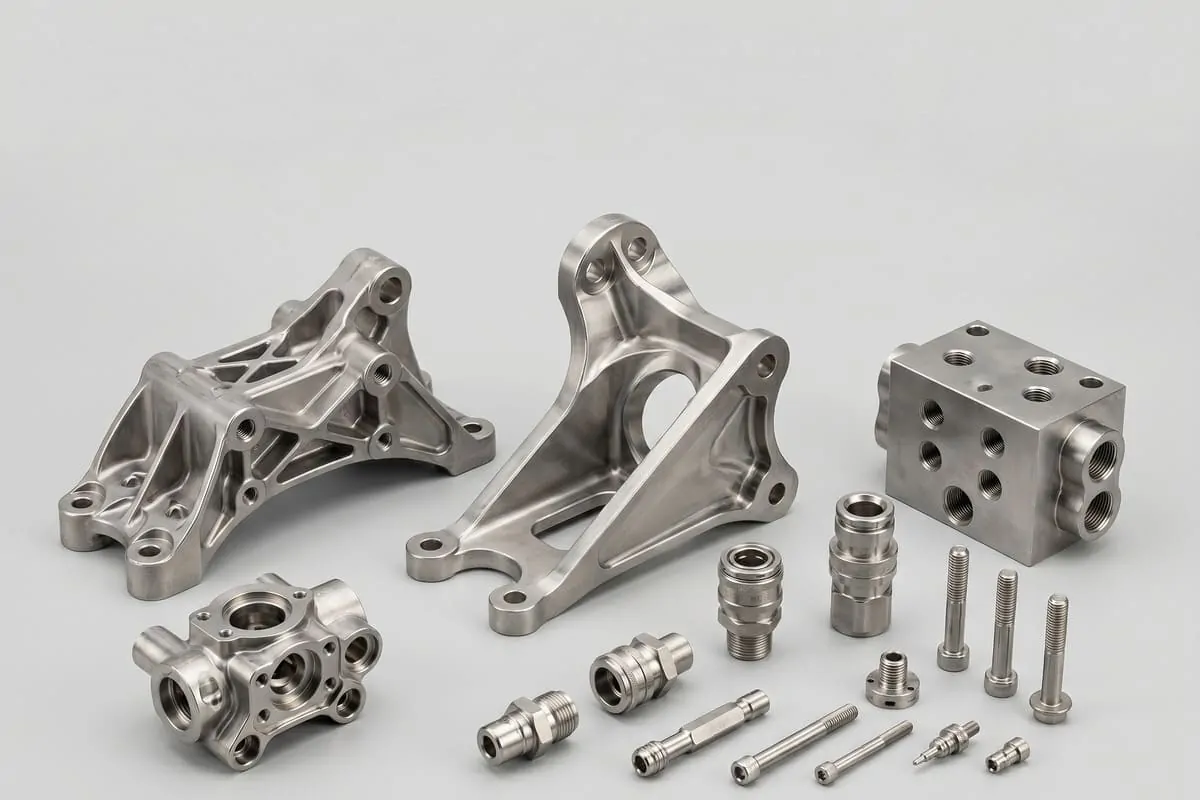
For aerospace buyers, China offers several advantages:
Competitive pricing compared with North America and Europe
Strong capabilities in 5-axis CNC machining, turning, and milling
Access to aerospace-grade materials such as titanium, aluminum 7075, Inconel, and stainless steel
Fast prototyping and low-volume production support
Mature export experience for international projects
However, aerospace manufacturing comes with strict quality, traceability, and certification requirements. Choosing the right CNC machining partner is critical to ensuring part accuracy, material compliance, and production consistency.
This guide compares the top aerospace CNC machining companies in China to help engineers, sourcing teams, and OEM buyers identify qualified suppliers for precision aerospace components.
Upload your drawings and project requirements to receive:
To make this list more useful for aerospace buyers, we evaluated each supplier based on technical capability, quality systems, and export readiness.
Suppliers with proven experience in aerospace parts manufacturing, including structural components, brackets, housings, connectors, and precision assemblies.
Assessment of machining capacity including:
3-axis CNC machining
4-axis CNC machining
5-axis CNC machining
Swiss machining
CNC turning and milling
Ability to machine aerospace-grade materials such as:
Titanium alloys
Aluminum 6061 / 7075
Stainless steel 17-4PH
Inconel
PEEK and engineering plastics
Preference was given to suppliers with:
AS9100 certification
ISO 9001 certification
Material traceability systems
First Article Inspection (FAI) capability
Evaluation of inspection equipment and quality procedures, including:
CMM inspection
Optical measurement systems
Surface roughness testing
Material verification
Suppliers serving customers in:
USA
Europe
Canada
Australia
with experience in export documentation, packaging, and logistics coordination.
Company | Location | Certifications | Core Capabilities | Materials | Export Experience |
|---|---|---|---|---|---|
NAITE TECH | Changzhou | ISO 9001 | Swiss machining, CNC turning, milling, 5-axis machining | Titanium, aluminum, stainless steel, Inconel | Global |
RapidDirect | Shenzhen | ISO 9001 | Rapid prototyping, CNC machining | Metals & plastics | Global |
WayKen | Shenzhen | ISO 9001 | CNC machining, vacuum casting, prototyping | Aluminum, steel, plastics | Global |
Runsom Precision | Shenzhen | ISO 9001 | Precision CNC machining | Titanium, aluminum, brass | Global |
HLH Prototypes | Shenzhen | ISO 9001 | CNC machining, tooling, injection molding | Metals & plastics | Global |
Junying | Dongguan | ISO 9001 | CNC machining, turning, milling | Metals & plastics | Global |
DEK | Shenzhen | ISO 9001 | Precision machining services | Titanium, steel, aluminum | Global |
3ERP | Zhongshan | ISO 9001 | Prototyping and CNC machining | Metals & plastics | Global |
China is home to a growing number of CNC machining suppliers serving aerospace projects worldwide. Below are some of the most recognized manufacturers known for precision machining capabilities, material expertise, and export experience.
Location: Changzhou, China
Website: www.naitetech.com
NAITE TECH provides precision CNC machining services for aerospace, medical, robotics, and industrial applications. The company focuses on tight-tolerance components, complex geometries, and production flexibility for both prototypes and repeat orders.
With extensive experience in machining titanium, aluminum, stainless steel, and high-performance alloys, NAITE TECH supports aerospace buyers requiring dimensional accuracy, stable quality, and responsive engineering support.
CNC mill-turn machining
Low-volume and production manufacturing
Titanium alloys
Aluminum 6061 / 7075
Stainless steel
Inconel
Brass and engineering plastics
Tight tolerances up to ±0.005 mm
Engineering review before production
Flexible low-volume support
Inspection reports available
Export experience with global customers
Location: Shenzhen, China
RapidDirect is known for online manufacturing services, rapid prototyping, and CNC machining. The company offers instant quoting systems and supports customers looking for fast turnaround on machined parts.
RapidDirect is often chosen for prototype development, low-volume production, and engineering validation projects.
CNC machining
Sheet metal fabrication
Injection molding
3D printing
Fast quotation system
Prototype-friendly workflows
Global shipping support
Location: Shenzhen, China
WayKen focuses on rapid manufacturing services, including CNC machining, vacuum casting, and prototype production.
The company serves automotive, aerospace, and consumer electronics customers requiring functional prototypes and short-run production parts.
CNC milling and turning
Prototype machining
Surface finishing
Vacuum casting
Strong prototyping capabilities
Flexible production volumes
Engineering support
Location: Shenzhen, China
Runsom Precision specializes in custom CNC machining services for precision metal and plastic parts.
The company supports industries requiring close tolerances and customized manufacturing, including aerospace and industrial equipment.
CNC milling
CNC turning
Surface treatment
Competitive pricing
Multi-material support
Export-focused operations
Location: Shenzhen, China
HLH Prototypes provides rapid manufacturing solutions covering CNC machining, tooling, and low-volume manufacturing.
The company is commonly selected by engineering teams needing quick iteration and product development support.
CNC machining
Injection molding
Vacuum casting
Tooling
Strong project management
Broad manufacturing capabilities
Location: Dongguan, China
Junying offers CNC machining services for custom metal and plastic parts, with a focus on turning, milling, and precision component manufacturing.
CNC turning
CNC milling
Grinding
Competitive lead times
Flexible order quantities
Location: Shenzhen, China
DEK provides precision machining services with experience in custom parts manufacturing for global customers.
The company supports projects requiring dimensional consistency and multiple surface finishing options.
CNC machining
EDM
Surface finishing
Inspection capability
Precision machining experience
Location: Zhongshan, China
3ERP is a manufacturing service provider focused on rapid prototyping and CNC machining.
The company is often used by product teams requiring fast iteration and engineering samples.
CNC machining
Rapid prototyping
Low-volume manufacturing
Quick turnaround
Prototype support
Location: Zhongshan, China
Star Rapid offers CNC machining, tooling, and injection molding services for international product development teams.
CNC machining
Tooling
Injection molding
Prototype-to-production workflow
Global project experience
Location: Shenzhen, China
Sunrise Metal provides precision manufacturing solutions including CNC machining and die casting.
The company supports aerospace, electronics, and industrial customers.
CNC machining
Die casting
Surface treatment
Integrated manufacturing processes
Export manufacturing experience
For aerospace manufacturers and sourcing teams, China has become an increasingly practical option for precision component manufacturing.
Beyond competitive pricing, many Chinese suppliers now offer advanced machining capabilities, engineering support, and production flexibility that align with the requirements of aerospace projects.
One of the main reasons buyers source aerospace parts from China is cost efficiency.
Compared with suppliers in North America and Europe, Chinese manufacturers often provide more competitive pricing due to established supply chains, production scale, and labor efficiency.
This makes China especially attractive for:
Prototype validation
Bridge production
Low-to-medium volume orders
Cost-sensitive aerospace programs
For companies developing new aerospace systems, combining cost savings with reliable manufacturing can significantly reduce project risk and development cost.
Buyers often use custom aerospace parts suppliers in China to lower machining costs while maintaining strict tolerance requirements.
Aerospace components often involve complex geometries, lightweight structures, and tight dimensional tolerances.
Many Chinese suppliers now offer advanced:
5 axis CNC machining
CNC turning and milling
Swiss machining
Multi-axis mill-turn machining
These processes are widely used for manufacturing:
structural brackets
housings
connectors
shafts
turbine-related components
custom fixtures
For complex geometries and reduced setup error, buyers frequently prioritize suppliers offering precision CNC milling and multi-axis machining support.
Speed matters in aerospace product development.
Chinese CNC suppliers are often well positioned to support:
design validation
prototype iterations
engineering changes
low-volume pre-production
This is particularly valuable for aerospace startups, R&D teams, and OEMs moving through rapid development cycles.
Many buyers rely on rapid prototyping services before moving into larger production runs, allowing teams to test functionality, fit, and assembly performance earlier in the development process.
A responsive supplier can also provide manufacturability feedback before production begins, helping reduce unnecessary machining cost and design issues.
Aerospace manufacturing requires materials with high strength-to-weight ratios, corrosion resistance, and thermal stability.
Chinese aerospace CNC suppliers commonly machine:
Titanium alloys
Aluminum 6061 / 7075
Stainless steel 17-4PH
Inconel
PEEK and engineering plastics
This allows aerospace buyers to source a wide range of flight-critical and structural parts from a single supplier.
For titanium-heavy applications, many projects specifically require suppliers with proven titanium CNC machining experience.
Not all aerospace projects require immediate mass production.
Many sourcing teams need a supplier capable of handling both:
prototype quantities
engineering samples
pilot runs
repeat production orders
Chinese suppliers are often more flexible with MOQs, making them suitable for evolving aerospace projects.
A supplier that can support both CNC machining services and production scaling reduces the need to qualify multiple vendors.
This improves project continuity and quality consistency over time.
Many top Chinese machining suppliers have years of export experience serving customers in:
United States
Germany
Canada
Australia
United Kingdom
This includes familiarity with:
export packaging
documentation
logistics coordination
inspection reporting
For international aerospace buyers, working with an export-experienced supplier reduces communication friction and delivery risk.
Aerospace manufacturing has far stricter requirements than general industrial machining.
When sourcing aerospace components, price and lead time are important, but supplier qualification should always come first.
Before selecting a machining partner, buyers should evaluate certifications, quality systems, and documentation capabilities.
AS9100 is one of the most recognized quality management standards in the aerospace industry.
It is built on ISO 9001 but includes additional requirements specific to aerospace manufacturing, including:
risk management
configuration control
product traceability
documentation procedures
supplier management
For aerospace buyers, AS9100 certification often indicates a more mature quality system and stronger process control.
When sourcing high-value or critical components, many OEMs prioritize suppliers with AS9100 or AS9100-aligned processes.
While not aerospace-specific, ISO 9001 remains a baseline requirement for many machining suppliers.
ISO 9001 focuses on:
process standardization
quality consistency
corrective actions
continuous improvement
Many suppliers offering CNC machining services use ISO 9001 as their foundational quality framework.
Although ISO 9001 alone may not satisfy all aerospace requirements, it is often the minimum qualification expected for precision manufacturing suppliers.
Material traceability is essential in aerospace manufacturing.
Buyers should confirm whether suppliers can provide:
mill test certificates
raw material certificates
heat number traceability
lot tracking
This is especially important for aerospace-grade materials such as:
titanium alloys
aluminum 7075
Inconel
stainless steel 17-4PH
Without proper traceability, even well-machined parts may not meet project compliance requirements.
Suppliers with strong custom aerospace parts experience typically have more mature traceability systems in place.
First Article Inspection helps verify that initial parts meet drawing requirements before production continues.
A proper FAI report generally includes:
dimensional results
drawing ballooning
inspection records
material verification
FAI is commonly required for:
new product introduction
engineering changes
critical aerospace assemblies
For aerospace buyers, confirming FAI capability can reduce production risk and improve first-pass success rates.
A qualified aerospace CNC supplier should also have appropriate inspection capabilities.
Common inspection equipment includes:
CMM machines
optical measurement systems
height gauges
roughness testers
hardness testers
These tools help verify dimensional consistency and surface quality throughout production.
Suppliers focused on precision CNC milling and tight-tolerance machining should be able to provide measurement reports when requested.
Beyond machining, many aerospace projects require compliant finishing and documentation.
Ask suppliers whether they support:
anodizing
passivation
electropolishing
bead blasting
laser marking
Documentation may include:
Certificate of Conformance (CoC)
inspection reports
material certifications
RoHS / REACH declarations
This is particularly useful when consolidating manufacturing and finishing under one supplier.
Aerospace projects often involve more documentation than general machining work.
Before placing orders, buyers should confirm whether the supplier can support:
packing lists
commercial invoices
customs documents
inspection packages
Suppliers with international experience and established rapid prototyping services workflows often handle export requirements more efficiently.
Material selection plays a critical role in aerospace manufacturing.
Different aerospace applications require different combinations of strength, weight reduction, corrosion resistance, and thermal stability.
Many Chinese suppliers offering aerospace machining services support a wide range of aerospace-grade metals and engineering plastics.
Below are some of the most commonly machined materials used in aerospace projects.
Titanium is widely used in aerospace due to its excellent strength-to-weight ratio, corrosion resistance, and heat resistance.
Common aerospace titanium grades include:
Titanium Grade 2
Titanium Grade 5 (Ti-6Al-4V)
Titanium is commonly used for:
structural components
brackets
housings
fasteners
engine-related parts
Although titanium offers strong performance, it is more difficult to machine because of:
heat concentration
tool wear
material hardness
This makes supplier experience especially important.
For projects requiring lightweight, high-strength components, buyers often prioritize suppliers with proven titanium CNC machining capabilities.
Aluminum remains one of the most widely used materials in aerospace machining.
7075 offers:
high strength
excellent fatigue resistance
lightweight performance
It is commonly used in:
aircraft structures
fixtures
brackets
tooling components
6061 is often selected for:
prototype parts
housings
general aerospace assemblies
Benefits include:
good machinability
corrosion resistance
cost efficiency
Suppliers offering precision CNC milling frequently machine both 6061 and 7075 for aerospace applications.
Stainless steel is commonly used when strength, wear resistance, and corrosion resistance are required.
Common aerospace grades include:
303 stainless steel
304 stainless steel
316 stainless steel
17-4PH stainless steel
Typical applications:
shafts
fittings
valve components
brackets
support hardware
17-4PH is especially popular for aerospace parts requiring both strength and dimensional stability.
Inconel is a nickel-based superalloy known for excellent performance under extreme temperatures and corrosive environments.
It is commonly used in:
turbine components
exhaust systems
engine parts
thermal applications
Benefits include:
high-temperature stability
oxidation resistance
corrosion resistance
However, Inconel is difficult to machine and requires controlled cutting strategies.
Suppliers with advanced 5 axis CNC machining and tooling experience are generally better suited for these materials.
Although less common in structural aerospace applications, brass and copper materials are still used in:
connectors
electrical components
fittings
thermal management parts
Benefits include:
conductivity
machinability
corrosion resistance
These materials are often used in aerospace electronics and communication systems.
Not all aerospace parts are metal.
High-performance plastics are widely used for lightweight and electrically insulating applications.
Common materials include:
PEEK
Delrin
PTFE
Nylon
ABS
Applications include:
insulators
bushings
lightweight housings
prototype assemblies
For product development and early validation, many teams combine engineering plastics with rapid prototyping services before finalizing metal components.
Choosing the right material affects:
part performance
manufacturing cost
lead time
compliance requirements
A qualified supplier should be able to recommend suitable materials based on:
load requirements
environmental conditions
weight targets
machining complexity
This is one reason many aerospace buyers prefer working with suppliers experienced in both custom aerospace parts manufacturing and engineering consultation.
Finding a CNC supplier for aerospace projects is not simply about comparing prices.
A lower quote may reduce upfront cost, but inconsistent quality, communication delays, or poor process control can create far greater risk later.
Before placing an order, aerospace buyers should evaluate suppliers across technical capability, quality systems, and project support.
Not every CNC supplier is suitable for aerospace manufacturing.
A supplier may be capable of machining industrial or automotive parts but lack the process discipline required for aerospace projects.
Ask potential suppliers:
Have you manufactured aerospace components before?
What types of aerospace parts have you produced?
Which materials do you commonly machine?
Suppliers experienced in custom aerospace parts are generally more familiar with tight tolerances, inspection requirements, and documentation expectations.
Aerospace parts often involve complex geometries and tight tolerances.
Before supplier selection, confirm whether the manufacturer supports the required processes.
Typical aerospace capabilities include:
CNC turning
CNC milling
Swiss machining
multi-axis machining
mill-turn machining
For more complex structures, suppliers offering 5 axis CNC machining are often preferred because they can reduce setup changes, improve accuracy, and machine more complex features efficiently.
Quality consistency is critical in aerospace manufacturing.
A reliable supplier should have documented quality procedures and inspection workflows.
Ask whether they provide:
incoming material inspection
in-process inspection
final inspection
inspection reports
Also confirm available equipment, such as:
CMM machines
optical inspection
roughness testing
Suppliers focused on precision CNC milling and high-tolerance components typically maintain stronger inspection standards.
Aerospace buyers should never overlook material documentation.
Before ordering, verify whether the supplier can provide:
raw material certificates
mill test reports
lot traceability
heat number tracking
This is especially important for projects involving:
titanium
Inconel
aerospace aluminum grades
Suppliers experienced in titanium CNC machining usually have more mature traceability procedures.
Strong engineering communication can prevent expensive production errors.
A good supplier should be able to review drawings and provide feedback before manufacturing begins.
Look for support such as:
manufacturability review
tolerance optimization
material recommendations
cost reduction suggestions
Suppliers offering rapid prototyping services are often better equipped to support early-stage product development and engineering iterations.
Aerospace projects rarely move directly from prototype to full production.
Many projects require multiple stages:
prototype
validation build
pilot production
repeat orders
Choose a supplier capable of scaling production as your project evolves.
A partner offering both CNC machining services and scalable production support can simplify long-term supplier management.
Fast lead time only matters if it is realistic.
Ask suppliers:
What is your typical prototype lead time?
What is your production lead time?
How do you handle urgent orders?
Reliable scheduling is often more valuable than overly aggressive delivery promises.
For international buyers, export experience matters.
A qualified supplier should understand:
international packaging standards
export documentation
customs coordination
logistics communication
This reduces delays and minimizes delivery issues for overseas projects.
Before committing to larger production volumes, consider starting with a smaller trial order.
A pilot order allows buyers to evaluate:
communication efficiency
machining quality
packaging quality
delivery reliability
This is often the most practical way to qualify a new aerospace supplier.
In aerospace manufacturing, supplier stability matters.
The best supplier is not always the cheapest option, but the one that consistently delivers:
quality
documentation
engineering support
reliable delivery
Long-term supplier relationships often reduce project risk and improve procurement efficiency over time.
China has become an increasingly important manufacturing destination for aerospace CNC machining, offering a strong balance of precision, production flexibility, and cost efficiency.
From prototype development to repeat production, many Chinese suppliers now support aerospace projects with advanced machining capabilities, experienced engineering teams, and mature export workflows.
However, selecting the right supplier requires more than comparing quotations.
A qualified aerospace machining partner should offer:
proven machining capability
quality control systems
material traceability
engineering communication
stable delivery performance
Whether you are sourcing titanium structural parts, precision housings, or complex multi-axis components, choosing the right supplier can significantly reduce project risk and improve production efficiency.
For buyers looking to balance quality, responsiveness, and manufacturing flexibility, working with an experienced supplier offering aerospace machining services and scalable CNC machining services can provide long-term advantages.
Whether you are developing prototypes, validating designs, or scaling production, choosing the right supplier early can save both time and cost.
We work with materials including titanium, aluminum, stainless steel, and high-performance alloys for precision aerospace applications.
Upload your CAD files or drawings to receive:
Response within 12 hours • NDA available • Global shipping support
The best supplier depends on your project requirements, including materials, tolerances, certifications, and production volume.
Yes. Many Chinese suppliers support aerospace manufacturing projects, including prototype parts, structural components, brackets, housings, and precision assemblies.
Yes. Many advanced suppliers provide 5-axis CNC machining for complex aerospace geometries, reduced setups, and tighter tolerances.
Yes. Many suppliers specialize in titanium machining, including Grade 2 and Grade 5 titanium components.
Many precision suppliers can achieve tolerances as tight as ±0.01 mm, and ±0.005 mm for critical features depending on geometry and material.


