
- Home
- Capabilities
- Solution
- Material
- Industry
- Resources
- Request a Quote
Views: 0 Author: Site Editor Publish Time: 2025-11-03 Origin: Site
At NAITE TECH, we believe that precision defines progress. This article explores the science, technology, and business of CNC machining — the foundation of modern manufacturing.
CNC machining, or Computer Numerical Control machining, represents a cornerstone of modern manufacturing. Unlike traditional manual machining, CNC relies on computer systems to control machine tools with exceptional accuracy. From aerospace components to medical implants, CNC machining enables the creation of parts that meet the most stringent tolerances and quality standards.
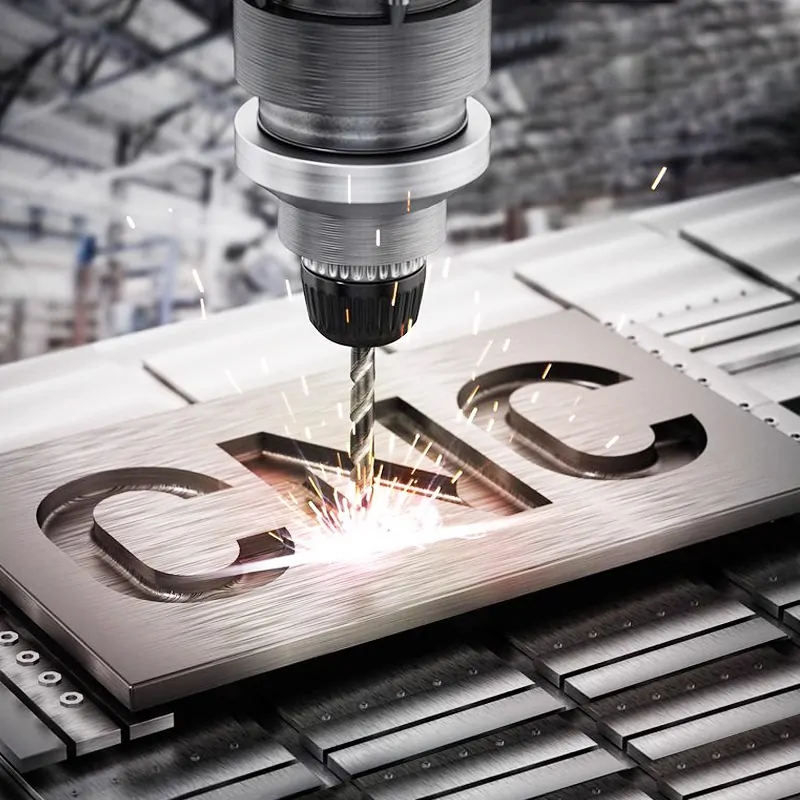
In today’s global market, precision, repeatability, and efficiency are not optional — they are required. Companies like NAITE TECH leverage CNC technology to deliver products that exceed client expectations, whether in prototyping, low-volume production, or large-scale manufacturing.
CNC machining evolved from manual milling, turning, and drilling techniques developed over centuries. In the 1940s and 1950s, engineers began automating machine tools using punched tape and early computer controls. This breakthrough enabled parts to be manufactured with much higher consistency than human operators could achieve.
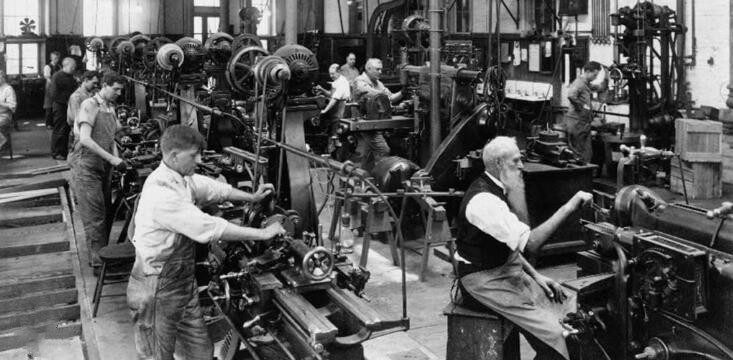
Key milestones include:
1952: First CNC machine tool developed at MIT for numerical control research.
1970s: Integration of microprocessors allowed improved flexibility and complex programming.
1980s: Multi-axis CNC machines emerged, enabling intricate geometries in aerospace and automotive applications.
2000s onward: Widespread adoption of 5-axis machining and integration with CAD/CAM software, IoT, and smart manufacturing systems.
This history highlights how CNC machining has continuously evolved, making it a critical enabler of precision manufacturing worldwide.
CNC precision machining is the process of converting a digital design into a physical component with high accuracy and repeatability. It is widely used in industries that demand tight tolerances, complex geometries, and superior surface finishes, such as aerospace, medical, and automotive manufacturing. At NAITE TECH, our CNC processes combine advanced machinery, skilled engineering, and automated systems to deliver parts that consistently meet or exceed specifications.
The CNC process can be broken down into five main stages, each critical to achieving precision and efficiency:
Every CNC project begins with a digital 3D model created in CAD (Computer-Aided Design) software. This model defines all geometric features, tolerances, and critical surfaces. Advanced CAD programs allow engineers to simulate stress, thermal, and material behaviors, ensuring that the design is manufacturable.
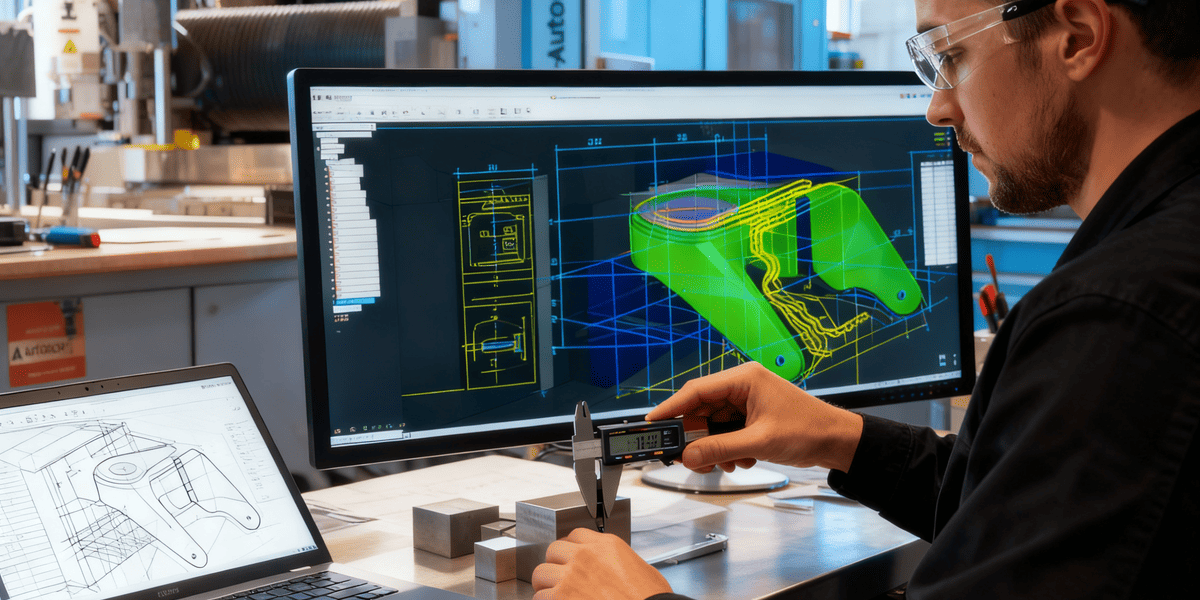
Key considerations at this stage include:
Selecting proper geometries for machinability
Designing for tool accessibility
Determining critical tolerances for mating parts
Optimizing part orientation to reduce material waste and cycle time
By refining the design digitally, manufacturers can reduce trial-and-error on the shop floor, saving time and cost.
Once the CAD model is finalized, it is imported into CAM (Computer-Aided Manufacturing) software, which converts the 3D geometry into machine-readable instructions, typically known as G-Code.
This stage defines:
Tool paths: The exact movement of cutting tools along multiple axes
Cutting parameters: Feed rate, spindle speed, depth of cut, and step-over
Tool selection: Type, size, and material of cutting tools
Clamping and fixturing strategies: To secure the workpiece without distortion
At NAITE TECH, CAM engineers leverage simulation tools to verify tool paths, avoid collisions, and optimize cycle times before any material is cut. This step ensures both precision and efficiency during actual machining.

Accurate machine setup is critical for CNC success. This involves:
Mounting the raw material on fixtures or vices
Installing appropriate cutting tools in the spindle or tool changer
Setting machine zero points and calibrating axes
Choosing coolant systems to manage heat and chip removal
Proper setup prevents part deformation, tool wear, and inaccuracies. Skilled machinists ensure that the machine environment is optimized for repeatable and consistent results.

Once the machine is running, the CNC system executes the programmed operations automatically. Modern CNC machines feature:
Closed-loop feedback systems that continuously measure position and adjust motor movements
Spindle load monitoring to prevent tool breakage
Temperature and vibration sensors to ensure machining stability
Adaptive control algorithms that adjust feed rates and spindle speed dynamically based on cutting conditions
This level of automation allows lights-out manufacturing, where machines can run unattended overnight, producing high-quality parts consistently. It also minimizes human error and improves production efficiency.
After machining, parts undergo rigorous quality inspection. Common methods include:
Coordinate Measuring Machines (CMM) to verify 3D dimensions
Laser scanning and optical inspection for complex surfaces
Surface roughness testers to ensure proper finish
Microscopy or SEM analysis for micro-scale features
Post-processing may include deburring, polishing, anodizing, plating, or coating to achieve functional or aesthetic requirements. At NAITE TECH, every part is tracked through a digital quality system, ensuring full traceability from design to delivery.
Tool Wear and Management: Cutting tools degrade over time. Optimized tool paths, proper speeds and feeds, and automated tool-change systems extend tool life while maintaining precision.
Material-Specific Strategies: Metals like titanium require slower cutting and specialized tooling, while plastics may need coolant adjustments to prevent melting or deformation.
Process Optimization: Advanced software allows simulation of multiple strategies to minimize cycle time and cost while maintaining part quality.
Integration with Manufacturing Systems: CNC machines at NAITE TECH are linked to ERP and production scheduling software, allowing real-time monitoring, predictive maintenance, and inventory management.
By combining design accuracy, precise programming, skilled setup, automated machining, and rigorous quality control, CNC precision machining ensures that every part delivered meets engineering specifications, performance requirements, and industry standards. For clients, this translates to:
Reduced risk of errors or rejects
Faster time-to-market
Consistent quality for prototyping and production runs
Flexibility to manufacture complex geometries efficiently
At NAITE TECH, mastering each stage of CNC machining ensures our clients receive precision-engineered components that enhance product performance and competitiveness.
Understanding CNC machines requires familiarity with their essential components:
Controller and Software: The brain of the machine, interpreting G-Code and sending commands to motors.
Motors and Drive Systems: Typically stepper or servo motors, controlling the motion of axes with precision.
Cutting Tools and Tool Changers: Specialized tools for milling, drilling, turning, or engraving; automatic tool changers increase efficiency.
Workholding and Fixtures: Securely hold parts during machining to prevent deformation or vibration.
Feedback Systems: Closed-loop or open-loop systems measure performance in real-time, enabling corrective actions.
CNC machining combines a variety of equipment types and manufacturing operations to produce parts with exceptional accuracy, surface quality, and repeatability. Each machine type has distinct capabilities and is optimized for specific geometries, materials, and production volumes.
Understanding these differences helps engineers select the right process, minimize cost, and achieve consistent results.
CNC milling is one of the most versatile and widely used machining processes. It removes material using a rotating, multi-point cutting tool that moves along multiple axes.
Depending on the configuration, milling machines can perform a wide range of operations — from face milling and slot cutting to complex 3D contouring.
Common categories include:
3-Axis Milling: Standard for machining flat surfaces, holes, and simple contours.
4-Axis Milling: Adds rotational movement around one axis, enabling access to multiple sides of a part without manual repositioning.
5-Axis Milling: Provides simultaneous movement along five axes, allowing for the production of complex freeform geometries such as turbine blades, orthopedic implants, and impellers.
High-end 5-axis systems maintain micron-level accuracy through dynamic tool-path optimization, real-time thermal compensation, and vibration control.
CNC turning — performed on a lathe — is primarily used to create cylindrical or conical shapes. In this process, the workpiece rotates while a stationary cutting tool removes material.
Turning operations include facing, boring, threading, and grooving.
Modern turn-mill centers combine both milling and turning functions in one setup, allowing the machining of complex parts with multiple features in a single cycle. This hybrid capability improves accuracy and reduces overall production time, making it ideal for components such as valves, connectors, and precision shafts.
CNC drilling machines automate the process of producing precise holes at defined locations and depths. They can perform standard drilling, peck drilling (for deep holes), and tapping operations.
Advanced drilling centers incorporate coolant-through spindles, which remove chips and heat during machining, enhancing accuracy and tool life.
Boring machines, on the other hand, are used to enlarge or finish pre-drilled holes to exact dimensions and surface finishes. These are often employed in applications where tight concentricity and alignment are critical.
CNC grinding machines deliver extremely fine finishes and tight tolerances, typically required in toolmaking, die production, or precision mechanical assemblies.
Depending on the part geometry, different configurations are used:
Surface Grinders for flat surfaces
Cylindrical Grinders for shafts and round parts
Centerless Grinders for high-volume production of small cylindrical components
CNC control enables automatic wheel dressing, in-process measurement, and adaptive speed control — ensuring consistent surface quality even across large batches.
EDM is a non-traditional machining process that removes material through electrical discharges between an electrode and the workpiece. It is particularly effective for hard metals and intricate geometries that are difficult to machine by conventional methods.
There are two primary types:
Wire EDM: Uses a continuously fed wire to cut profiles through conductive materials with high precision.
Sinker EDM: Uses a shaped electrode to erode cavities and contours into the workpiece.
EDM can achieve sub-micron accuracy and is widely used in mold-making, die manufacturing, and the production of complex aerospace or medical parts.
These machines represent specialized CNC systems for cutting sheet and plate materials, each offering distinct advantages:
Plasma Cutting: Utilizes a high-temperature plasma arc to slice through conductive metals like steel, aluminum, and copper. It is fast and economical for medium-precision applications.
Laser Cutting: Employs a focused laser beam to achieve fine, burr-free edges and tight tolerances. Commonly used in the electronics, automotive, and sheet metal industries.
Waterjet Cutting: Uses a high-pressure stream of water mixed with abrasives to cut materials without heat distortion — suitable for metals, ceramics, glass, and composites.
Each cutting process is chosen based on material properties, thickness, and required edge quality.
CNC routers resemble milling machines but are optimized for lighter materials such as plastics, composites, wood, and aluminum. They operate at higher spindle speeds and are commonly used in furniture manufacturing, prototyping, and signage.
Their large working areas make them ideal for producing big, flat components or panels with intricate surface patterns.
Recent advancements have led to multi-tasking machines that combine several machining capabilities — milling, turning, drilling, and even additive manufacturing — into one platform.
These systems minimize the need for re-clamping and manual handling, improving dimensional accuracy and throughput. Hybrid CNC machines, which integrate 3D printing and subtractive machining, are also gaining traction for rapid prototyping and repair applications.
Beyond the main machine types, overall CNC capability also depends on automation systems and supporting technology:
Automatic Tool Changers (ATC) for seamless tool swaps
Robotic part loading/unloading systems
Probing and in-process measurement sensors
Coolant management and chip evacuation systems
Real-time machine monitoring and IoT integration
Together, these systems turn CNC machining into a highly automated, data-driven manufacturing environment capable of continuous production with minimal human intervention.
Choosing the correct CNC machine and operation depends on several factors:
Material type (metal, plastic, composite, ceramic)
Design complexity and geometry
Tolerance and surface finish requirements
Production volume and cost target
Lead time and post-processing needs
In practice, most precision manufacturing facilities integrate multiple CNC systems under one roof — combining milling, turning, EDM, and finishing operations to deliver complete, ready-to-assemble components.
This comprehensive understanding of CNC machine types and operations allows manufacturers to leverage the full potential of modern digital manufacturing — achieving not only dimensional precision but also production flexibility, speed, and scalability.
| Material Type | Material Grade | Typical Applications | Machining Characteristics | Recommended Cutting Strategy | Compatible Surface Finishes |
|---|---|---|---|---|---|
| Aluminum | 6061, 7075 | Aerospace housings, enclosures, brackets | Excellent machinability, low tool wear | High spindle speed, aggressive feed | Anodizing, powder coating, brushing |
| Stainless Steel | 303, 304, 316, 17-4PH | Medical devices, food-grade parts, shafts | Work hardening, low thermal conductivity | Moderate speed, rigid fixturing | Polishing, bead blasting, electroplating |
| Titanium | Ti-6Al-4V | Aerospace, implants, high-strength components | Poor heat dissipation, tool wear risk | Low speed, high-pressure coolant | Polishing, passivation |
| Brass | C360, C260 | Electrical connectors, fittings | Easy to machine, minimal burrs | High speed, light feed | Polishing, electroplating |
| Copper | C110 | Heat sinks, conductors | Ductile, prone to burr formation | Sharp tooling, controlled feed | Polishing, electroplating |
| Engineering Plastics | ABS, Nylon, Delrin (POM) | Housings, gears, precision plastic parts | Thermal expansion, soft material | Lower clamping force, sharp tools | Painting, polishing |
| High-Performance Plastics | PEEK, PTFE | Medical, aerospace, semiconductor | Heat-sensitive, high cost | Controlled speed, minimal heat | Polishing |
| Composites | CFRP, Fiberglass | Aerospace panels, structural parts | Abrasive fibers, delamination risk | Diamond-coated tools, dust control | Clear coating, sealing |
| Surface Finish | Suitable Materials | Primary Benefits | Typical Applications |
|---|---|---|---|
| Anodizing | Aluminum alloys | Corrosion resistance, wear protection | Aerospace, electronics housings |
| Powder Coating | Steel, aluminum | Thick, durable coating | Enclosures, brackets |
| Polishing / Buffing | Stainless steel, brass | Smooth or mirror finish | Medical, decorative parts |
| Electroplating | Steel, copper, brass | Improved hardness & conductivity | Electrical components |
| Brushing | Stainless steel, aluminum | Uniform matte texture | Consumer products |
| Bead Blasting | Metals & plastics | Non-reflective, uniform surface | Aerospace, industrial parts |
Material hardness and thermal behavior directly impact tool selection and cutting parameters
Surface finishing requirements affect achievable tolerances and post-processing sequence
Early material–finish pairing reduces cost and prevents rework
NAITE TECH Engineering Tip
NAITE TECH integrates material properties, machining strategy, and surface finishing into a single optimized workflow—ensuring consistent results from prototype to production.
Effective design improves manufacturability, reduces cost, and enhances part longevity. Key considerations include:
Wall Thickness: Maintain uniform walls to avoid warping or vibration.
Fillet Radius: Rounded corners reduce stress concentration and extend tool life.
Hole Depth and Spacing: Ensure accessibility for tools and proper coolant flow.
Tolerance Management: Design within realistic machine capabilities to avoid excessive scrap or rework.
DFM Principles: Optimize geometry for easier machining and shorter production time.
Exceptional precision and repeatability
Scalable production volumes
Versatility across materials and geometries
Rapid prototyping and fast iteration
Automation reduces human error
Higher setup cost for small batches
Programming and toolpath creation require skilled operators
Certain geometries may need multiple setups or secondary operations
CNC machining is ubiquitous across industries:
Aerospace & Defense: Turbine blades, structural components, precision fasteners
Automotive: Engine parts, transmission components, custom body panels
Medical Devices: Implants, surgical instruments, dental appliances
Industrial Equipment: Robotics, automation tools, valves, and pumps
Consumer Electronics: Housings, connectors, heatsinks
CNC offers higher surface finish and material options
Better suited for structural and high-strength components
CNC ideal for low to medium volumes and custom parts
Injection molding is cost-effective for large-scale production
CNC provides 3D complex geometries
Sheet metal is better for simple, flat, or bent components
IoT integration: Machines communicate with central systems
Adaptive control: Automatic adjustments for cutting forces
Predictive maintenance: Minimize downtime
Digital twins: Virtual simulation of machining processes
Lights-out production: Unattended operation for efficiency
High-precision manufacturing relies on strict quality assurance:
Coordinate Measuring Machines (CMM) for 3D measurement
Surface roughness testers for finish verification
Dimensional standards: ISO 2768, AS9100
In-process verification ensures errors are caught early
NAITE TECH maintains multi-level inspection protocols, combining automated and manual techniques to guarantee client satisfaction.
NAITE TECH delivers comprehensive, end-to-end manufacturing solutions, supporting clients from early-stage design consultation through precision machining, finishing, and final delivery. Our vertically integrated capabilities enable tighter quality control, shorter lead times, and scalable production for both prototyping and serial manufacturing.
Our advanced CNC machining services support a wide range of geometries, tolerances, and materials, from simple prismatic components to highly complex precision parts.
3-axis to 5-axis CNC Milling
Suitable for intricate contours, undercuts, and multi-face machining with high positional accuracy. Ideal for aerospace, medical, and high-end industrial components.
CNC Turning, Drilling, and EDM
High-precision turning and drilling for rotational parts, combined with EDM processes for hard materials, micro-features, and complex internal geometries.
Complex Part Geometries
One-stop machining of multi-feature parts through advanced toolpath strategies, live tooling, and reduced setup requirements.
For projects transitioning from prototype to production, our molding services provide cost-effective scalability.
Rapid Tooling for Prototyping
Aluminum and soft steel molds enable fast validation of part design, fit, and function before full-scale production.
Injection Molding for Low to Medium Volume Production
Suitable for functional end-use components with consistent quality, repeatability, and optimized unit cost.
We offer flexible fabrication solutions to support sheet metal and structural components, fully integrated with machining and assembly.
Sheet Metal Cutting and Bending
Precision laser cutting, CNC punching, and bending for enclosures, brackets, and chassis components.
Welding and Assembly
TIG, MIG, and spot welding combined with mechanical assembly ensure strong, reliable structures.
Custom Sub-Assemblies
Integration of machined, fabricated, and off-the-shelf components to reduce supply chain complexity.
Surface treatment and post-processing play a critical role in part performance, aesthetics, and durability.
Anodizing, Plating, and Polishing
Improve corrosion resistance, wear properties, and surface appearance across metal and plastic components.
Laser Engraving and Custom Markings
High-precision marking for traceability, branding, and regulatory compliance.
NAITE TECH combines engineering support, precision manufacturing, finishing, quality inspection, and global logistics into a single streamlined workflow. This integrated approach helps customers reduce risk, simplify supplier management, and accelerate time to market—without compromising quality or precision.
Engineering Note:
Many clients choose NAITE TECH specifically for projects requiring tight tolerances, multi-process integration, and consistent quality across global production runs.
Advanced multi-axis machinery for complex components
Experienced engineers providing DFM optimization
Global material sourcing with rapid lead times
Proven track record for OEM and ODM projects
Commitment to quality, consistency, and innovation
Clients worldwide rely on NAITE TECH to deliver parts that meet or exceed specifications, on time and within budget.
Hybrid manufacturing: Combining CNC and additive techniques
Micromachining: Nano-precision components for electronics and medical devices
Sustainable manufacturing: Energy-efficient processes and waste reduction
AI-driven optimization: Smarter tool paths, predictive maintenance, and real-time quality monitoring
CNC machining continues to evolve, shaping the future of advanced manufacturing globally.
CNC machining is the backbone of precision manufacturing. Its ability to deliver highly accurate, complex, and repeatable parts makes it indispensable across industries. Companies like NAITE TECH exemplify how innovation, engineering expertise, and automation converge to set new standards in quality and efficiency.
At NAITE TECH, we continue to redefine precision manufacturing through innovation, reliability, and customer-driven engineering solutions.
What’s the difference between CNC machining and manual machining?
CNC machining automates tool movements using computer control, achieving higher precision, repeatability, and efficiency.
What tolerances can CNC precision machining achieve?
Typical tolerances range from ±0.01 mm for standard parts to ±0.005 mm for high-precision components.
What’s the lead time for CNC parts production?
Lead time depends on material, complexity, and volume, ranging from a few days for prototypes to weeks for large production runs.
How does CNC machining ensure quality and repeatability?
Through precise programming, automated toolpaths, real-time monitoring, and multi-level inspection protocols.
What industries benefit most from CNC precision machining?
Aerospace, automotive, medical devices, industrial equipment, consumer electronics, and any industry requiring high-precision components.


