
- Home
- Capabilities
- Solution
- Material
- Industry
- Resources
- Request a Quote
Views: 0 Author: Site Editor Publish Time: 2026-03-20 Origin: Site
In modern manufacturing, not all CNC machining processes are created equal. While standard CNC machining is widely used for general-purpose parts, precision CNC machining is essential for applications where accuracy, consistency, and surface quality directly impact performance.
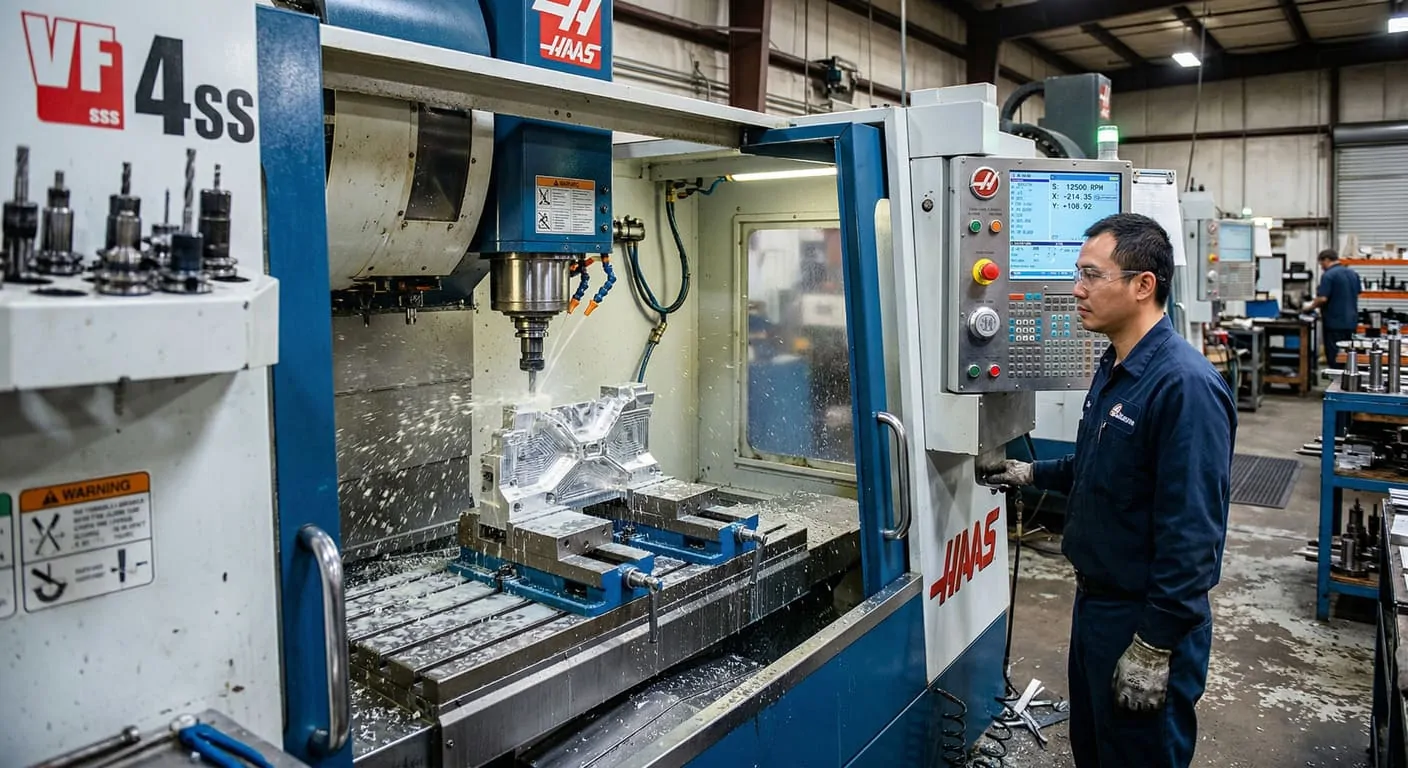
From aerospace components to medical devices and high-performance automotive parts, even a deviation of a few microns can lead to assembly failure, reduced lifespan, or critical safety risks. This is where precision CNC machining stands apart — offering ultra-tight tolerances, superior repeatability, and advanced multi-axis capabilities that standard machining simply cannot match.
In real-world manufacturing projects, the difference between standard and precision CNC machining is often not obvious at the design stage—but it quickly becomes critical during assembly.
We’ve seen cases where a deviation of just 0.02 mm caused alignment issues in mating parts, leading to costly rework and production delays. These situations are more common than many engineers expect, especially in high-performance applications.
However, many engineers and sourcing professionals still face a key question:
When is precision CNC machining truly necessary, and when is standard CNC machining sufficient?
Choosing the wrong process can result in:
Overpaying for unnecessary precision,One common mistake we see is over-specifying precision. Not every part needs ±0.01 mm tolerance, and unnecessary precision can significantly increase cost without adding value.
Or worse — compromising product quality and reliability
In this guide, we will break down:
The exact differences between precision CNC machining and standard CNC machining
Tolerance, cost, and performance comparisons
Real-world applications where precision machining is critical
And how to identify reliable precision CNC machining companies for your project
Whether you are developing high-tolerance components or optimizing production costs, this article will help you make a technically sound and commercially smart decision.
For projects requiring high accuracy and reliability, working with a professional CNC machining service provider can significantly reduce manufacturing risks.
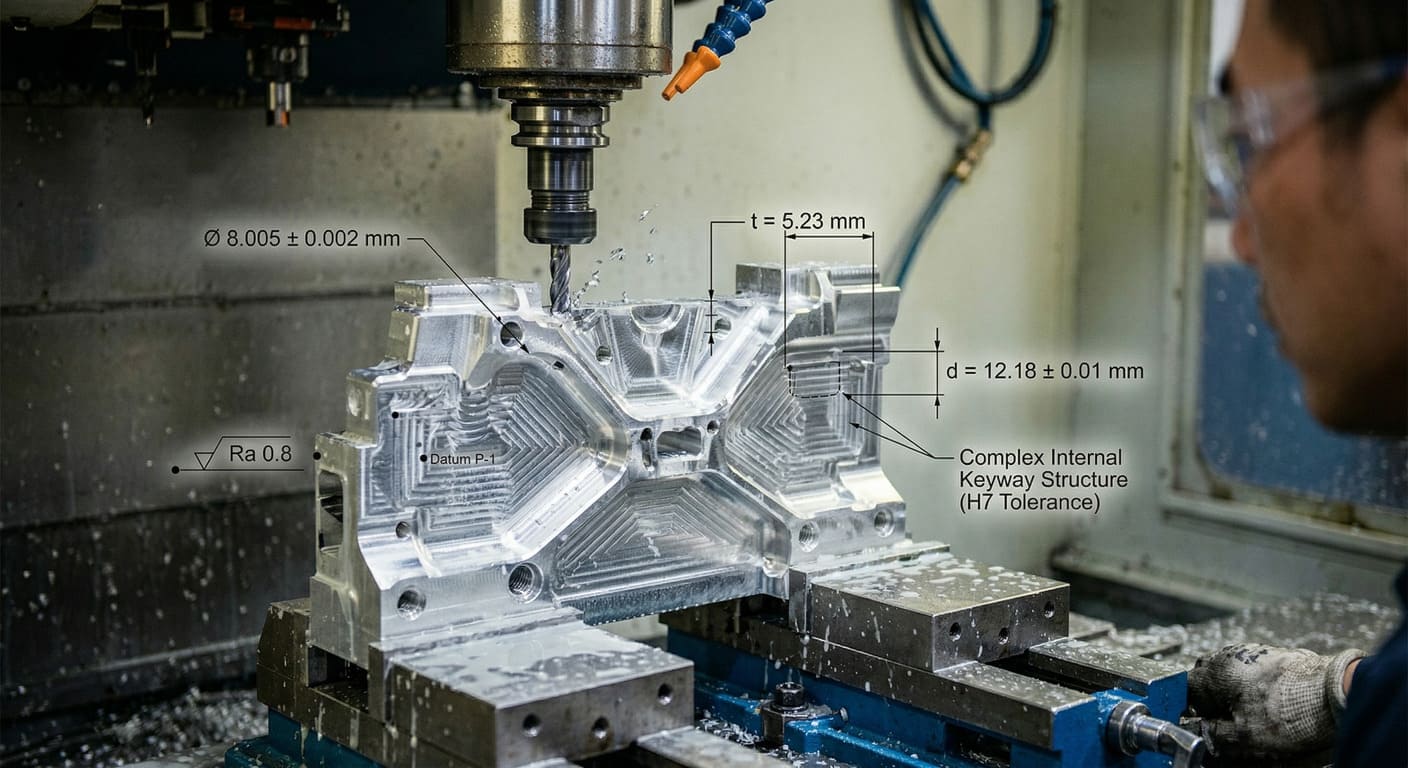
Precision CNC machining refers to a highly controlled manufacturing process that produces parts with extremely tight tolerances, superior surface finishes, and consistent repeatability. Unlike standard CNC machining, which is suitable for general applications, precision machining is specifically designed for high-performance components where even the smallest deviation can affect functionality.
In real-world projects, we’ve seen cases where a tolerance deviation of just 0.02 mm caused assembly misalignment, requiring full rework. This is why precision CNC machining is critical for high-performance parts.
In most industrial contexts, precision CNC machining typically achieves tolerances of:
±0.01 mm (±0.0004 inches) or tighter
In advanced applications, even micron-level accuracy (±0.001 mm) can be required
This level of precision is made possible through a combination of:
High-end CNC equipment (such as 5-axis machining centers)
Advanced tooling and cutting strategies
Strict process control and in-process inspection
Environmental control (temperature, vibration, and stability)
From a practical standpoint, achieving this level of precision is not just about machine capability. It also depends heavily on process stability, tooling strategy, and operator experience.
For example, machining aluminum and titanium with the same tolerance requirement involves completely different cutting behaviors, thermal effects, and tool wear considerations.
To better understand what differentiates precision CNC from standard machining, here are its defining characteristics:
| Feature | Description |
|---|---|
| Ultra-Tight Tolerances | Capable of achieving ±0.01 mm or better for critical dimensions |
| High Surface Finish Quality | Typically achieves Ra ≤ 0.8 μm or finer |
| Complex Geometry Capability | Supports intricate designs, undercuts, and multi-axis features |
| High Repeatability | Ensures consistent part quality across batches |
| Advanced Quality Control | Includes CMM inspection, GD&T compliance, and full reports |
Precision CNC machining supports a wide range of engineering materials, especially those used in high-performance and critical applications:
| Material | Why It’s Used in Precision CNC |
|---|---|
| Aluminum (6061, 7075) | Lightweight, excellent machinability, ideal for aerospace and structural parts |
| Stainless Steel (303, 304, 316) | High strength and corrosion resistance for medical and industrial use |
| Titanium (Ti-6Al-4V) | Exceptional strength-to-weight ratio, widely used in aerospace and implants |
| Engineering Plastics (PEEK, Delrin, PTFE) | Tight tolerance capability for lightweight, non-metal components |
| Tool Steel (H13, D2) | High wear resistance for molds and precision tooling |
For example, aluminum machining is often preferred for precision parts due to its stability and machinability.
In actual production, material selection often has a direct impact on achievable tolerance. Softer materials like aluminum are generally easier to machine with high precision, while harder materials such as titanium require more controlled machining strategies to maintain consistency.In contrast, stainless steel machining requires more controlled cutting conditions to maintain tight tolerances.
Precision CNC machining is not required for every project—but in certain industries, it is non-negotiable.
Pro Tip: If your part requires tight tolerance only in specific areas, you can reduce cost by applying precision machining selectively rather than across the entire part.
Common applications include:
Aerospace Components
(e.g., brackets, housings, structural parts requiring exact tolerances)
Medical Devices
(e.g., surgical instruments, implants, diagnostic equipment)
Automotive Performance Parts
(e.g., engine components, transmission systems)
Robotics and Automation
(e.g., precision joints, motion systems)
Semiconductor Equipment
(e.g., ultra-clean, high-accuracy parts)
In these fields, precision CNC machining ensures:
Proper fit and assembly
Long-term reliability
Compliance with strict industry standards
It’s important to understand that precision CNC machining is not simply standard CNC with smaller tolerances.
It represents a completely different level of manufacturing capability, involving:
More advanced machinery
More experienced engineers
More rigorous quality systems
Higher production costs—but significantly lower risk
In short:
Precision CNC machining is about guaranteeing performance, not just achieving dimensions.
While both precision CNC machining and standard CNC machining rely on computer-controlled processes, their capabilities, costs, and applications differ significantly. Understanding these differences is critical to selecting the right manufacturing approach for your specific requirements.
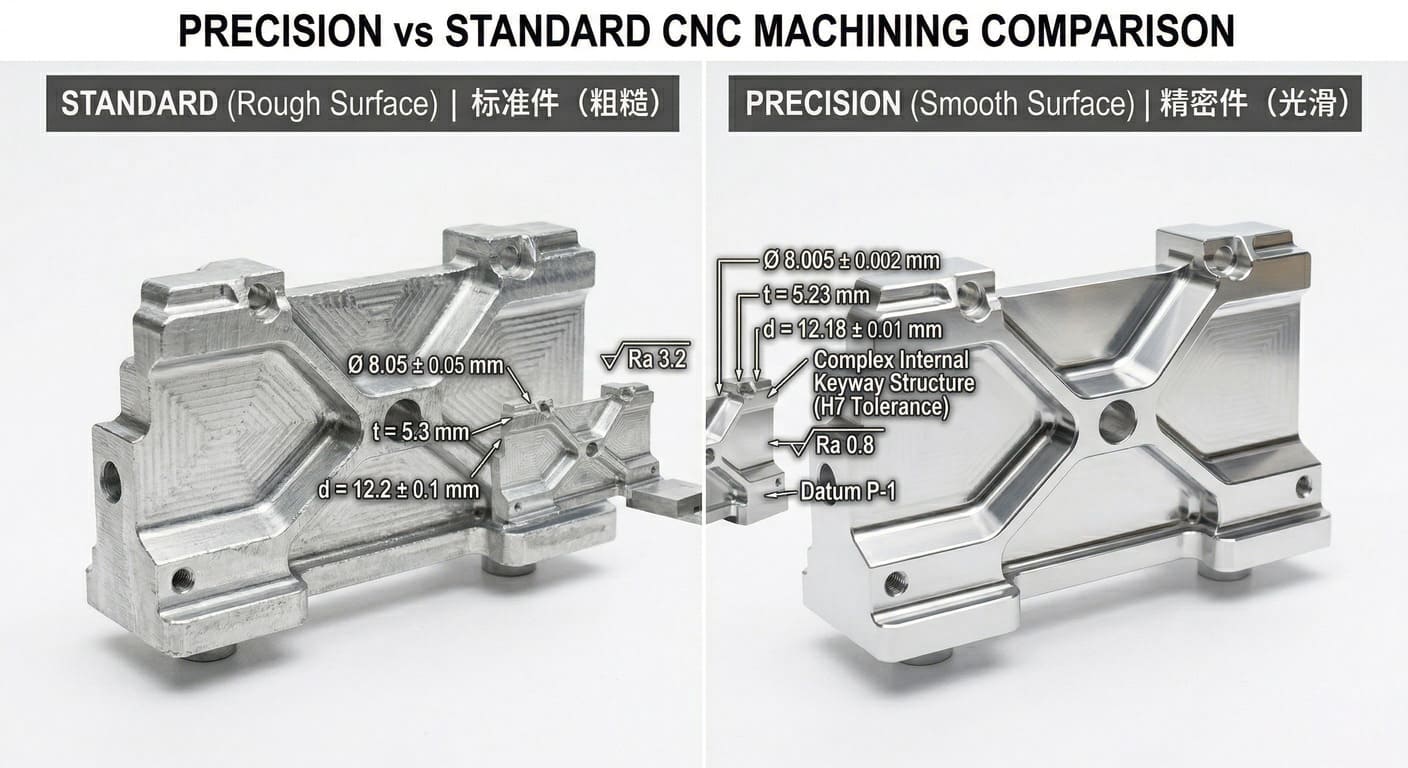
Below is a detailed side-by-side comparison:
| Factor | Precision CNC Machining | Standard CNC Machining |
|---|---|---|
| Tolerance | ±0.01 mm or tighter (micron-level possible) | ±0.05 mm to ±0.1 mm |
| Surface Finish | High-quality (Ra ≤ 0.8 μm or better) | Moderate (Ra 1.6–3.2 μm) |
| Machining Complexity | Supports complex geometries, 5-axis machining, micro features | Suitable for simpler geometries |
| Repeatability | Extremely high, ideal for critical batch production | Moderate consistency |
| Equipment Level | Advanced CNC machines, multi-axis systems, precision tooling | Standard 3-axis or basic CNC systems |
| Quality Control | CMM inspection, GD&T compliance, full inspection reports | Basic inspection tools, limited reporting |
| Cost | Higher due to tighter control and slower machining speeds | Lower, optimized for cost-efficiency |
| Lead Time | Slightly longer due to precision requirements | Faster for general parts |
| Typical Applications | Aerospace, medical, robotics, semiconductor | General industrial, consumer products |
One important point to note is that the difference between these two processes is not always linear. In many projects, moving from standard CNC to precision CNC can significantly increase cost—but only certain dimensions may actually require tight control.
Optimizing which features truly need precision can make a substantial difference in overall manufacturing efficiency.
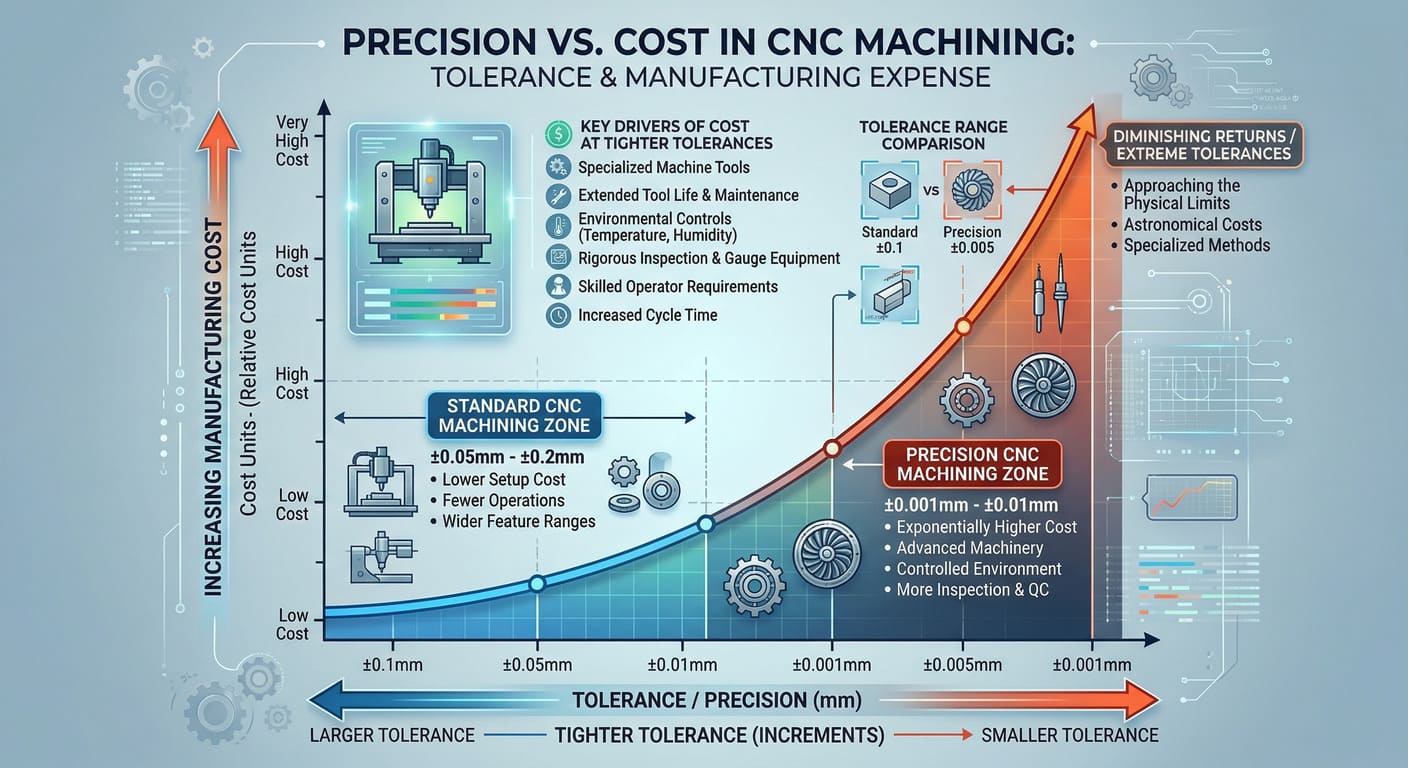
The most fundamental difference lies in tolerance capability. Precision CNC machining is designed for ultra-tight tolerances, ensuring that parts fit and function exactly as intended.
In contrast, standard CNC machining allows for wider tolerances, which are acceptable for non-critical components but may lead to issues in high-performance assemblies.
Precision machining delivers superior surface finishes, often eliminating the need for additional post-processing. This is especially important for:
Sealing surfaces
Medical-grade components
Optical or aesthetic parts
Standard CNC machining typically produces acceptable but less refined finishes, often requiring secondary finishing processes.
Precision CNC machining supports:
Multi-axis (4-axis, 5-axis) operations
Intricate geometries
Tight internal features
Standard CNC is generally limited to simpler designs, making it more suitable for basic structural components.
A common misconception is that precision CNC machining is simply “more expensive.”
In reality, it offers higher value in critical applications by:
Reducing assembly errors
Minimizing part rejection rates
Improving product lifespan
In contrast, choosing standard CNC for high-precision parts can lead to hidden costs, including rework, failure, and performance issues.
A common mistake is assuming that higher precision always leads to better results. In reality, over-specifying tolerances can increase machining time and cost without adding functional value.
The key is to match tolerance requirements with actual performance needs.
Precision CNC machining involves rigorous quality assurance, including:
Coordinate Measuring Machine (CMM) inspections
Statistical process control (SPC)
Detailed inspection reports
Standard CNC machining typically relies on basic inspection methods, which may not meet the requirements of high-spec industries.
If you're still unsure which process to choose, here’s a simplified guideline:
Choose Precision CNC Machining if:
Your part requires tight tolerances (≤ ±0.01 mm)
The component is mission-critical
You are working in aerospace, medical, or high-performance industries
Choose Standard CNC Machining if:
Tolerances are not critical
The part is non-functional or low-risk
Cost reduction is the primary concern
Selecting between precision CNC and standard CNC machining is not just a technical decision—it directly impacts:
Product performance
Assembly efficiency
Long-term reliability
Total production cost
In high-stakes applications, precision is not a luxury—it is a requirement.
Not every part requires ultra-tight tolerances—but in many high-performance applications, choosing standard CNC machining can lead to assembly issues, performance degradation, or even product failure.
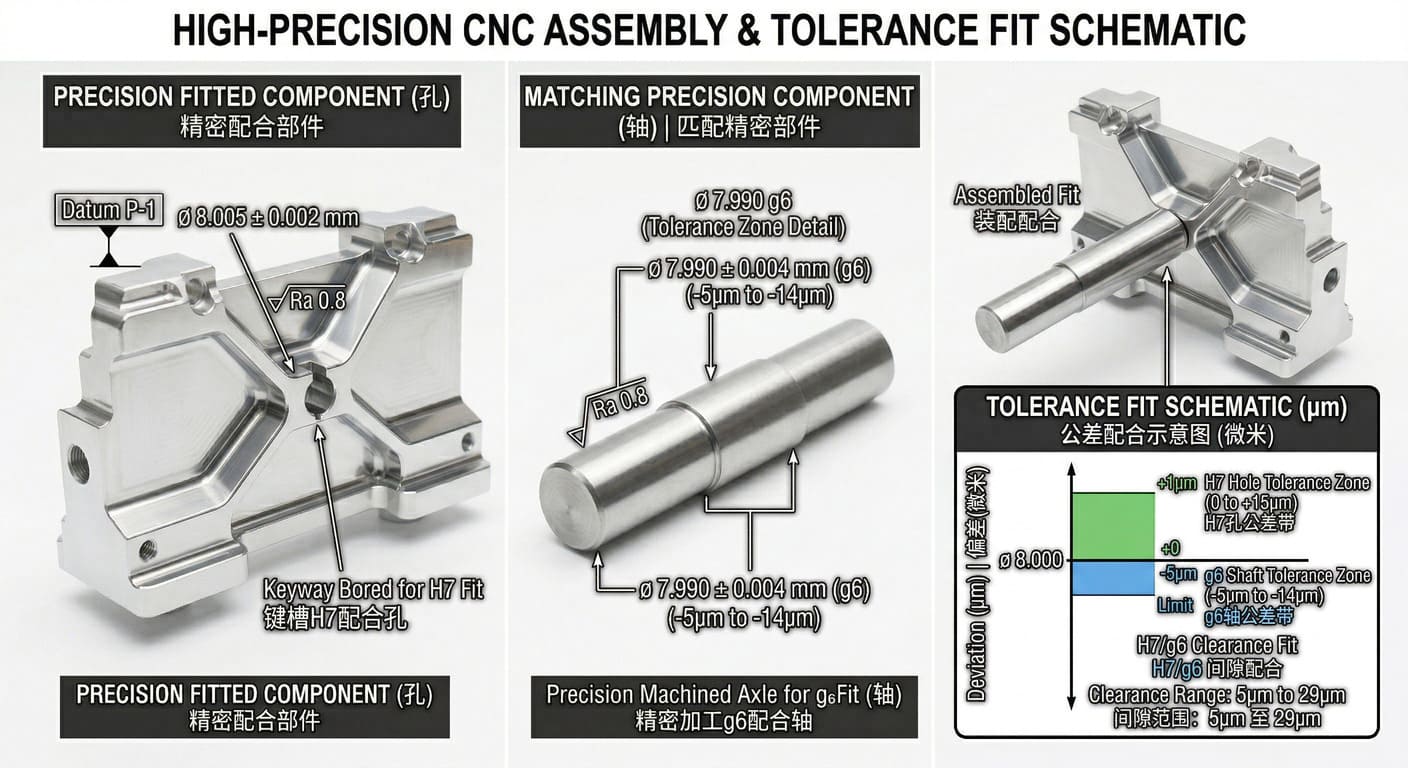
So how do you know when precision CNC machining is the right choice?
Below are the most common scenarios where precision is not optional—but essential.
If your design specifies tolerances of ±0.01 mm or tighter, precision CNC machining is required to ensure proper fit and function.
This is especially important for:
Mating parts and assemblies
Press-fit or interference-fit components
Sealing surfaces (e.g., fluid or air-tight systems)
Even a small deviation can result in:
Misalignment
Leakage
Increased wear
In many assemblies, tolerance stack-up is a hidden issue. Even if each individual part is within acceptable limits, small deviations can accumulate and lead to functional problems. Precision CNC machining helps minimize this risk.This is why many engineers choose to work with a dedicated precision CNC machining service to ensure part accuracy.
Precision CNC machining is essential when a component directly impacts performance, safety, or reliability.
Typical examples include:
Aerospace structural components
Medical implants and surgical instruments
High-speed rotating parts
Load-bearing mechanical components
In these cases, failure is not acceptable—precision ensures reliability.
Modern product design often involves:
Intricate internal features
Tight radii and micro-details
Multi-axis surfaces
These designs require:
5-axis CNC machining
Advanced toolpath strategies
Highly stable machining environments
Standard CNC machining may not be capable of achieving these geometries with sufficient accuracy.
Complex geometries often introduce additional challenges such as tool accessibility, vibration, and heat buildup. These factors must be carefully managed to maintain accuracy throughout the machining process.
Surface quality is not just about aesthetics—it directly impacts functionality in many applications.
Precision CNC machining is necessary when:
Low friction is required (e.g., moving parts)
Sealing surfaces must be smooth
Components interact with sensitive environments (medical, optical, semiconductor)
A poor surface finish can lead to:
Increased friction and wear
Poor sealing performance
Reduced product lifespan
In many cases, additional surface finishing processes are required to achieve the desired surface quality.
If you are producing parts in medium to high volumes, consistency becomes critical.
Precision CNC machining ensures:
High repeatability across batches
Minimal variation between parts
Reduced rejection rates
This is especially important for:
Assembly lines
Scalable production
Quality-sensitive industries
At first glance, precision CNC machining appears more expensive—but in many cases, it reduces total cost over time.
Why?
Because it helps avoid:
Rework and scrap
Assembly failures
Product recalls or warranty issues
In other words:
Precision machining is an investment in quality and reliability—not just a manufacturing cost.
From a long-term perspective, investing in precision machining often reduces overall project risk. Many manufacturers initially choose standard CNC to save cost, only to face higher expenses later due to part rejection or performance issues.Choosing the right CNC machining partner early can help avoid these issues.
If you answer “yes” to any of the following, precision CNC machining is likely the right choice:
Do you require tolerances tighter than ±0.01 mm?
Is the part critical to product performance or safety?
Does your design involve complex geometries or multi-axis features?
Are you targeting high-end industries like aerospace or medical?
Do you need consistent quality across production batches?
If the answer is yes, standard CNC machining may not meet your requirements.
In many real-world projects, the biggest mistake is not over-specifying precision—but underestimating the need for it.
Choosing standard CNC machining for a precision-critical part often leads to:
Hidden costs
Project delays
Performance issues
The right approach is to match machining capability to functional requirements from the start.
Precision CNC machining plays a critical role in industries where accuracy, reliability, and consistency are non-negotiable. In these sectors, even the smallest deviation can compromise performance, safety, or compliance with strict standards.
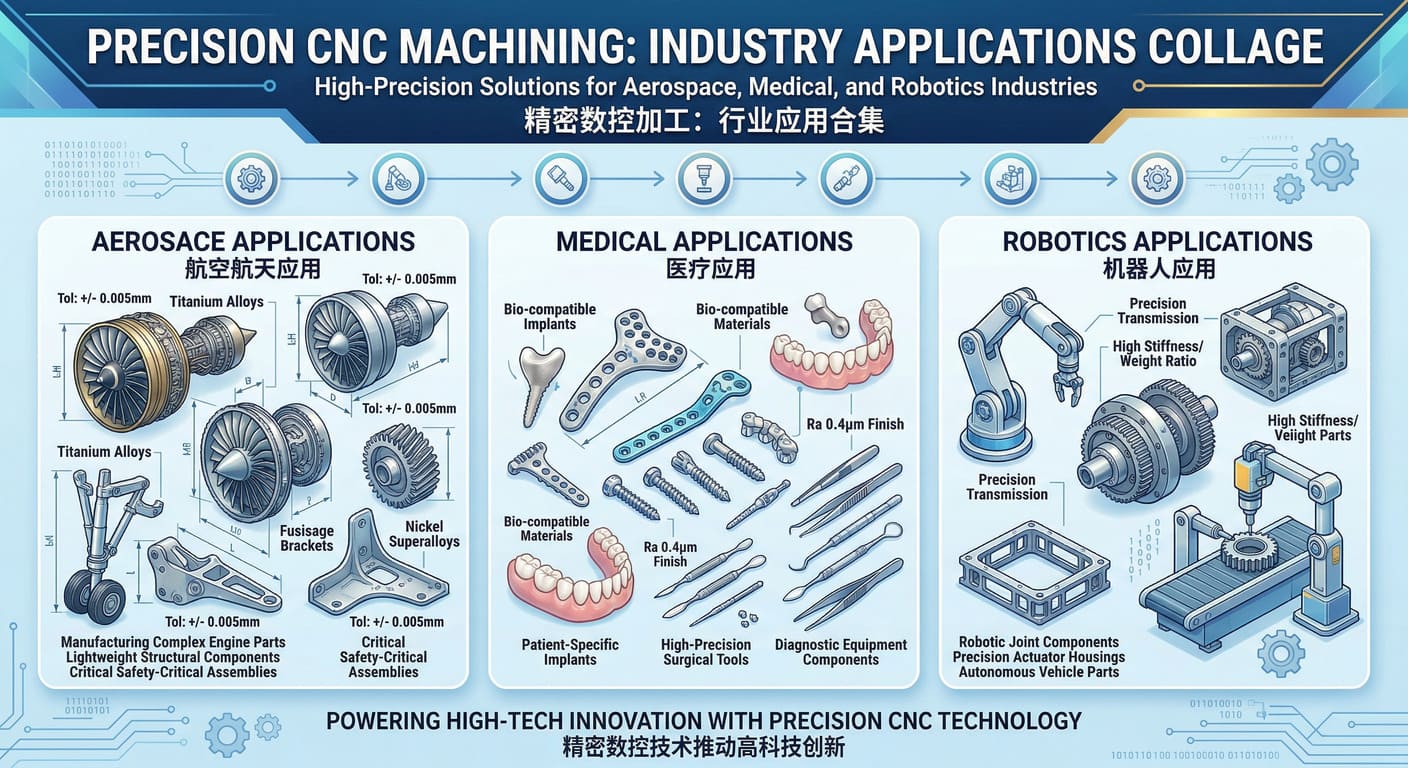
Below are the key industries that depend heavily on precision CNC machining:
The aerospace sector demands some of the highest precision levels in manufacturing. Components must meet extremely tight tolerances and strict regulatory standards, as they are often exposed to high stress, temperature fluctuations, and critical operating conditions.
Typical precision CNC parts include:
Structural brackets
Engine components
Housings and enclosures
In aerospace applications, precision machining ensures:
Structural integrity
Weight optimization
Compliance with standards such as AS9100
In aerospace projects, even minor dimensional inconsistencies can affect load distribution and fatigue performance. This is why precision machining is closely tied to both safety and compliance.
In the medical field, precision CNC machining is essential for producing components that directly affect patient safety and treatment outcomes.
Common applications include:
Surgical instruments
Orthopedic implants
Diagnostic equipment components
These parts require:
Ultra-high precision
Biocompatible materials
Exceptional surface finishes
Even microscopic inaccuracies can lead to serious consequences, making precision machining a strict requirement rather than an option.
Medical components also require strict control over surface finish and geometry, as these factors can directly influence biocompatibility and long-term performance.
While standard CNC machining is widely used in automotive manufacturing, precision CNC machining is critical for high-performance and safety-related components.
Examples include:
Engine components (pistons, cylinder heads)
Transmission systems
Suspension and braking parts
Precision machining helps achieve:
Better mechanical efficiency
Reduced vibration and wear
Improved overall vehicle performance
Robotics systems rely on precise motion control and repeatability, which can only be achieved through high-precision components.
Typical parts include:
Joint components
Gear housings
Motion control assemblies
Precision CNC machining ensures:
Smooth movement
Accurate positioning
Long-term operational stability
The semiconductor industry requires components with extreme dimensional accuracy and ultra-clean surface finishes.
Applications include:
Wafer processing equipment
Precision frames and mounts
Vacuum-compatible components
In this field, precision CNC machining is critical for:
Maintaining process stability
Preventing contamination
Supporting high-tech manufacturing environments
Precision CNC machining is also widely used in advanced industrial equipment where durability and accuracy are essential.
Common applications:
Molds and dies
Precision tooling
High-load mechanical components
These parts require:
High wear resistance
Tight tolerances
Consistent performance over time
Across all these industries, the demand for precision CNC machining is driven by a common set of factors:
Increasing product complexity
Higher performance expectations
Stricter quality and safety standards
The need for repeatable, scalable production
As a result, precision CNC machining has become a foundational capability in modern high-end manufacturing.
Across these industries, advanced CNC machining capabilities play a key role in ensuring performance and reliability.
Choosing the right precision CNC machining partner is just as important as selecting the right manufacturing process. Not all CNC suppliers are capable of delivering true high-precision machining, especially when tight tolerances, complex geometries, and strict quality requirements are involved.
You can also explore our detailed guide to the top CNC machining companies for a broader comparison.
To help you make an informed decision, we’ve outlined how top precision CNC machining companies are evaluated—and highlighted several suppliers known for their capabilities in high-accuracy manufacturing.
It’s worth noting that not all suppliers advertising “precision CNC machining” truly have the capability to deliver consistent high-accuracy results. In practice, there can be significant differences in process control, inspection standards, and engineering support.
Rather than simply listing popular manufacturers, this selection is based on technical capability and real-world performance criteria:
Tolerance Capability
Ability to consistently achieve ±0.01 mm or tighter
Machining Equipment
Availability of advanced machines such as 5-axis CNC centers and Swiss-type lathes
Quality Assurance Systems
Use of CMM inspection, GD&T compliance, and documented quality processes
Industry Experience
Proven track record in high-demand sectors like aerospace, medical, and robotics
Production Flexibility
Capability to handle prototypes, low-volume, and medium-scale production
These factors ensure that the companies listed are not just CNC suppliers—but true precision manufacturing partners.
Below are several companies recognized for their precision machining capabilities, each with distinct strengths depending on application needs:
Core Strengths:
High-precision custom machining with multi-process integration
Capabilities:
Tolerance up to ±0.01 mm
CNC milling, turning, and complex part machining
Integrated services including casting, sheet metal, and surface finishing
Best For:
Custom-engineered parts
Projects requiring multiple manufacturing processes
Clients seeking a one-stop manufacturing solution
NAITE TECH stands out for its ability to combine precision machining with flexible production and engineering support, making it a strong choice for both prototyping and scalable production.
In practice, many clients value not only machining accuracy but also the ability to coordinate multiple processes under one supplier. This helps reduce communication costs and improves overall project efficiency.
Core Strengths:
Fast turnaround and digital manufacturing platform
Capabilities:
CNC machining with tight tolerances
Online quoting system
Broad material support
Best For:
Rapid prototyping
Time-sensitive projects
Core Strengths:
Automated manufacturing and rapid production
Capabilities:
High-speed CNC machining
Strong design-for-manufacturing (DFM) feedback
Scalable production options
Best For:
Engineers needing quick iteration cycles
Functional prototypes
Core Strengths:
Large manufacturing network and flexible sourcing
Capabilities:
Wide range of CNC machining services
AI-driven quoting system
Access to multiple suppliers
Best For:
Projects requiring supplier flexibility
Diverse manufacturing needs
Core Strengths:
Digital supply chain management with global partners
Capabilities:
Precision CNC machining
Quality-controlled partner network
Production and logistics integration
Best For:
Managed manufacturing solutions
Mid- to large-scale production
While all the companies above offer CNC machining services, their positioning differs:
Platform-based providers (e.g., RapidDirect, Xometry, Fictiv)
→ Focus on speed, scalability, and supplier networks
Manufacturing-focused providers (e.g., NAITE TECH)
→ Focus on process control, precision, and engineering depth
Choosing between them depends on your priority:
Speed and convenience
Or precision, consistency, and technical support
Before selecting a supplier, consider the following:
Can they consistently meet your tolerance requirements?
Do they have the right equipment for your part complexity?
Can they provide inspection reports and quality documentation?
Do they understand your industry standards?
A reliable precision CNC machining partner should not just manufacture parts—but help optimize your design, reduce risk, and ensure long-term product performance.
Selecting a precision CNC machining supplier is not just about comparing prices—it’s about ensuring your parts meet strict technical requirements, quality standards, and long-term performance expectations.
A reliable supplier should act as a manufacturing partner, helping you reduce risk, optimize design, and maintain consistent quality across production.
Below are the key factors to evaluate when choosing the right precision CNC machining partner:
The first and most critical factor is whether the supplier can consistently achieve your required tolerances.
It’s not enough to claim ±0.01 mm capability—the real question is:
Can they maintain this tolerance across batches?
Do they have process controls to ensure consistency?
Look for:
Documented tolerance capability
Process standardization
Experience with similar precision parts
In real production scenarios, maintaining tolerance consistency across batches is often more challenging than achieving it in a single prototype. This is where process control becomes critical.Working with experienced CNC machining services can significantly improve consistency across production.
Precision machining requires more than basic CNC machines. Advanced equipment directly impacts part quality and complexity capability.
Key indicators include:
4-axis and 5-axis CNC machining centers
High-precision turning and Swiss machining
Advanced tooling systems
Suppliers with modern equipment are better equipped to handle:
Complex geometries
Tight internal features
Multi-operation parts
A true precision CNC machining supplier must have a robust quality assurance system.
Essential quality capabilities include:
Coordinate Measuring Machine (CMM) inspection
GD&T (Geometric Dimensioning & Tolerancing) compliance
First Article Inspection (FAI) reports
In-process quality checks
Without proper inspection, even well-machined parts can fail to meet specifications.
Without proper inspection systems, it is difficult to verify whether parts truly meet specifications—especially for complex geometries or tight tolerances.This is a key indicator when evaluating a reliable precision machining supplier.
Different materials behave differently during machining. A qualified supplier should understand how to optimize processes for each material.
Look for:
Experience with metals (aluminum, stainless steel, titanium)
Capability with engineering plastics (PEEK, PTFE, etc.)
Engineering support for design optimization (DFM)
Strong engineering support can help:
Reduce machining difficulty
Improve part performance
Lower overall production cost
Your needs may evolve from prototyping to production. A good supplier should support:
Rapid prototyping
Low-volume production
Medium to high-volume manufacturing
This flexibility ensures:
Faster product development cycles
Seamless transition to mass production
In today’s competitive environment, speed matters—but not at the expense of quality.
Evaluate:
Quotation response time
Production lead time
Communication efficiency
A responsive supplier helps you:
Reduce project delays
Adapt quickly to design changes
Experience in your specific industry is a strong indicator of reliability.
Check for:
Previous projects in aerospace, medical, or robotics
Certifications such as ISO 9001 or AS9100
Case studies or proven track records
Industry-specific experience ensures the supplier understands:
Compliance requirements
Application-specific challenges
Many buyers focus too heavily on price, which can lead to costly issues later.
Avoid suppliers that:
Offer unusually low prices without technical justification
Cannot provide inspection reports
Lack clear communication or engineering support
Have no verifiable experience in precision machining
The lowest price often results in the highest long-term cost.
Another common issue is relying solely on price when selecting a supplier. While cost is important, insufficient technical capability often leads to hidden risks that outweigh initial savings.
Choosing the right precision CNC machining supplier is ultimately about risk management.
A qualified partner will not only deliver parts that meet specifications but also help you:
Improve product quality
Reduce production issues
Ensure long-term reliability
In high-precision manufacturing, the right supplier is not just a vendor—it’s a critical part of your product success.
When your project requires high precision, consistent quality, and reliable delivery, choosing the right manufacturing partner becomes critical. NAITE TECH is positioned to support demanding applications by combining precision CNC machining expertise with integrated manufacturing capabilities.
In many projects, the biggest challenge is not machining a single precise part—but maintaining consistent quality across multiple batches while meeting delivery timelines.

NAITE TECH specializes in producing parts with tight tolerances up to ±0.01 mm, ensuring accuracy and consistency across every batch.
With strict process control and experienced engineering teams, we are able to:
Maintain dimensional stability in complex parts
Deliver consistent results in repeat production
Meet the requirements of high-performance industries
This level of precision helps reduce assembly issues and improves overall product reliability.
We utilize a range of modern CNC equipment, including:
Multi-axis CNC machining centers
Precision CNC turning systems
Complex part machining setups
These capabilities allow us to handle:
Intricate geometries
Tight internal features
Multi-surface machining in a single setup
Result: higher accuracy, fewer setups, and better overall part quality.
Beyond CNC machining, NAITE TECH offers a fully integrated manufacturing approach, including:
Casting
Sheet metal fabrication
Surface finishing (anodizing, sandblasting, polishing, etc.)
This means you can:
Reduce supplier management complexity
Ensure consistency across processes
Shorten production lead times
We also offer a range of surface finishing services to meet different application requirements.
Our engineering team works closely with clients to provide:
Design for Manufacturability (DFM) feedback
Material selection recommendations
Process optimization suggestions
This helps you:
Improve part performance
Reduce unnecessary machining costs
Accelerate product development
Early-stage engineering input can significantly reduce downstream manufacturing issues. Simple design adjustments can often improve machinability and reduce unnecessary cost.
Whether you need a single prototype or medium-scale production, NAITE TECH supports:
Rapid prototyping
Low-volume production
Scalable manufacturing
This flexibility ensures a smooth transition from development to production without changing suppliers.
Quality and reliability are at the core of our operations. We implement:
Strict quality control processes
In-process inspections
Final verification before shipment
Combined with efficient production management, we ensure:
Stable quality across batches
On-time delivery
Clear communication throughout the project
NAITE TECH is a strong fit for industries that demand precision, including:
Aerospace
Medical devices
Robotics and automation
High-performance industrial equipment
If your project requires tight tolerances, complex geometry, and dependable quality, we are ready to support your manufacturing needs.
If you are looking for a reliable precision CNC machining partner, NAITE TECH offers the technical capability and production flexibility to bring your designs to life.
Share your drawings or project requirements, and our team will provide:
Fast and accurate quotations
Engineering feedback
Optimized manufacturing solutions
You can learn more or request a quote through our CNC machining service page.
Precision CNC machining refers to manufacturing processes that achieve tight tolerances of ±0.01 mm or better, along with high repeatability and superior surface finishes. It is typically used in industries where accuracy directly impacts performance, such as aerospace, medical devices, and robotics.
Most precision CNC machining processes can achieve tolerances of ±0.01 mm, while advanced setups can reach ±0.005 mm or even ±0.001 mm in controlled environments. The achievable tolerance depends on material, geometry, and machining conditions.
It’s important to note that tighter tolerances also require stricter control of machining conditions, including temperature, tooling, and machine stability.
Yes, precision CNC machining generally costs more due to:
Tighter process control
Slower machining speeds
Advanced equipment and inspection requirements
However, it often reduces overall costs by minimizing rework, assembly errors, and product failures.This is especially important when working with professional CNC machining services.
You should choose precision CNC machining when:
Tolerances are tighter than ±0.01 mm
The part is functionally critical
Surface finish affects performance
The application is in high-end industries like aerospace or medical
Industries that commonly require precision CNC machining include:
Aerospace
Medical devices
Automotive performance engineering
Robotics and automation
Semiconductor equipment
These industries rely on high accuracy and consistent quality.
Common materials include:
Aluminum (6061, 7075)
Stainless steel (304, 316)
Titanium alloys
Engineering plastics such as PEEK and PTFE
The choice depends on strength, weight, corrosion resistance, and application requirements.
Yes, high-end precision CNC machining can achieve micron-level accuracy (±0.001 mm) under controlled conditions. This typically requires:
Advanced machinery
Stable environments
Experienced operators
Such precision is often used in medical, optical, and semiconductor applications.
Precision CNC machining typically uses:
5-axis CNC machining centers
High-precision CNC lathes
Swiss-type turning machines
These machines enable complex geometries and high accuracy.
Look for a supplier that offers:
Proven tolerance capability
Advanced equipment
Strong quality control systems (CMM, inspection reports)
Experience in your industry
A reliable partner should also provide engineering support and consistent delivery.
Reviewing sample parts or inspection reports can provide valuable insight into a supplier’s actual capability, beyond what is stated in quotations.
The main differences include:
Tolerance: Precision CNC achieves tighter tolerances
Surface finish: Higher quality in precision machining
Applications: Precision CNC is used for critical components
Cost: Precision machining is typically more expensive but offers higher reliability


