
- Home
- Capabilities
- Solution
- Material
- Industry
- Resources
- Request a Quote
Views: 0 Author: Site Editor Publish Time: 2025-11-03 Origin: Site
In the fast-evolving world of modern manufacturing, precision is everything. From aerospace turbines to medical implants and consumer electronics, every industry today depends on parts that are not only accurate but also consistent and cost-effective to produce. This is where CNC precision machining—a cornerstone of digital manufacturing—comes into play.
At NAITE TECH, we define CNC precision machining as the fusion of automated control, advanced software, and high-end materials to create parts that meet the most demanding tolerances and performance standards. It’s the bridge between concept and reality—turning digital designs into functional, real-world products with micron-level accuracy.
This article offers a complete technical breakdown of CNC precision machining: how it works, the machines behind it, the materials it supports, and why choosing the right partner like NAITE TECH can make a measurable difference in cost, quality, and lead time.
CNC precision machining stands for Computer Numerical Control precision machining. It’s an automated manufacturing process where computer-controlled tools remove material from a solid block—called a workpiece—to create a desired 3D shape.
Unlike manual machining, where human operators adjust tools and feeds, CNC machines operate through digital instructions (G-code) generated from 3D models. This means once the design and parameters are set, the entire production cycle—cutting, drilling, milling, turning, or grinding—runs automatically with unmatched repeatability.
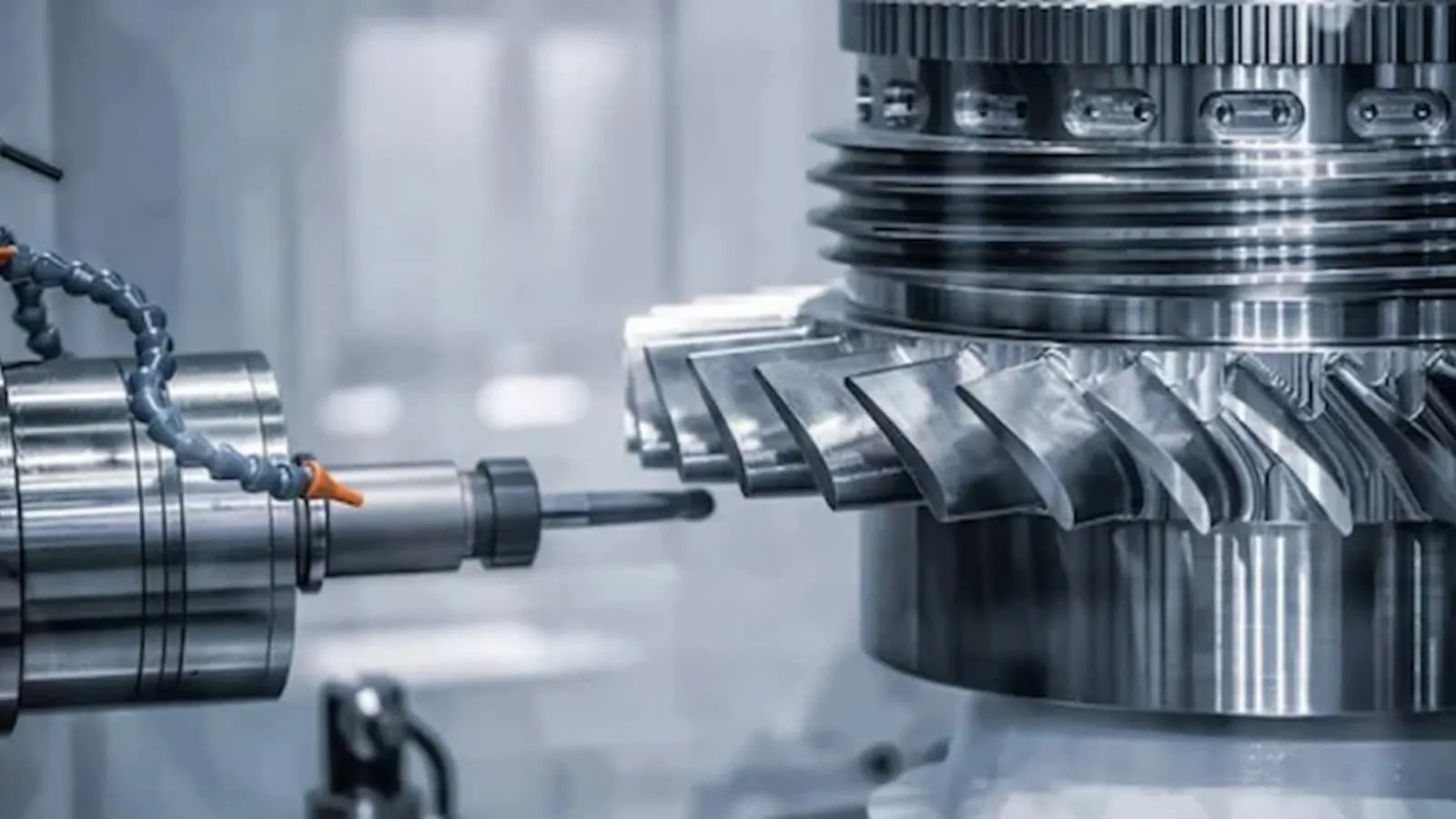
Accuracy: CNC machines regularly achieve tolerances as tight as ±0.005 mm.
Repeatability: Each part produced is nearly identical to the previous one.
Complex Geometry: Capable of multi-axis motion (3-, 4-, and 5-axis) to produce intricate parts impossible by manual machining.
Automation: Operates 24/7 with minimal supervision, optimizing production efficiency.
| Feature | Traditional Machining | CNC Precision Machining |
|---|---|---|
| Control | Manual | Computer-programmed |
| Accuracy | ±0.05 mm | ±0.005 mm or better |
| Productivity | Operator-dependent | Continuous automated |
| Complexity | Limited | Complex multi-axis |
| Scalability | Low | High, suitable for mass customization |
In short, CNC precision machining combines automation, accuracy, and versatility, making it indispensable for high-quality manufacturing.
The CNC machining workflow may seem complex, but at its core, it follows a logical sequence—from digital design to post-production finishing. Let’s explore each stage in detail.
Every precision part begins with a digital design created using CAD (Computer-Aided Design) software such as SolidWorks, AutoCAD, or Siemens NX. The CAD model defines the exact geometry, dimensions, and tolerances of the part.
Engineers at NAITE TECH collaborate closely with clients to optimize the model for manufacturability. This process, known as Design for Manufacturing (DFM), ensures that complex features like deep pockets, thin walls, or tight radii are achievable using the available tooling and materials.

Best practices in CAD design for CNC:
Maintain consistent wall thicknesses for strength and stability.
Avoid extremely small radii that require micro tools.
Specify critical tolerances only where necessary to control costs.
Include thread types, hole depths, and surface finish requirements directly in the model.
By finalizing a well-prepared CAD model, the foundation is set for a seamless transition into machining.

Once the 3D model is ready, it moves into CAM (Computer-Aided Manufacturing) software, where machining paths are generated. The CAM system translates the 3D geometry into toolpaths—the exact motion routes the cutting tool will follow.
The output of this stage is G-code, a standardized programming language that tells the CNC machine:
Which tool to use
Where to move
At what speed (feed rate)
At what depth and cutting parameters
At NAITE TECH, we use advanced CAM tools such as Fusion 360, Mastercam, and HyperMill, combined with custom post-processors for different machine types (e.g., 3-axis, 5-axis, or Swiss-type CNCs). This ensures optimal tool engagement and minimizes machining time.
Programming Optimization Factors:
Feed rate and spindle speed tuned to material hardness
Cutter engagement angle to prevent chatter
Tool change sequence optimization for minimal idle time
Simulation checks for collision and overcut prevention
By using intelligent programming, our engineers can often reduce cycle times by 15–25% without compromising precision.
Machine setup is the bridge between the virtual and physical worlds. It’s where human expertise ensures that the CNC system operates flawlessly.
Steps in setup:
Fixture installation: The workpiece is clamped or fixed using vises, jigs, or vacuum tables. Precision alignment is crucial—any misalignment directly affects final tolerances.
Tool setup: Operators load the required cutting tools (end mills, drills, reamers, etc.) into the machine’s automatic tool changer (ATC). Each tool’s offset and length are calibrated using probes.
Coordinate system zeroing: The machine’s zero point (work coordinate origin) is defined, often via a touch probe or laser system.
Dry run or simulation: The machine runs a toolpath simulation without cutting material to ensure safety and correctness.
At NAITE TECH, setup verification is supported by automated probing systems and real-time calibration software, reducing setup errors and downtime.


Once the setup is complete, machining begins. The CNC controller executes the programmed G-code commands, guiding the tools to cut the material layer by layer with micron precision.
The process may involve several types of operations:
Milling: Removing material with rotating tools to shape surfaces and cavities.
Turning: Rotating the workpiece to create cylindrical features.
Drilling: Creating holes with precise depths and diameters.
Tapping: Forming internal threads.
Reaming: Refining hole accuracy and surface finish.
Modern CNC machines feature real-time monitoring systems that adjust feed rates, spindle speeds, and coolant flow automatically to maintain consistent machining quality.
Key machining parameters affecting precision:
Spindle speed (RPM)
Feed rate (mm/rev or mm/min)
Depth of cut
Tool wear compensation
Coolant type and flow rate
NAITE TECH’s multi-axis machining centers allow simultaneous control of multiple axes—ideal for producing complex geometries such as turbine blades, impellers, and medical implants with exceptional surface finishes.


After the machining phase, parts undergo post-processing to achieve the desired surface finish, dimensional accuracy, and appearance.
Common post-machining operations:
Deburring: Removing sharp edges and residual burrs.
Polishing: Enhancing surface smoothness or preparing for coating.
Anodizing: Providing corrosion resistance and coloring for aluminum parts.
Electroplating: Adding protective or conductive coatings.
Powder coating / Painting: For visual or environmental protection.
Tumbling: Automated finishing for high-volume small parts.
Surface roughness is often measured using Ra (Roughness Average). Precision CNC machining can achieve surface finishes as smooth as Ra 0.4 µm depending on tooling and material.
At NAITE TECH, our finishing services are integrated into the production workflow—ensuring every component not only meets dimensional tolerances but also aesthetic and performance standards required by aerospace, automotive, and medical sectors.
CNC precision machining is not a single process—it’s a family of automated methods that use various machines, each tailored for specific geometries, tolerances, and production needs.
At NAITE TECH, we deploy a complete fleet of milling, turning, drilling, EDM, grinding, and hybrid CNC systems, all calibrated to meet global manufacturing standards.
Let’s break down the major machine categories and their unique functions.
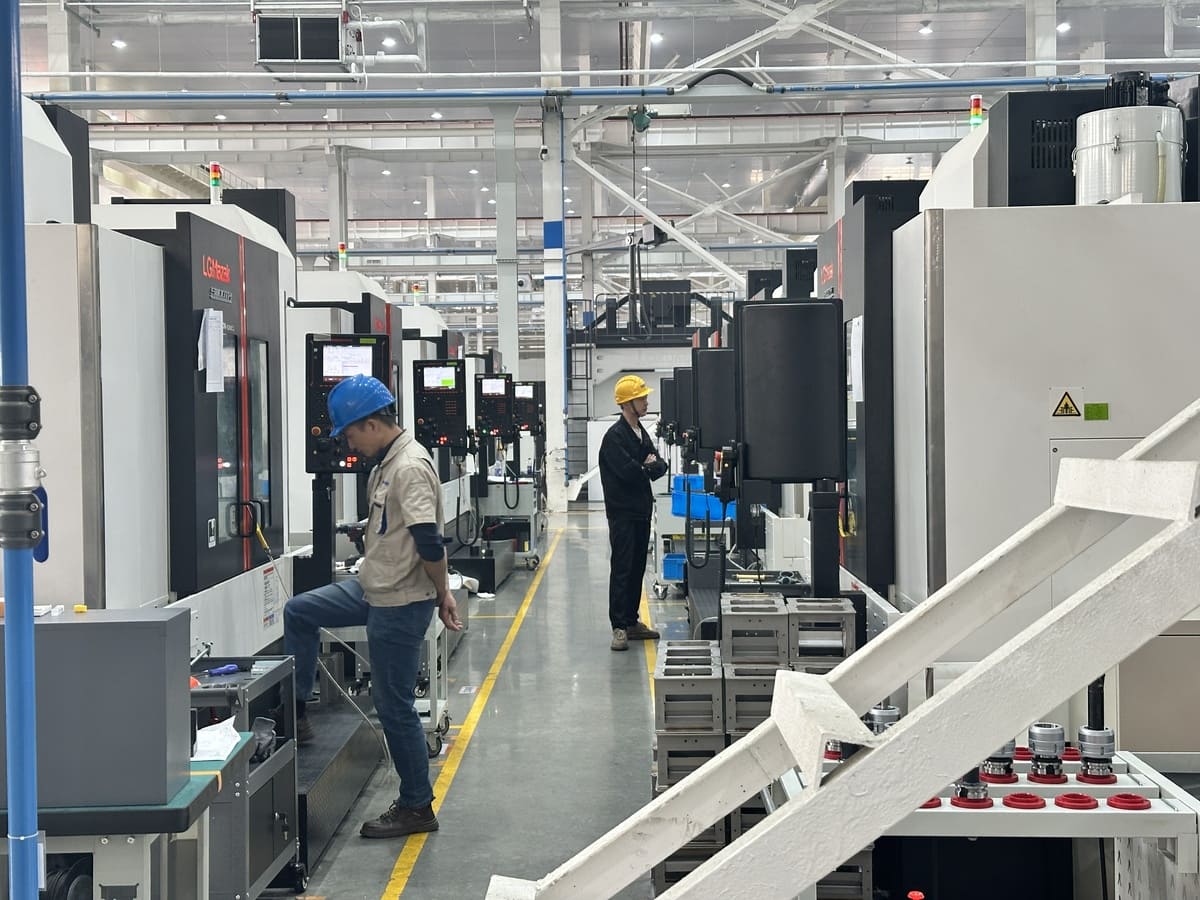
CNC milling is the most versatile and widely used machining method. A rotating cutting tool removes material from a stationary workpiece along multiple axes (X, Y, Z—and in advanced cases, A and B for rotation).
Key Capabilities:
3-, 4-, and 5-axis machining
High-precision pocketing and contouring
Ideal for complex 3D surfaces
Typical Parts:
Housings, brackets, mold cavities, impellers, and structural components.
NAITE TECH Advantage:
Our 5-axis CNC milling centers are capable of continuous simultaneous machining, enabling complex geometry production in a single setup—reducing human intervention and increasing accuracy.
CNC turning involves rotating the workpiece while a stationary cutting tool removes material. It’s best suited for cylindrical or symmetrical components.
Key Features:
Excellent for producing shafts, pins, bushings, and threaded components.
High-speed turning for small or large diameters.
Capable of combining turning and milling (mill-turn centers).
Benefits:
Extremely tight concentricity
Smooth surface finishes (Ra < 0.8 µm)
Lower cycle time for round parts

At NAITE TECH, we employ Swiss-type lathes for ultra-precise components, particularly for medical devices and micro-mechanical assemblies.
Precision drilling is fundamental in almost every manufacturing project. CNC drilling machines automate hole-making with high accuracy and repeatability.
Capabilities:
Automatic tool changers for multiple drill sizes
Deep-hole drilling with through-coolant tools
Thread tapping and counterboring integration
Applications:
Printed circuit boards, aerospace brackets, engine blocks, and hydraulic manifolds.
EDM machining removes material using controlled electrical discharges between an electrode and the workpiece.
It’s perfect for hard materials and tight internal corners that are difficult to reach with traditional cutters.
Types of EDM:
Wire EDM: For cutting profiles in conductive metals.
Sinker EDM: For producing deep cavities and sharp internal geometries.
Advantages:
No mechanical stress—ideal for hardened steel.
Achieves micron-level detail.
Used in mold making and precision die manufacturing.
NAITE TECH’s EDM cells use fine wire (0.1 mm) and automatic wire-threading technology, achieving accuracy up to ±2 µm for tool steels and titanium.
Plasma cutting uses an accelerated jet of ionized gas to slice through electrically conductive materials.
While not as precise as milling or EDM, plasma CNC systems are efficient for large sheet metal fabrication.
Best for:
Cutting aluminum, stainless steel, or carbon steel sheets.
Rapid prototyping of enclosures and brackets.
Pre-processing before fine machining.
Key Benefits:
High cutting speed
Low tooling cost
Suitable for medium-tolerance industrial applications
Grinding is the final stage of precision machining—ideal for parts requiring ultra-fine surface quality or tight dimensional control.
Applications:
Tooling components, bearing races, and sealing surfaces.
Finishing after hardening or heat treatment.
Capabilities:
Achieve surface finishes down to Ra 0.1 µm.
Submicron precision for roundness and flatness.
Cylindrical, surface, and centerless grinding options.
At NAITE TECH, CNC grinding ensures dimensional integrity across high-performance parts, especially for aerospace and optical equipment.
The flexibility of CNC machining lies in its ability to handle a vast range of materials—from lightweight polymers to superalloys.
Choosing the right material affects cost, machinability, performance, and surface finish.
At NAITE TECH, we process over 100+ metal and plastic grades, each optimized for specific tolerances and mechanical properties.
Lightweight, strong, and corrosion-resistant.
Excellent machinability and thermal conductivity.
Commonly used in aerospace and consumer electronics.
Stainless Steel (304, 316, 17-4PH)
High corrosion and heat resistance.
Ideal for medical, marine, and industrial components.
Copper & Brass
Outstanding electrical and thermal conductivity.
Preferred for heat exchangers, connectors, and decorative parts.
Titanium (Grade 2, Grade 5)
High strength-to-weight ratio.
Excellent biocompatibility for implants and aerospace.
Challenging to machine but worth the precision results.
Tool Steel (D2, H13, S7)
Used for dies, molds, and cutting tools.
High hardness and wear resistance.
NAITE TECH Insight:
Each metal requires unique feeds, speeds, and tool coatings (TiAlN, DLC, etc.). Our process database optimizes these parameters for consistent results.
ABS (Acrylonitrile Butadiene Styrene)
Cost-effective, durable, and impact-resistant.
Used for consumer prototypes and housings.
POM (Delrin / Acetal)
Excellent dimensional stability and wear resistance.
Ideal for precision gears and bushings.
Nylon (PA6, PA66)
Strong and flexible, but absorbs moisture.
Suitable for mechanical components under dynamic loads.
PTFE (Teflon)
Extremely low friction coefficient.
Excellent chemical resistance; often used for seals and insulation.
PEEK (Polyether Ether Ketone)
High temperature tolerance up to 250°C.
Biocompatible and used in aerospace and medical applications.
Note: For plastics, controlling heat buildup is critical. NAITE TECH uses sharp cutters and optimized coolant flow to prevent warping or surface deformation.
CNC precision machining serves as the backbone of almost every advanced industry.
Its ability to maintain tight tolerances and reproduce complex geometries makes it indispensable in high-stakes applications.
| Industry | Typical Components | Key Requirements |
|---|---|---|
| Aerospace | Turbine blades, landing gear, structural frames | Lightweight, high strength, ±0.01 mm tolerance |
| Automotive | Engine housings, gearboxes, brackets | Mass production, durability, cost-efficiency |
| Medical | Surgical tools, implants, prosthetics | Biocompatibility, mirror finish, clean-room machining |
| Robotics | Gears, actuators, frames | High stiffness, complex kinematics |
| Electronics | Enclosures, heat sinks, connectors | Precision fit, surface finish, small-scale details |
| Energy & Industrial | Valves, manifolds, turbine casings | Heat resistance, dimensional stability |
NAITE TECH’s Industry Footprint:
Our parts power everything from drone propulsion systems to MRI scanning equipment—delivering reliability where every micron matters.
The benefits of CNC precision machining go far beyond accuracy. It’s about efficiency, consistency, and scalability—enabling innovation across industries.
CNC machining delivers tolerances as fine as ±0.005 mm, essential for parts like fuel injectors or optical components.
Once a program is validated, it can reproduce thousands of identical parts with no deviation—critical for production consistency.
Multi-axis systems can machine intricate shapes such as helical grooves, undercuts, and organic contours, often in one setup.
From aluminum to titanium to engineering plastics, CNC machining works across a wide range of materials with consistent performance.
Fast turnaround and digital flexibility make CNC machining ideal for both prototype validation and mass production without retooling.
With proper tooling and post-processing, CNC machining achieves mirror-like finishes that meet cosmetic and functional requirements.
Compared to molding or additive manufacturing for low to mid-volume production, CNC machining often provides a better balance of cost and precision.
At NAITE TECH, our integrated digital production line minimizes waste and ensures first-time-right manufacturing—reducing costs and lead times by up to 30%.
Finding the right CNC machining supplier is more than comparing quotes—it’s about building a relationship with a technically capable, quality-focused partner.
Here’s what sets a reliable CNC partner apart:
| Criteria | Description | NAITE TECH Strength |
|---|---|---|
| Technical Expertise | Multi-axis machining, CAM programming, and process engineering | 5-axis, Swiss-type, and hybrid EDM facilities |
| Quality Control | Measurement, testing, and certification | ISO 9001, IATF16949, CMM inspection, SPC data traceability |
| Material Knowledge | Ability to machine metals and polymers precisely | 100+ material grades handled |
| Surface Finishing | In-house post-processing and coating | Anodizing, bead blasting, electroplating |
| Lead Time | Rapid prototyping and on-time delivery | Digital workflow + real-time tracking |
| Engineering Support | DFM consultation and design validation | Dedicated engineering team with 30+ years experience |
How NAITE TECH Helps You Win:
Real-time quoting and design feedback.
Transparent production tracking through our online platform.
Scalable capacity for both prototypes and large-volume orders.
Global logistics support and dedicated account managers.
When precision, quality, and responsiveness matter, NAITE TECH stands as your long-term manufacturing partner for CNC excellence.
CNC precision machining isn’t just a process — it’s the foundation of modern manufacturing. From aerospace turbines to smartphone housings, its strength lies in translating digital precision into physical perfection.
At NAITE TECH, we see CNC machining not merely as a production service, but as a technology partnership that empowers engineers, product designers, and innovators worldwide.
Our commitment to excellence extends beyond producing tight-tolerance components — we engineer reliability, consistency, and innovation into every part.
As industries evolve toward lighter materials, tighter tolerances, and smarter manufacturing, CNC precision machining continues to be the backbone of digital production. And with NAITE TECH’s combination of technical expertise, data-driven workflow, and global delivery network, your precision ideas can become tangible results faster than ever before.
Whether you’re prototyping a complex aerospace part, scaling up production for automotive components, or developing a high-tech medical device — NAITE TECH ensures every micron counts.
CNC (Computer Numerical Control) machining refers to automated machining using programmed commands. Precision machining emphasizes the tight tolerance and accuracy achievable with CNC systems.
In other words, CNC is the method, and precision machining is the outcome.
At NAITE TECH, our machines routinely achieve tolerances as tight as ±0.005 mm, depending on material and part geometry.
5-axis and EDM processes can reach even finer precision for high-end aerospace and optical components.
It depends on the application:
Aluminum for lightweight structures.
Stainless steel for corrosion resistance.
Titanium for strength-to-weight performance.
Plastics (POM, PEEK) for insulation or lightweight parts.
Our engineering team provides DFM (Design for Machining) advice to optimize both performance and cost.
CNC machining offers higher strength, better surface finish, and superior dimensional accuracy than most 3D printing methods.
However, 3D printing excels in fast iteration and internal complexity.
NAITE TECH often combines both — using additive manufacturing for concept validation and CNC for final production.
We offer a complete range of surface finishes including:
Anodizing (Type II & III)
Bead blasting
Powder coating
Electropolishing
Black oxide, zinc plating, and nickel plating
Surface finish options depend on aesthetic, functional, and material requirements.
Our rapid prototyping service delivers functional metal parts within 3–5 business days, depending on complexity and finishing needs.
For mass production orders, lead time is managed through our smart scheduling system, ensuring global customers receive products on time, every time.
Yes. Every project includes:
Material certification
Dimensional inspection report (CMM or 2D)
Surface finish verification
Tolerance and thread checks
We’re ISO 9001 and IATF 16949 certified, guaranteeing traceability from raw material to final shipment.
Absolutely. CNC machining excels at low- to mid-volume runs where tooling costs for molding are prohibitive.
Our hybrid manufacturing system allows seamless scaling from one-off prototypes to thousands of parts.
We serve aerospace, automotive, medical, robotics, energy, and consumer electronics — with special expertise in high-precision aluminum and stainless steel components.
Simply visit our Online Platform, upload your 3D CAD model (STEP, IGES, or STL), and receive real-time pricing, lead time, and manufacturability feedback — all within minutes.
NAITE TECH is a global manufacturing solutions provider specializing in CNC precision machining, rapid prototyping, and low-volume production.
With advanced 3-, 4-, and 5-axis equipment, we deliver engineering-grade parts with exceptional accuracy and speed.
Core Strengths:
State-of-the-art CNC and EDM facilities
ISO 9001 & IATF 16949 certified quality management
100+ material options with integrated finishing
Dedicated DFM support and 24/7 customer service
AI-powered online quoting and tracking platform
From prototype to production, NAITE TECH ensures your ideas move seamlessly from CAD to reality — with unmatched quality and global reliability.
Every component leaving our facility is backed by a rigorous Quality Assurance Protocol:
Incoming material inspection
In-process checks and SPC data recording
CMM measurement and tolerance verification
Final visual and dimensional inspection
Documentation package with certificates of conformity
This multi-layer quality control guarantees consistent results — whether you order 1 part or 10,000.
Congratulations — by reading this far, you’ve mastered the essentials of CNC precision machining.
From understanding the process flow to choosing the right partner, you’re now equipped to make smarter, faster, and more informed manufacturing decisions.
At NAITE TECH, precision isn’t just a promise — it’s our standard.
Let’s engineer your success, one micron at a time.


